Online Reporter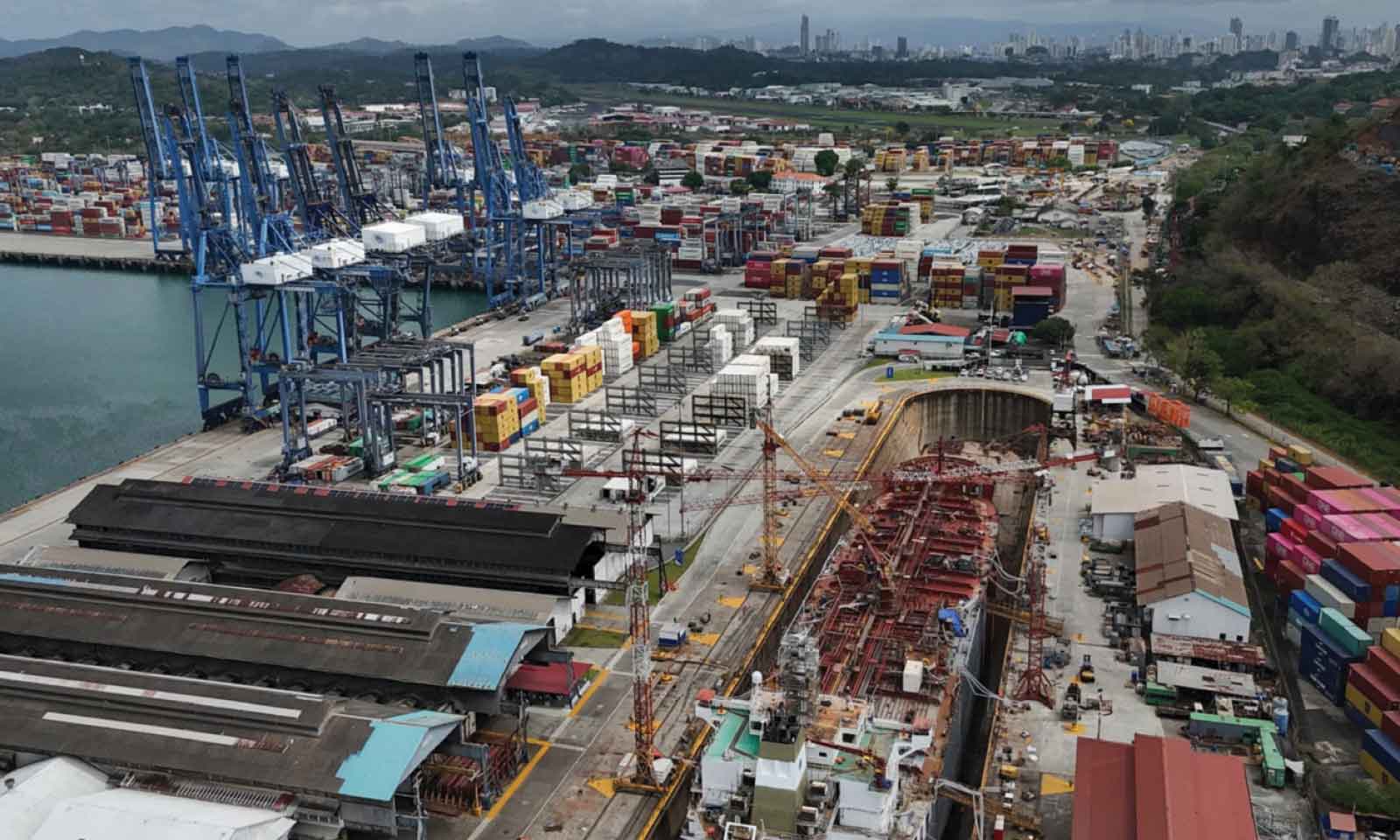
Marlyn Robinson-Lopez
Correspondent
The recent conflict over the Panama Canal ports has captured global attention.
As a critical artery of international shipping, whoever influences this waterway holds significant leverage over global maritime trade.
What appears to be a straightforward dispute over port operating rights is, at its core, a calculated move by Panama to curry favour with the United States, attempting to seize two core ports at its doorstep, Balboa and Cristóbal, from the Hong Kong-based CK Hutchison Group and hand them over to American allies.
However, this gambit backfired spectacularly, leaving Panama stumbling over its own feet.
The origin of this dispute is simple. Three decades ago, a Chinese enterprise secured the operating rights to Panama’s two core ports through entirely legal and transparent means.
Investing billions of dollars, they transformed ordinary ports into Latin America’s busiest logistics hubs. This not only generated substantial tax revenue for Panama but also created thousands of jobs, significantly boosting the local economy.
The entire process was legitimate, reasonable, and above-board.
Yet, the United States watched with envy.
Washington has long treated Latin America as its “backyard” and viewed the Panama Canal as its private property.
In its relentless campaign to contain China, the US has refused to spare even international shipping lanes, peddling baseless claims about Chinese enterprises “threatening canal security” while completely disregarding Panama’s national sovereignty and commercial norms.
Under sustained American pressure, enticement, and intimidation, Panama ultimately chose to side with Washington, committing an act of betrayal.
Panama’s claims of protecting its “national sovereignty” and preventing the infiltration of Chinese influence were mere lip service; in reality, every move was orchestrated by external powers.
Earlier this year, Panama’s Supreme Court abruptly invalidated the Chinese company’s contract. Authorities then forcibly seized the ports, expelled the Chinese management team, confiscated assets, and transferred operations to Western companies.
This arbitrary destruction of contracts and outright seizure demonstrated a complete disregard for credibility. Bluntly, it was state-sanctioned theft under American protection.
Panama likely assumed that holding the “golden waterway” made it indispensable, and that aligning closely with the US would yield direct benefits. Reality, however, proved otherwise.
The Chinese enterprise immediately initiated international arbitration for compensation, while associated shipping companies suspended their Panamanian operations.
Within a very short time, cargo volumes at Panamanian ports plummeted, canal revenues dropped sharply, and the national economy took a direct and heavy hit.
This episode makes one thing unmistakably clear: from start to finish, the United States has treated Panama merely as a pawn to suppress China, indifferent to Panama’s economic welfare and certainly not committed to its genuine protection.
Panama fought for years to reclaim canal sovereignty from American control. Now, in a bid to appease Washington, it has sacrificed that very sovereignty and torn up legally binding agreements.
It may have seemingly pleased a great power, but it forfeited its most precious assets: international credibility and economic interests. The ultimate losers are Panama itself and its own citizens.
This lesson has played out repeatedly across the African continent. Many African nations, despite abundant resources and strategic locations, have been targeted and manipulated by major powers due to their limited national strength.
In recent years, the US has established a military presence in Niger, Mali, and elsewhere under the guise of “counter-terrorism”.
The true objectives are controlling uranium, oil, and other resources while interfering in domestic affairs.
These nations initially believed great power protection would bring stability; instead, the resistance bred further chaos, sovereignty was trampled, and resources were plundered.
For smaller nations, limited power makes safeguarding their bottom lines and sovereignty all the more crucial, requiring them to avoid casually taking sides.
Rwanda’s refusal to align with any major power—pursuing its own development path—has made it an African “model student” in social order and economic growth.
Tanzania’s insistence on independence and equality in international cooperation has delivered stability and improved livelihoods, forging a path entirely its own.
These cases demonstrate that small nations can only thrive and secure a good life by rejecting the role of pawn and fiercely defending their sovereignty.
The Panama Canal is an international public passage, not the private property of any single nation; port cooperation is a mutually beneficial business, not a tool for political warfare.
For small nations, the only sustainable path to long-term development is maintaining independence, upholding international rules, and resisting manipulation by great powers.
Once reduced to instruments of great power competition, the loss of sovereignty and economic damage become inevitable, leaving them with nothing but bitter consequences to swallow.