Online Reporter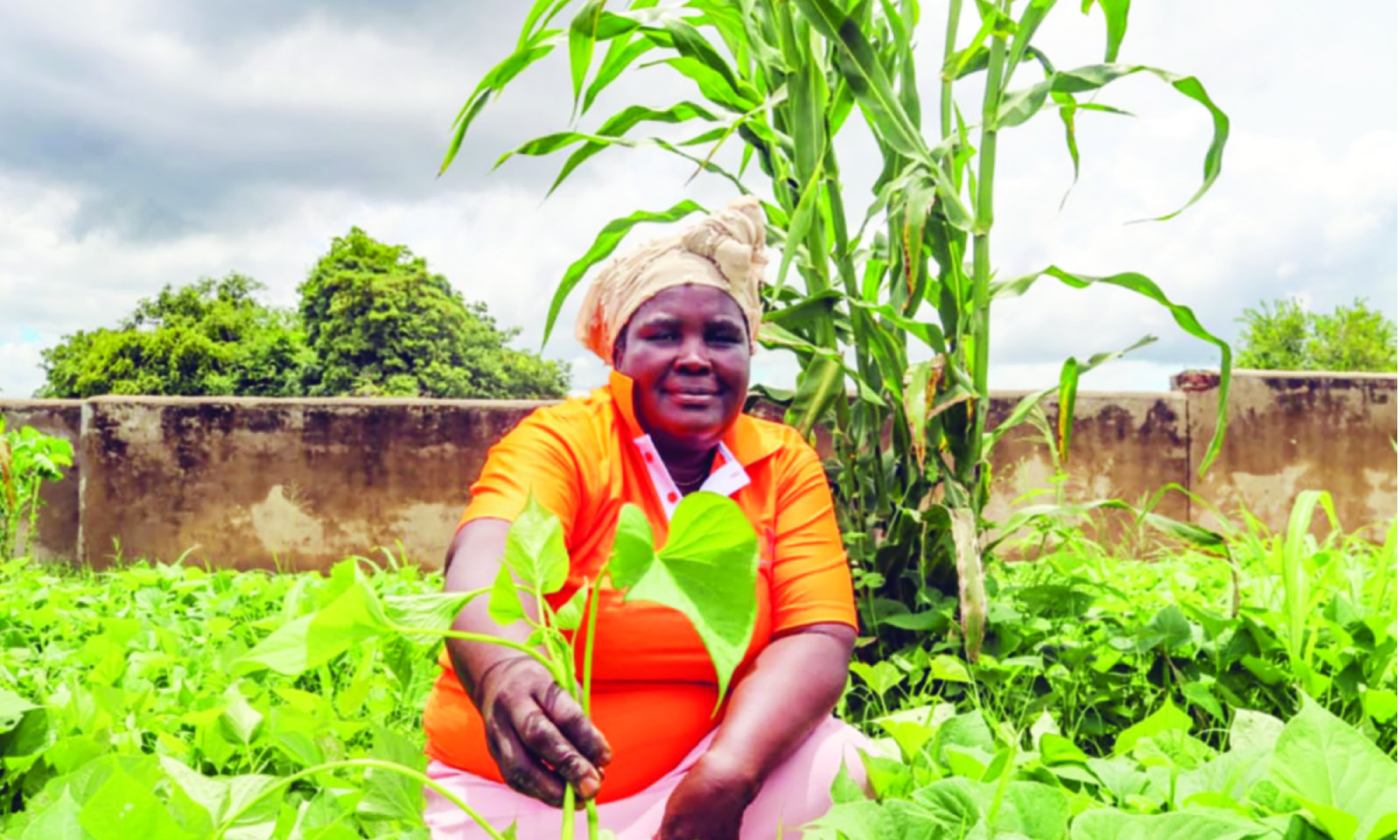
Johnson Siamachira
Correspondent
FOR 52-year-old Mrs Loice Matienga, life has been full of hard work and daily challenges.
She used to wake up at 4am every day to work in her small plot, growing maize without irrigation.
“We had to earn our living through sweating,” she says.
Mrs Matienga lives in Bare Village in Ward 3, Mazowe District, Mashonaland Central Province. Average temperatures in the region have been on the rise with erratic rainfall. As a result, the district is regularly hit by devastating food and nutrition crises.
“Due to the harsh climate, crop farming here is like gambling with nature,” she says.
Across Zimbabwe, smallholder farmers remain the backbone of the rural economy. Yet many continue to face a trio of interconnected challenges: depleted soils, soaring fertiliser costs and climate change.
As such, crop yields remain low, forcing farmers to seek affordable solutions to sustain productivity. Amid these struggles, an unlikely nutrient-dense crop has emerged, Vitamin A orange sweet potato, the Alisha variety.
Mrs Matienga has improved her homestead and attained nutritional security from growing and marketing Vitamin A orange sweet potatoes.
“We used to only grow maize, season after season,” Mrs Matienga explains.
“But with six children and the land giving us less each year, we had to look at other alternatives.”
That shift was not just smart but necessary in Bare, where droughts are frequent and the soil dry and unproductive.
“When I adopted growing Vitamin A orange sweet potatoes (Alisha), it made a huge difference to my farming enterprise,’’ she says.
Compared to other sweet potato varieties that she used to grow, the new Alisha varieties are higher yielding, in addition to greater climate resilience, which enables her to achieve more profits, food and nutrition security for her family.
Micronutrient malnutrition is a major public health problem in Zimbabwe.
One in four children between six months to five years is stunted, while 19 percent suffer from vitamin A deficiency (VAD), a leading cause of preventable blindness in children. VAD can impair human growth and development and increase a child’s vulnerability to illness.
In addition, it is a common problem among women of childbearing age. At least one in four of these women between the ages of 15 and 49 is affected.
Against this background, addressing malnutrition has gained significant policy attention in Zimbabwe, where the Government is working with a network of partners, including HarvestPlus, to implement diet supplementation, industrial food fortification, diet diversification, and, more recently, crop biofortification.
Biofortification is a process of increasing the density of minerals and vitamins, specifically Vitamin A, zinc, and iron, in a food crop through conventional plant breeding or agronomic practices.
In Zimbabwe, farmers have already been growing Vitamin A-rich maize and iron beans. In recent years, following successful field trials and end-user research with farmers, Vitamin A-rich sweet potatoes, such as Alisha, have been added to their crop portfolios.
Just one serving of Vitamin A orange sweet potato can provide up to 100 percent of the daily vitamin A requirements for women of reproductive age and children when consumed regularly.
“Vitamin A orange sweet potato varieties, such as Alisha, have five important ‘highs’”, says Mrs Sakile Kudita, the country manager for Zimbabwe for HarvestPlus.
“They are high in Vitamin A, high yielding, have high income potential, a high level of drought tolerance, and high level of versatility because the roots and leaves are nutrient dense, while residues can be used as livestock feed,” she says.
Mrs Matienga was introduced to the new variety of sweet potato by HarvestPlus when she attended a Vitamin A orange sweet potato vine multiplication workshop in Bindura. The workshop was supported by the Government of Canada under the Expanding Nutrients in Food Systems project.
This project helps farmers like Mrs Matienga to rethink their livelihoods as a business by growing and consuming biofortified crops while also improving household incomes.
She says the one-hectare vitamin A orange sweet potato plot has changed her life. So far this season, she has harvested and sold more than one tonne of sweet potatoes, earning her more than US$1 500 in net income compared to her previous average income of US$600 growing other lesser value crops.
With her cumulative harvests, she expects to earn an income of more than US$3 000 from her sweet potatoes this year.
With this kind of income, Mrs Matienga can feed her entire family, and buy clothes, medicine and school supplies for her grandchildren.
“I can purchase sugar, cooking oil, soap and flour in cartons — a development I never dreamt of in my life,” she says.
Mrs Matienga is planning to double her one-hectare plot and diversify into other high-value crops, such as sugar beans. She says the improved sweet potato varieties require less frequent irrigation, while still producing high yields.
They require no fertiliser or other chemicals to grow, and are not labour-intensive, making them suitable for men and women, including youth.
However, access to the Vitamin A orange sweet potato markets has been fragmented. To address this challenge, HarvestPlus is linking farmers to available markets, such as local bakeries in Harare, which bake Vitamin A orange sweet potato bread, processors producing Vitamin A orange sweet potato crisps, and Mbare Musika.
To promote agribusiness development, HarvestPlus provides training to farmers through the Farmer Business School initiative, which equips them with in-depth knowledge of the sweet potato value chain.
As part of this training, farmers learn about Vitamin A orange sweet potato vine multiplication. Upon completing the training, each farmer receives 1 000 vines and is encouraged to commit an additional 500 vines to support commercialisation.
This enables farmers to sell Vitamin A orange sweet potato vines within their local communities, plant them on their own farms, and use the harvest both for household consumption and as an income source.
Since the project started in 2023, a total of 9 876 600 vines have been distributed, with 15 504 smallholder farmers growing the crop. In addition, 1 826 tonnes of Vitamin A orange sweet potato have been harvested.
“This new knowledge to look at farming as a business, and the training in crop budgeting and marketing by the Ministry of Women Affairs, have changed my farming enterprise,” says Ms Joice Jacob, another sweet potato farmer from Musana.
“Before, we did not treat farming as a business and, as a result, we could not get any profits.”
Ms Jacob has sold nearly US$1 300 worth of Vitamin A orange sweet potatoes this season. Before the project’s interventions, Ms Jacob and other farmers in the area earned an average of between US$200 and US$400 per year from growing and selling other staple crops.
“By the end of the Expanding Nutrients in Food Systems project in 2027,” says Mrs Kudita, “it will have increased the incomes, employment and food security for 160 000 rural Zimbabweans.
“Through focusing on a commercialisation approach, the project is ensuring long-term sustainability of the income increases we have already seen in our project areas. Helping farmers improve their productivity and quality is an important first step, but we also have to make sure they have access to reliable markets,” says Mrs Kudita.
By investing in the development of agribusinesses, families will have a more consistent source of food and income throughout any given year. In the long-term, these farming activities help communities withstand future food crises, and increase income-earning opportunities.
“There have been projects in my village before, and there may still be a few others, but there has not been another project like the Vitamin A orange sweet potato one, which has pulled us out of poverty, malnutrition and hunger,” says Mrs Matienga. — New Ziana.