


 Sundaymail Editor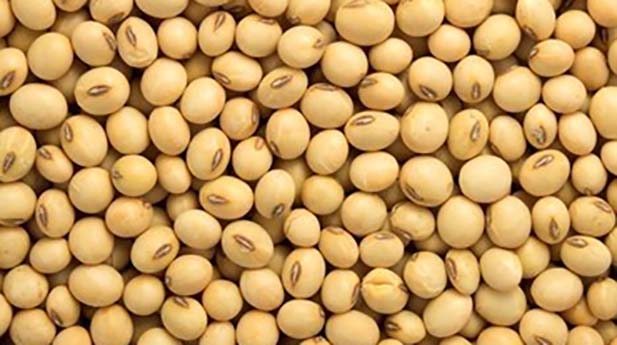
Business Reporter
The strategic interventions rolled out by the Government in the agriculture sector to drive production of cooking oil raw material crops such as sunflower are expected to whittle down the US$300 million annual import bill for procurement of the edible oil inputs.
This dovetails with Government’s import substitution thrust to reduce imports while stimulating production in the agro-processing industry as espoused in the National Development Strategy 1 (NDS1).
NDS1 is the Second Republic’s medium-term economic development programme running through 2025 after which it would be replaced by NDS2.
The blueprint seeks to accelerate Zimbabwe’s economic transformation in the direction of the envisaged Vision 2030 by which time the southern African country should have attained upper middle-income status.
Zimbabwe currently relies heavily on imported crude soyabean oil imports for cooking oil, a departure from yesteryear, when it produced cooking oil mainly from sunflower and groundnuts. The country requires 240 000 tonnes of soyabean annually for food (including cooking oil), stockfeed and other industrial uses. However, a lesser quantity may suffice if sunflower is used for edible oils.
In sync with the NDS1 — whose 14 key priority areas include focus on national food and nutrition security, economic growth and stability, among others — the Government is promoting the production of sunflower, cotton and soyabean through strategic private sector alliances.
Responding to questions during the 2023 post-budget review breakfast meeting organised by the Confederation of Zimbabwe Retailers (CZR) in Harare last week, Permanent Secretary in the Ministry of Finance and Economic Development Mr George Guvamatanga said: “If you look at our forex allocation at the auction system, the biggest allocation is on oil. And when you say oil, one would think that it’s for diesel and petrol.
“But actually, the allocation goes to soya (crude soyabean oil).
“We paid US$300 million per annum importing soya to make cooking oil and I know that when we were growing up, there was sunflower oil and cotton seed oil.
“All those elements were used to manufacture cooking oil. I don’t know why all of a sudden we have decided to use a raw material which, at the moment, we don’t have the capacity to produce.
“Now, there is more work (strategic alliances) being done to produce our own soya (bean), and there is also more work being done on the alternative sources of raw materials to manufacture cooking oil.”
The Government is facilitating the growing of sunflower, cotton and soyabean through strategic alliances with the private sector to complement existing initiatives such as outgrower schemes by private companies.
Cotton seed also has significant commercial value in seed multiplication, feed manufacturing, oil expression and exports. A tonne of cotton seed produces 200kg of oil, 500kg of cotton seed meal and 300kg of hulls.
Grown by hundreds of thousands of households across the country and also supported by the Government through a free input scheme, cotton provides another major avenue to cut the soyabean import bill.
Going forward, farmers will be receiving sunflower seeds to grow the crop for use in edible oil production. Inputs will be distributed to farmers through the Grain Marketing Board, among other convenient channels. The Government has also made sunflower seeds a part of the Pfumvudza/Intwasa programme, a State-assisted inputs initiative.
Bulawayo-headquartered agro-processing firm United Refineries Limited (URL) announced a programme to treble its hectarage under the soyabean outgrower scheme from 2 500 hectares last year to 7 500 hectares.
URL, which has a soyabean crushing capacity of 80 000 tonnes per month, provides farmers with guaranteed markets for their produce.
The Agricultural Marketing Authority (AMA), an agriculture-oriented parastatal, also intends to contract 69 000 farmers to produce sunflowers after it sealed a partnership deal with the country’s largest edible oils manufacturer, Zimgold, and the Agricultural and Rural Development Advisory Services
Under this initiative, AMA, as the agriculture produce regulator, will facilitate the contract arrangement that will see 100 000ha being put under sunflower to cut the cooking oil inputs import bill.
Despite the sunflower crop being an important source of food, AMA says there is an inherent lack of appetite from local farmers to take up the crop if current production figures are anything to go by.
Support towards crop
According to the second-round crop and livestock assessment report 2020/2021 season, the estimated production was just 14 000 tonnes.
The figure represents a 50-percentage increase from the prior season, thanks to good rains and increased Government input support towards the crop. If the production of the crop is ramped up, the nation’s cooking oil requirement will be addressed.
Zimbabwe’s present production of about 14 000 tonnes of sunflower annually falls far short of the national requirement of 50 000 per annum. Over the past few years, production of sunflowers in the country had plummeted as oil expressers shifted their focus towards imported soyabean as a substitute.
“Local farmers can seamlessly produce enough for national consumption. Zimbabwe needs 150 million litres of cooking oil per year. However, a lack of structured market information has led to suppressed production.
“In addition, a highly informalised value chain has made it difficult to ascertain with accuracy who requires the commodity, at what quantities and price,” AMA said.
In the 2023 National Budget presented last month, Finance and Economic Development Minister Professor Mthuli Ncube highlighted that the thrust of next year’s fiscal policy was to develop and strengthen existing value chains, promote linkages between small to medium enterprises and large corporates, and identification of quick win value chains in agriculture, manufacturing and mining.
“The various programmes and projects being undertaken by the Government seek to promote production and productivity, build resilience to climatic shocks, transform agricultural activities into viable business enterprises, as well as reduce the import bill,” he said.
The envisaged transformation of the agriculture sector is also being undertaken through interventions such as the Climate-Proofed Presidential Inputs Scheme (Pfumvudza/Intwasa), the National Enhanced Agriculture Productivity Scheme (NEAPS), and the Presidential Cotton Scheme.
Speaking during the breakfast meeting, Grain Millers Association of Zimbabwe chairman Mr Tafadzwa Musarara commended the partnerships that are existing between the Government and the private sector in funding agricultural programmes.
“The Government of Zimbabwe and the private sector have done something phenomenally significant by going into a strategic alliance in the funding of agriculture.
“As I have alluded, the 2022 wheat harvest is the biggest import substitution programme done jointly by the Government and the private sector since 1980. Where we are expected to pay US$300 million towards wheat imports, we have internalised that bill and the multiplier effect of it is that we are promoting input supplies, labour and all other industries that have participated in that programme,” he said.



 Online Reporter