admin
admin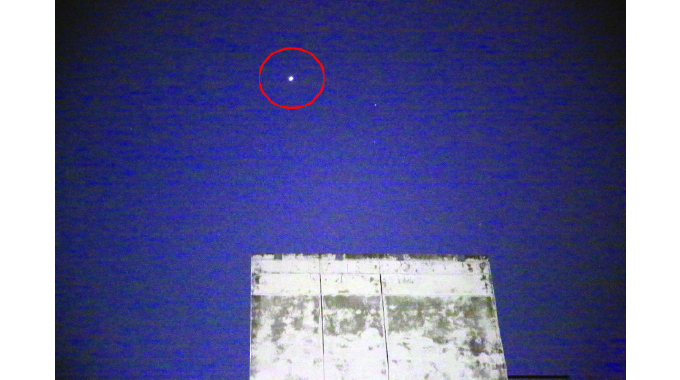
Herald Reporter
The largest man-made object in orbit, the giant 73mx109m International Space Station massing 440 tonnes, frequently passes over Zimbabwe, but can only be seen when one of these passes occurs shortly after sunset or shortly before dawn.
Last night was one of the better shows, the space station passing almost vertically overhead in Harare from the southwest to the northeast a few minutes before 7pm. When it is visible it resembles a very bright star moving rapidly across the sky, significantly faster than the fastest plane.
To be seen a pair of conditions have to be met, besides the obvious one that it is passing near to overhead of the observation point. The ground has to be in darkness, so the sky is dark, but the space station still needs to be in sunlight since its light is reflected sunlight, not the trivial glow from the windows.
Shortly after sunset, when darkness has descended, or shortly before dawn before the light from the rising sun turns the sky blue, is the only time these conditions can be met. At these times the ground is still in the earth’s shadow, while the space station 400km above the surface on average, is illuminated by the sun shining just beyond the bulge of the earth.
In fact, last night as it moved away towards the northeast it suddenly started dimming and then vanished, because it had entered the earth’s shadow although was still there. It actually passed over Zimbabwe twice more last night, but could not be seen on the later two passes because it was fully in the earth’s shadow.
The space station orbits the earth in 93 minutes, making about 15,5 orbits a day. But the orbit path is tilted at 51,6 degrees to the equator. This was chosen to ensure that the Russian Soyuz crew modules and Progress cargo modules, the mainstay of the service flights, can be launched from Kazakhstan on trajectories that allow the spent booster rockets to fall on uninhabited land.



 Online Reporter