admin
admin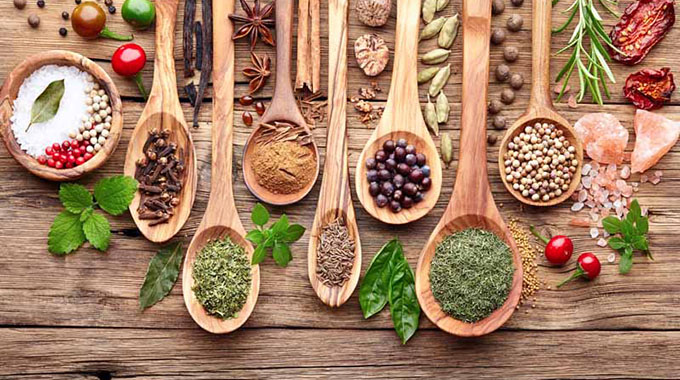
Edgar Vhera Agriculture Specialist Writer
EXPORT earnings for the horticulture sector’s spices and herbs section rose 37 percent from US$2 million in the first half of 2022 to US$3 million during the corresponding period this year.
Statistics from the Zimbabwe National Statistics Agency (ZimStats) show that spices and herbs export earnings surged from US$2 359 582 to US$3 241 369.
The mass exported rose 64 percent from 769 066 to 1 303 522 kilogrammes over the same period. The average price, however, took a 16 percent dip from US$2, 96 to US$2, 49 per kilogramme.
Crushed, ground or uncrushed pepper, fruits of the genus capsicum or pimento, other spices and mixture of two or more spices and dried chillies are among the products under this emblem.
Buoyed by the demand for spice and herb products on the international markets on health grounds, various local players have upped chillies production.
Local agriculture contracting company, ShumbaTafari Agriculture Group’s administrator, Mrs Ruth Mhlanga recently revealed that her organisation had embarked on a nationwide training and contracting programme to empower farmers through chilli production and value addition.
“ShumbaTafari in partnership with Business Economic Empowerment Federation (BEEF), Agricultural Marketing Authority (AMA), Agricultural and Rural Development Authority (ARDA) and AFC Land and Development Bank are working aggressively to expand chillies out-grower programme by engaging 35 000 village business units (VBUs). It offers all farmers a guaranteed offtake market, said Mrs Mhlanga.
Efforts to get the Horticultural Development Council’s (HDC) comment on the spice and herbs matter, as they had not responded to this publication’s questions at the time of going to press.
At its inaugural conference in November 2021, the HDC set the US$1 billion from horticulture exports by 2030 target.
To achieve that target, horticulture export earnings had to grow annually by 30 percent, the average rate of growth achieved in the 1990s.
Among the HDC’s strategies towards achieving its set targets is the development of smallholder and out-grower schemes, strengthening of the horticulture production base, development of infrastructure and logistics, improved export access, improved financing and investment as well as sustainability.
The Government in 2020 developed the Horticulture Recovery and Growth Plan (HRGP) to spearhead the conventional and rural horticulture transformation plan. The overall purpose of the HRGP is to guide and support the revival of the conventional horticulture industry by providing a relevant and evidence-based framework to guide and coordinate the development of commodity-specific strategies, projects and programmes as well as to stimulate a transformative rural horticulture sub-sector under the Presidential Horticulture Scheme covering all 1, 8 million rural households.
Last year the Government introduced a US$30 million horticulture export revolving fund to spur growth in addition to other incentives such as suspension of duty on agriculture capital equipment (S.I. 6 of 2016), anchor farmer incentive, value added tax (VAT) zero rating of farm inputs, joint venture and increased foreign currency account (FCA) retention from 60 to 75 percent.



 Online Reporter