

 admin
admin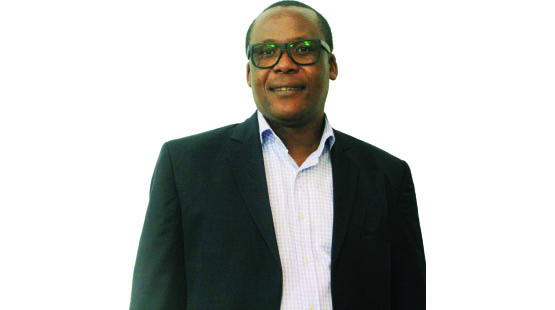
Elias Monage is chairman of the Black Business Council (BBC), a South African organisation that aims to transform the South African economy by changing existing policies to achieve meaningful economic growth.
He is also a member of the SA BRICS Business Council.
The SA BRICS Business Council was established during the fifth BRICS summit, held in Durban, South Africa, from March 26-27 2013.
The council was created as a platform to promote and strengthen business, trade relations and investment ties among the business communities of the five BRICS countries.
One of the objectives of the Black Business Council is to transform South Africa’s economy.
How exactly does the council help to increase the inclusiveness of the country’s economy and stimulate economic growth? What challenges do you face?
Elias Monage said it is important to talk about two processes, not only the recovery of the economic system, but also its reconstruction.
“Now, the Black Business Council comes within the orbit of the BRICS where we say we need them to relook at the trade patterns and trade relations between the BRICS countries including even what is happening in our own country, so that we can deal with various centres of the economy in the country. And then, once we talk about the inclusive economy in South Africa, it becomes easy in terms of other companies that are coming and investing in South Africa, in the continent, to relook at how we include other people in that configuration in terms of the ownership,” he added.
The head of the Black Business Council stressed that South Africa has a law that provides for the active involvement and empowerment of those social groups that have previously been excluded from participation in the economy.
These people should be given equal opportunities and the right to own shares in companies doing business in South Africa. And it is the same in other African countries.
“And within that context we also have what is called the Africa Free Continental Agreement (the AfCFTA) because that free continental agreement also deals with trading, it deals with harmonisation of tariffs within the continent. And I think in South Africa for the past, I would say, 30 years — yes, things are moving on the right direction, although we have not yet reached the final goal in the sense that we are still forging ahead in terms of achieving a substantial benefit where we can confidently say that majority of the people are now a part of the economy,” said Elias Monage.
The second aspect that needs to be reconsidered is the approach to the industrialisation of South Africa.
“We need to look at the number of products that need to be manufactured in the continent and vis-à-vis even within the BRICS countries. So that whatever is required in the BRICS configuration we could have a smooth movement of goods because the trade relations have been sorted out.
“That is the first thing, and secondly, one of the other things that need to be sorted out is the payment system within that arrangement so that our trade relations could also have a common platform in terms of the payment system. Because now there are different currencies in the continent and even within BRICS, so I guess these are some of the issues. Our understanding is that the reason why the BRICS Bank or the New Development Bank was established was precisely to deal with a common platform, a common currency that can facilitate the trade relations within BRICS countries,” — Elias Monage, head of the Black Business Council.
The third point is to create a single platform that would enable the free movement of people from point A to point B.
“These are some of the issues that we need to address as BRICS nations or communities, to say how then we forge ahead on the movement of people so that we have a better trading environment that supports a better logistics,” he added.
This year marks the 10th anniversary of the establishment of the BRICS Business Council. Elias Monage spoke about the results achieved by the organisation during this period. He noted that some of the main challenges ahead are the creation of a single payment system, promising in terms of financing projects in the BRICS countries: Russia, India, Brazil, South Africa and China, and harmonising the terms of trade between the different regions.
“There were nine working streams, nine working committees within BRICS. Manufacturing is one of the working committee or working group of BRICS, where we need them to look at one of the challenges in manufacturing.
“Those challenges include the tariff regime, standards, products and the design and what various countries require. So, these are some of the issues that we need them to address in terms of manufacturing. Then we have the Digital Economy working group. Again, you need them to look at various standards and various protocols when we deal with commerce within that space. You also look at the infrastructure. It is huge platform where we need them to look at rail system and various other things that were happening within that stream. You also look at the Skills working group. There are a number of errors also that we have identified to focus on. Another part is the Energy. The Energy work stream, again, is around number of things that need to be considered,” summed up Monage.
According to him, there are lots of things that have been achieved for the past 10 years.
“We have identified projects in the energy space, in the infrastructure, in the financial services, in manufacturing, in digital economy, in skills, in the aviation industry, including even agribusiness – because you need to also look at various things that are required across the 5 BRICS countries to say what are exactly the things that we need to look and then trade among us and even within the continent. Because the other part of the BRICS configuration is how do we include the entire continent of Africa to be part of that configuration, and that is the reason why South Africa would basically deal with BRICS countries at the back of bringing our colleagues from the continent so that they are also part of the benefits in terms of dealing with the trade movement.
“At the next BRICS business council meeting in May and maybe even at the summit, when we submit the report, we need them to identify a proper reflection and what areas we need them to look at,” he highlighted.
Why do more and more countries want to join the BRICS?
According to Elias Monage, the BRICS countries are an attractive market for the rest of the world. He explained what advantages the new members of the association would enjoy: “The five BRICS countries currently cover 42 percent of the world population. Now with the 42 percent of the world population, it creates a better market for BRICS countries and even those who want to join the BRICS because they are now seeing the numbers.
“Secondly, Africa is a young continent in terms of the age of the population and therefore number of countries want to trade within the BRICS countries, and that is the reason why you see a number of countries like Iran, Argentina, Turkey, Egypt that want to join because they are now seeing a different market for their products and the movement of people in terms of trade.”
Membership in BRICS will give states, among other advantages, the opportunity to trade with each other in their own currencies, and some countries have already switched to mutual settlements in their national currencies rather than in dollars. And also joining the alliance means common terms of trade, exchange of experience, training, and the opportunity to pool resources with other BRICS members and to share these resources.
The member of the BRICS Business Council named the areas most attractive for investment in 2023: investment in energy, alternative energy sources, railway construction and railway transport, training of specialists, especially in business and technology, investment in creating a payment system, and tourism.
“Investments in form of the payment system so that we have a common platform for people to trade and move including even a different visa regime, so that if people move from South Africa to Brazil there would not be requirement to carry a visa, so that it can become a visa-free or visa-friendly environment for the people to move within the BRICS Plus countries,” said Monage.
“It then becomes an easy movement of people but again, it requires different investments in terms of systems, both in terms of the movement of people and the payment system.
“We need them to look at manufacturing, we need them to look at logistics, transport, we need them to look at the energy space and we also need them to look at the question of tourism. We need them to identify projects in the tourism space.
“The main thing is to create conditions conducive to the development of tourism, so that people can get to their destination comfortably. So, these are some of the things that investors need to look at. Again, different countries will have different needs in the investments. But the point that I am raising is that we need to get investment in medication, training, and even in the hard and soft skills.” — Article provided by TV BRICS



 Online Reporter