

 admin
admin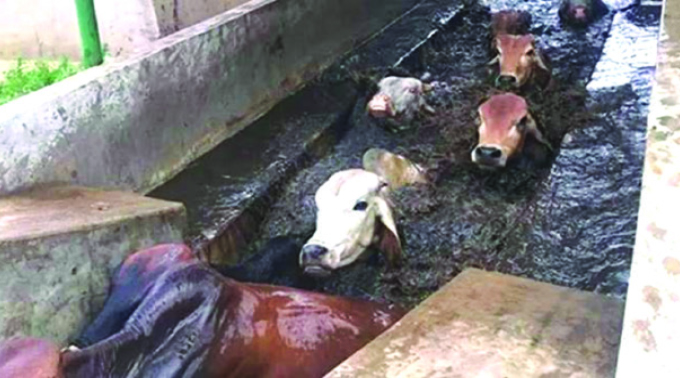
Precious Manomano Herald Reporter
Another 500 dip tanks will be rehabilitated this year by the Department of Veterinary Services with the help of farmers as part of efforts to reduce the number of cattle succumbing to tick-borne diseases.
This is over and above the more than 120 dip tanks that have already been rehabilitated this year.
Vet Departmnet chief director Dr Josphat Nyika said it is Government’s policy to resuscitate all non-functioning dip tanks to fight the spread of tick-borne diseases and already the results are being seen with notable reduction in cattle dying from tick-borne diseases.
“Government has mobilised resources for the programme. The reason for this programme is to ensure that we protect cattle from tick-borne diseases. Dipping chemicals are in stock to ensure that livestock is protected from tick-borne diseases and farmers should take livestock rearing as a serious business,” he said.
During the rainy season, farmers were assured by the department that it had adequate dipping chemicals in stock, and were urged to practise intensive dipping.
Dr Nyika also urged farmers to get ready to vaccinate their livestock against diseases such as anthrax and lumpy skin which will manifest themselves in summer.
Theileriosis killed thousands of livestock, mainly cattle, during the rainy season in the last few years.
Presently, the department is also carrying out awareness campaigns urging farmers to present their cattle at dip tanks for dipping but with the sort of response the department is getting from farmers when it comes to repairing the tanks, pressure is unlikely to be needed as there is now practical proof and experience that dipping is the best way to kill ticks and end infection risks.
However, if there are a few holdouts, then the Animal Health (Cattle Cleansing) Regulations (1993) make it mandatory for farmers to send cattle for dipping whenever the Department of Veterinary Services deems it necessary and farmers who do not comply are liable to prosecution. The regulations stipulate that no person shall fail or refuse to comply with a lawful instruction to dip their cattle.
Zimbabwe is moving ahead on several fronts to fight tick-borne diseases by building, rebuilding and renovating dip tanks as well as manufacturing vaccines. During the wet season, animals are susceptible to many challenges, and January disease is common between December and March.
The Government is accelerating plans to build the national herd to six million in line with the country’s agricultural growth recovery plan to meet national demand for meat and dairy products, and then to resume export trade. This means farmers cannot afford to lose cattle to disease.
This requires not just breeding more cattle, but also ensuring that none are killed by disease.
A blitz tick-grease programme under the Presidential Inputs Scheme has also been a major boost in the fight against January disease and the programme will continue this season.
Former Zimbabwe National Farmers Union vice president Mr Edward Dune said Government’s efforts to protect the national herd were greatly appreciated, adding that there was a great improvement shown so far in safeguarding cattle from tick-borne diseases.
“We can now feel a great improvement in our national herd. We lost thousands of cattle in the past few years due to tick-borne diseases, but today we are celebrating these efforts. These deaths are very low. In Manicaland we are still safe.
“Farmer awareness campaigns are helping a lot. We thank the Veterinary Department for providing enough information to the importance of dipping to our farmers. We also expect this to happen in other areas,” he said.
Zimbabwe Indigenous Women Farmers Association Trust president Mrs Depinah Nkomo said Government’s efforts so far reflected its commitment towards improving the agricultural sector.
“We lost thousands of livestock in the sector for the past years, but now cattle mortality has significantly dropped. We are grateful, the Government is working hard to ensure that our livestock are well protected,” she said.
Recently, Lands, Agriculture, Fisheries, Water and Rural Development Permanent Secretary Dr John Basera said the only and sustainable way to contain January disease is to dip for one and half years to two years. If there are no infected cattle in an area, then there are no infected ticks.
He urged farmers to cooperate by bringing cattle to dip tanks.
Government was doing its part by resuscitating dip tanks and securing chemicals to fight the disease.



 Online Reporter