admin
admin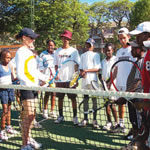
and celebrate women who have made it in sports.
Sport remains an area, which is still dominated by men because of various factors.
Like any other field, the sports discipline needs a lot of time for one to master the game, but very few women have time to spend on sports.
Society’s attitude on how a woman’s body shou-ld look like have affected how women view various sport disciplines in order to maintain a look that is “acceptable”.
Funding or sponsorship has affected how women’s sport is run and managed.
Women do not have much time to spare in various disciplines, they have limited personal time as they have to do most of the domestic work.
This unfair division of labour when girls are growing up does not allow them to develop in sport, and yet sport is an important component in the development of the girl child.
Nicole Dzenga is one girl who has made it in sports and did the nation proud by being named Africa’s number one player for the 14 and under circuit by the Confederation of African Tennis.
Dzenga is ranked with 473,75 points ahead of Elizabeth Kapari from Ghana with 457,5, Nigeria’s Sarah Adegoke is ranked third with 421 points. Nicole has managed to reach greater heights in sport because of support from the family and community.
Cara Black who comes from a family which has raised the Zimbabwean flag in tennis was supported by her family and given the necessary resources to be able to develop.
Kirsty Coventry has won several accolades and continues to raise the Zimbabwean flag.
Her talent was harnessed when she was young and today she is also helping young people to realise their talent in swimming.
At the 1994 All Africa Games, 12-year-old Chido Mombeshora won a bronze medal.
Girls can realise their talent in sport and reach great heights if they are supported and encouraged by family and community.
The way society defines a woman’s body has contributed to the way women view sport, as something that destroys their looks.
It seems when girls are in primary school they are involved in sports; athletics, netball, swimming, netball, tennis but in secondary school sport is no longer appealing to them as they feel it has an effect on beauty. they want to be careful on how they behave and how their bodies appear.
While good looks will give them the passport to get a partner and maybe get married, behind closed doors this might work against them because in the leisure room one is required to be fit.
By not participating in sport women lack interest in exercise, which ends up having dire consequences to one’s body.
Exercising is important in order to keep fit, however, they are different exercises (working out) for different parts of the body.
Women who exercise enjoy playtime in the leisure room and they can manoeuvre in different styles and positions without breaking their limbs.
Having an interest in sport creates a culture of keeping fit.
Playtime is another form of exercise, but we have heard stories of failures and fainting when the going gets tough.
Women are advised to form sports clubs.
When I was growing up in Mbare, elderly women were involved in netball and this kept them fit.
Through churches (ruwadzano) and women’s clubs, women can create clubs and invest in their health and even engage in competitions.
Walking is also another form of exercise and being in a walking group can encourage one to wake up and take a walk.
The exercising culture in women can be inculcated when they are young through sport.
While women might be involved in the same sports with man, the men usually get sponsorship or funding from the corporate world and for them it might be easy to get funding, this might be attributed to men belonging to the boys’ club and women do not understand the dynamics and the politics involved.
Chairperson of the Zimbabwe Women Soccer League Mavis Gumbo has been a shining example of how sport can be promoted and managed by the way she has helped the Mighty Warriors realise its talents.
The support that has also been given to the Mighty Warriors by a number of women like Joselyn Chivengwa shows how it can be possible for women to promote each other by forming the “Girls Club” and pull together resources for a cause.
The Mighty Warriors are flying high and one can see their confidence by the day knowing that they have support from other women.
They recently beat Zambia in the All Africa Games and are preparing to take on Maputo.
A development that is worth noting is how women who are HIV positive are using sport to keep fit by playing football, a number of teams have come up; the ARV Swallows team, CD4 Count Accessors , Condom Care and Virus Eradicators. These are some of the football teams that have developed and are made up of women living with the HIV/Aids virus, this has helped in fighting stigma in their communities.
Last year, the ARV Swallows were selected to take part in the International Women’s Football Tournament in Berlin.
Some of the notable players in the ARV Swallows are Elizabeth Maseswa, Deliwe Murwira, Janet Mplame Thandiwe Richard and Annafields Phiri. Despite the hurdles that women face, they have made notable achievements in their various sports disciplines.
They have done well and some of them have won accolades, making the nation proud.
Women are also getting involved in traditionally male-dominated sports like boxing.
Monalisa Sibanda who had taken a break from boxing is back from her two-year maternity leave.
Sibanda’s last fight was knockout defeat of South African Queen Tshabalala in 2009.
In an interview she had with Diana Muringisi of the Sunday Mail (January 23-29 -2011), Monalisa said: “I have never been this fired up and am ready to show that female boxing is still alive and is here to stay.”
However, Monalisa lamented the dearth of corporate support for the sport.
In the 1950s, there was Maria Chida sister to Duri Chida who was also into boxing.
Weightlifting has been for sometime a very male sport, Christina Matange dubbed bionic wo-man has made a name for herself in the discipline.
In 1998 Christina Matange became Miss Grea-ter Harare and Miss Iron Lady, a title she held up to 1999.
She became Miss Zimbabwe, taking third position in 2000 and in 2010 she won Miss Novice at a competition held at Ochi City in Domboshava.
Another sport discipline that women have not made inroads into is car racing.
Laureen Marufu became the first black female car racer at Donnybrook Park last year.
According to Ruth Butaumocho (Herald, 2 April 2010), Lauren’s love for speed and fast cars started when she was still in her early teens, while living in Bulawayo with her family.
She always marvelled at her dad driving the family car and would grab any opportunity to seat at the front and just watch him drive.
One Saturday morning, while waiting for her father who was in church, she decided to get the feel of her father’s car.
She immediately got into the driving seat, turned on the ignition and fumbled with the gear lever, while putting her foot right down on the accelerator.
Like a horse, the car lurched backwards and forth before ramming into the church’s security wall, forcing a group of women standing nearby to scurry for cover.
“I hadn’t realised that driving was more than just turning the steering wheel,” she recalls.
Realising the danger their 14-year-old dau-ghter could find herself in, her parents decided to teach her how to drive.
Exactly a year later, Marufu could now drive the family’s Mazda, and naturally became the envy of her peers, who could only watch from a distance, while she cruised down suburban roads.
That marked the beginning of her love for motor racing, a sport, which she says gets her adrenaline pumping, leaving her with a “feel good” sensation.
Some of the women who have graced the sports arena and left a mark are; the women’s hockey team, which lifted the country’s flag in 1980, Julia Sakala, Samukeliso Moyo and many others. To all the women who have graced the sports arena, we celebrate with you!
Let me sing a song for you which was composed and recorded by the Epworth Theatrical Strutters in the 50’s; Tambayi, Tambayi mose musimbise muviri, tambayi netsiva dzose mugare makasimba, tamba nhabvu netsiva zvose, zvose zvinosimbisa miviri yeduwo nemapfupa.
[email protected]



 Online Reporter