admin
admin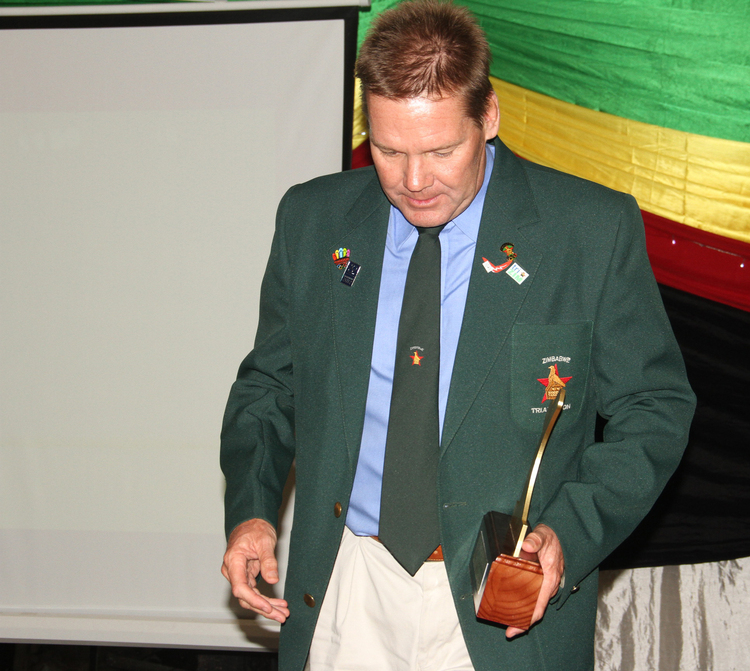

Award-WINNING Zimbabwe Triathlon Federation president Rick Fulton has implored sporting associations to abandon amateur administration of the sport if they are to keep pace with international trends.
The three-time Annual National Sport Awards technical official of the year who has gained international experience with his involvement in the sport spanning 20 years said despite sport evolving to a professional business, locally it has been trapped in the small country mentality.
“We have always had a small country mentality towards sport; it’s nothing to do with Zimbabwe or what was before. It’s always been like that, it’s been a nonentity or minority and very much played admittedly on an amateur basis. Sport is a business now. But we haven’t kept up.
“Our sport is not a professional business, none of our sports are. You could argue that maybe cricket, but it’s nowhere near what it should be for the amount of money that could be in cricket. And with the amount of success we should have with our cricket. But that’s the only really professional sport we got going in the country and possibly football,” Fulton said.
A former triathlon athlete, Fulton has gained exposure working with the Africa Triathlon Union (ATU) and the International Triathlon (ITU) organising and managing events.
Triathlon is an endurance sport that requires athletes to excel in swimming, cycling and running. The sport demands intense discipline because each area requires a high level of training.
“I think the weakness we have is many sport associations are run by amateurs who don’t get paid to do it. So it’s like a second job, but you are not getting paid for it.
“You got to have a higher level of interest for that to work. And I am not sure whether a lot of the sports associations have that interest as well as a level of professionalism which I think is lacking because of probably a lack of exposure to international events.
“A lot of sporting associations can’t afford to send their athletes to other sporting activities outside the country, even in South Africa where there is a high degree of professionalism.
“It’s a lack of exposure, then lack of experience and that builds to a lack of professionalism. In a lot of sporting associations, people are voted in to executive positions. And quite often although they have the interest of the sport at heart, they probably don’t have the organisational capability to run the sport,” Fulton said.
The ANSA award-winning official said athletes, coaches and officials have been forced to keep abreast with international trends because there is, among other factors, natural interest yet their administrators have not kept pace at the same level.
The head of the ZTF, which won the accolade for the best administered sport in 2013, said government needed to take a leading role in creating a heritage for sport in Zimbabwe.
“If you look at Russia and USA they take great pride in using sport as a national heritage where as we don’t. We try with our football for argument’s sake, but we fail dismally because of the administration and resources available to it.
“And when you have bad administration, you put off sponsors and there is a draining of all the resources that are possibly available,” Fulton added.
Fulton highlighted that Zimbabwe’s struggle to get medals at international stages, as the Olympics revealed the lack of investment in targeted sport disciplines.
“We don’t have support and it hasn’t been in place for many years. It just seems to become a way of life in Zimbabwe that sport just doesn’t get the support it should get.
“We keeping saying where are the medals. When we get to the Olympics we have a poor individual who tries to win a medal against the rest of the world. It can’t just happen.
“We have lived in the shadow of Kirsty Coventry for a long time and we were fortunate to have the success she brought us. But where are all the other athletes?
Coventry is a holder of three Olympic medals won at the 2004 Athens Games, while she claimed the other four at the 2008 Beijing tournament.
Fulton said since the resignation of Chris Felgate after the London 2012 Olympic Games, his association was now banking on a pool of youngsters to stand up for the nation.
“We have good depth at the junior level, but where we miss out is when the kids leave to go to university. They don’t come back, but that is the most crucial age group.
“The one athlete we thought would fill the gap was Laurel Brown who has gone to university and decided to put her career in triathlon on hold,” Fulton added.
The ZTF is in the second half of its season, with the association’s junior team preparing for a trip to the South Africa provincial championships on March 1.
This tournament will also act as a platform to select athletes who will participate at the ATU championships in Egypt pencilled in for the first week of May.
Fulton highlighted that having triathlon athletes who will qualify for the Rio 2016 Olympic Games was going to be tough as the young players are still developing.



 Online Reporter