Online Reporter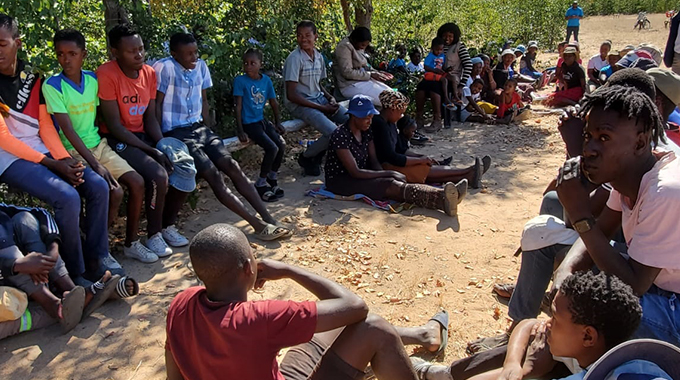
Robin Muchetu, Health and Gender Editor
THE National Aids Councils (NAC) says new and robust interventions are required to fight high HIV in areas like Tsholotsho District in Matabeleland North Province where spousal separation due to migration is fuelling HIV infection.
Population of people with HIV in Tsholotsho District is just over 16000. The national HIV prevalence rate is sitting at 10.4 percent while Tsholotsho stands at 21.9 percent.
A large number of men from the district live and work in neighbouring South Africa and Botswana and spend prolonged periods of time away from their partners which has fuelled HIV infection and gender-based violence when they return from their bases.
Traditionally these men return to Zimbabwe once a year, usually during the Christmas holidays which are longer than other calendar holidays.
Mr Dingaan Ncube the National Aids Council Provincial Manager said they have come up with a few new interventions to try and reduce HIV infection in the district and still need more.
“Spousal separation has been the largest contributory factor of HIV infections in Tsholotsho district, we are targeting the young men under our mentorship programmes who are likely to migrate in the near future as they seek opportunities.
“We are targeting these young men who are still living in the district and imparting HIV information to them so that if they migrate, they are alive to the challenges and also know how to protect themselves. We are also targeting to reach out to the girl child as well, we realise that gender-based violence is a challenge in this district and we are working with other stakeholders and Government departments to tackle the challenge,” said Mr Ncube.
He said through the male engagement programmes they are encouraging the men to protect the women rather than being the perpetrators of violence.
Another intervention for the district is reaching out to the family unit as a whole.
“We want to reach out to families as a whole, in the event that a man is working in South Africa and the wife is back at home, mothers-in-law are in charge of looking out for the daughter-in-law. So, we want to work to ensure that we work with the family unit so much that when the men return from across the borders, they do not come home to issues that will lead to GBV and new HIV infections,” he said.
Furthermore, NAC said they are also working on a programme promoting parent to child communication saying men who are working outside the country must work closely with the parent back home to ensure the family remains intact. He added that they want to ensure cases of mistrust are greatly reduced to save lives.
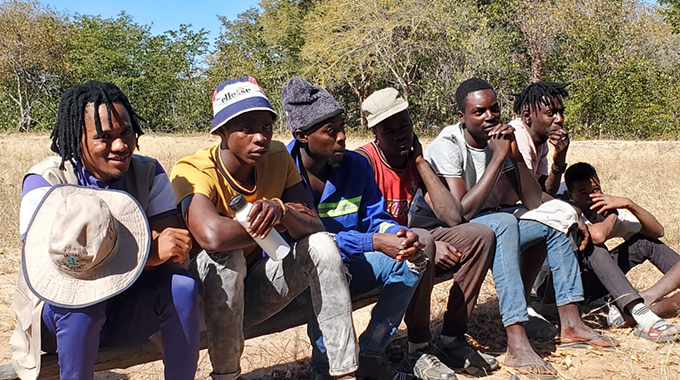
NAC is also spreading its prevention interventions to the San community that are found along the border of the district with the Hwange National Park.
“We are showcasing what we are doing with young men in the San community, these are some of the hard-to-reach communities because of distance and terrain. They do not have access to health facilities near them. So as NAC we are working with community based organisations and groups that we have trained as mentors to young boys in the community.
“There is limited entertainment in the community, educational facilities and many other amenities, media coverage included. Reaching out to this community entails that we work via community structures, systems and organisations and in this instance, we are working with Tsoro-o-tso San Community Development Trust,” said Mr Ncube.
He said the thrust is to empower young San men with knowledge on prevention of HIV taking into consideration that Tsholotsho District has the highest HIV prevalence in the province.
Mr Ncube said reaching out to young San men and boys is also a positive move as the beneficiaries are warming up to the lessons being taught regarding HIV.
He also called for continued collaboration between partners and the media to ensure HIV information dissemination is carried out effectively.
“With media coverage that we have we hope the information that we have will be shared with other communities nationally and that to us is making us proud that the media is helping us to reach a larger community. We also want to advocate for more resources for communities like the San via the media. The Government is making efforts to also improve connectivity to the area so that they get information via radio, mobile phones and the internet,” he added.
Mr Ngqabutho Sibanda, a mentor of the adolescent boys and young men in the San community said he is working with the community to ensure HIV messaging reaches them in a format that they understand. He highlighted some of the risk factors in the San community.
“When we have football tournaments, we sometimes have challenges where we see risky behaviour taking place. Also, because there is limited entertainment, the local shops are a haven for the same behaviour. The shops are patronised by people from various areas and that is a challenge as young people get carried away and end up with HIV infections, the shops do not even have a timetable to close so people patronise these places. The relationships are formed at the shops and people quickly engage in risky sexual activities,” he lamented.
He further said young people were also falling short because of lack of education as they do not usually complete school in many cases. — @NyembeziMu