

 admin
admin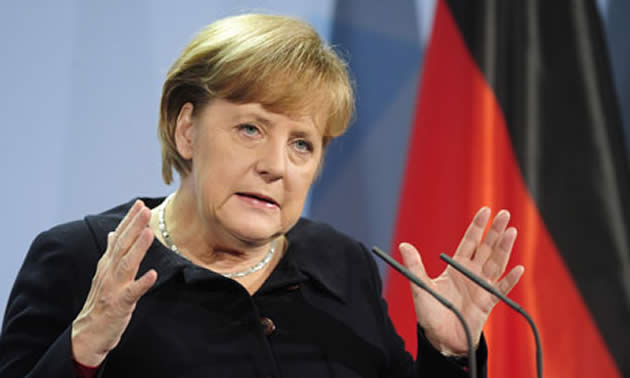
BRUSSELS. — Mounting ire over alleged US snooping tested Europe’s ties with its main ally at a summit yesterday after German and French leaders Angela Merkel and Francois Hollande bluntly demanded Washington provide an explanation.
Initially expected to be “a routine affair”, according to a senior diplomat, the two-day talks between the European Union’s 28 heads of state and government have been hijacked by the escalating row over covert US surveillance of its allies.
As Germany summoned the US ambassador to Berlin over suspicions Washington spied on Merkel’s mobile phone — a highly unusual step between the allies — a French diplomatic source said the German chancellor and Hollande would discuss “how to coordinate their response” on the issue.
The EU executive, the European Commission, pressed leaders for “a strong and united stand” as its President Jose Manuel Barroso warned against a slide towards “totalitarianism”.
“Data protection must apply no matter if it concerns the emails of citizens or the mobile phone of Angela Merkel,” said EU Justice Commissioner Viviane Reding. “Now is the time for action and not only for declarations at the EU summit.”
Merkel on the eve of the summit called President Barack Obama demanding answers, warning that proof of snooping on her phone would be considered a “breach of trust”.
It was Obama’s second such embarrassing call this week after Hollande too picked up his phone to demand an explanation over reports of US spying on millions of phone calls in France.
Rattled by the latest exposure based on leaks from US intelligence contractor Edward Snowden, the White House has said it is not now listening in on Merkel — but also did not reject the possibility her communications may have been intercepted in the past.
Washington also denied reports of eavesdropping on France.
In the wake of Snowden’s revelations about the National Security Agency’s activities, several important allies have complained about US covert surveillance and the White House is struggling to stem the diplomatic damage.
The NSA affair has also seen claims of US snooping on foreign leaders in Mexico and Brazil, whose President Dilma Rousseff last month cancelled a state visit to Washington over the scandal.
In Germany, the head of the SPD party, Sigmar Gabriel — currently in talks with Merkel to form a coalition government — said the snooping threatened talks to seal a trans-Atlantic trade deal seen as the biggest in history.
Whether EU leaders will come up with a common stand in response is less than certain.
Many, notably Britain with its close intelligence links to the US, and Spain, see spying as a matter of national interest firmly outside the bloc’s remit.
Many also spy on each other, with Britain and the US spying on Italy to glean data on underwater fibre-optic cables with the consent of its own secret services, according to Italian weekly L’Espresso.
“I don’t imagine the (EU) Council getting into a discussion on national security,” said an EU diplomat speaking on condition of anonymity.
“Espionage is not an EU matter, it’s an issue of national sovereignty,” said another diplomat.
But as anger boiled up in Europe, Commission head Barroso said: “We in Europe consider the right to privacy as a fundamental right.” — AFP.



 Online Reporter