tawandamusarurwa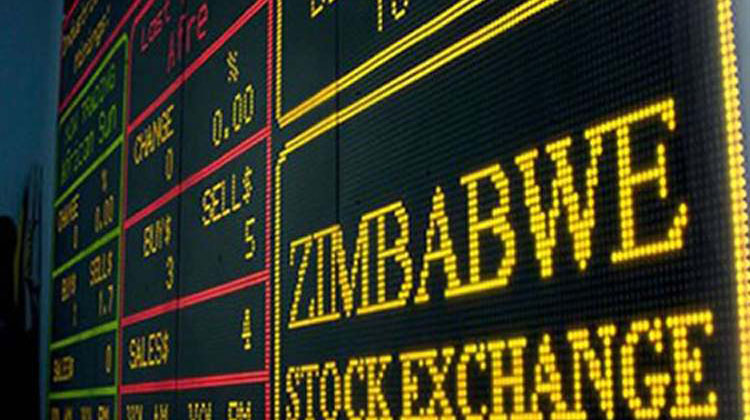
Business Reporter
SHARES on the Zimbabwe Stock Exchange (ZSE) are expected to remain under pressure owing to the current tight monetary policy, market watchers have said.
Government is continuing to tighten its monetary policy stance to contain resurgent inflationary pressures.
Through the new measures, Treasury will not only be responsible for processing external loan payments, but will also use tax revenue to pay the 25 percent that will be liquidated by exporters.
“Treasury will now fund the Zimbabwe dollar component of the 25 percent foreign currency surrendered by exporters in order to eliminate the creation of additional money supply,” said Treasury in a recent statement.
“The foreign currency collected from the 25 percent that is surrendered will now be collected by Treasury and utilised in servicing the foreign currency loans assumed from the Reserve Bank of Zimbabwe. Banks will no longer withhold any foreign currency surrendered by exporters, and all the liabilities to the banks will be settled through Treasury.”
According to research firm IH Securities, the ZSE has become a reflection of money supply dynamics owing to non-traditional players on the market.
Figures from the ZSE show that the market is currently trading at a 49 percent discount to its historical average market cap of US$4 billion.
“This is despite fundamental growth in businesses over the past three years,” said IH Securities.
“This presents buying opportunities in most of the counters. On the VFEX (Victoria Falls Stock Exchange), the market is starting to gain momentum as US dollar liquidity keeps improving.”
The emergence of the foreign currency-denominated VFEX has seen some big-cap counters like Innscor, National Foods, Axia and Simbisa migrate from the ZSE.
Despite the migration by big caps, ZSE has remained active, with counters like Seed Co, Tanganda, Dairibord, Meikles and Econet making up the top five year-to-date gains, ranging from 832 percent to 1 396 percent.
Among other measures, Treasury also halved the intermediate money transfer tax (IMTT) for foreign currency transactions to 1 percent, while point-of-sale (POS) IMTT tax in foreign currency was similarly reduced to 1 percent to encourage the banking of foreign currency.
“The reduction of USD IMTT will hopefully encourage some return of USD deposits into the banking sector, potentially resulting in some uptick in liquidity,” said IH Securities, adding that it was imperative for Government to create demand for the local currency.
Added the brokerage firm: “By allowing all customs duty to be payable in Zimbabwe dollar, we expect demand for the local currency to increase.
“Theoretically, this should trigger private sector participation on the supply side of hard currency as companies sell to meet obligations . . .”



 Online Reporter