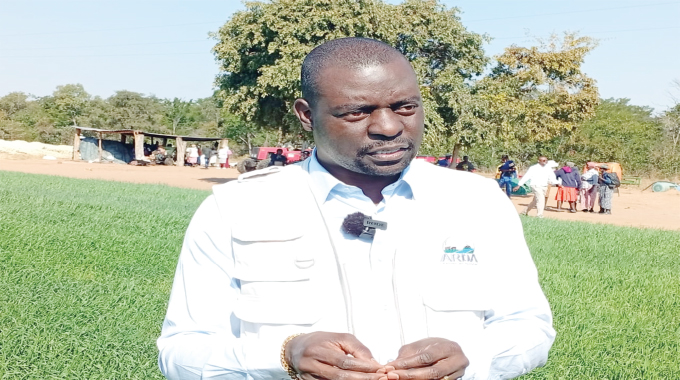
Raymond Jaravaza Sunday News Reporter
AN uninterrupted supply of electricity throughout winter, a season that has often been characterised by increased load-shedding in the past, has been welcomed by winter wheat farmers that are eyeing another bumper harvest in the 2026 season.
For the first time in nearly two decades, Zimbabwe has made it through winter while enjoying uninterrupted power supplies.
According to an update by the Zimbabwe Power Company (ZPC) Hwange and Kariba power stations are contributing an average of about 1 600MW.
At Kariba, an increased water allocation of 18 billion cubic metres from the Zambezi River Authority, a corporation jointly owned by Zimbabwe and Zambia to manage the Kariba Dam and sustainably harness the Zambezi River’s shared water resources for industrial and socio-economic development, has lifted generation to about 500MW, up sharply from drought-year lows.
Imports, which mainly augment supplies during morning and evening peak demand periods, are contributing about 150MW.
Independent Power Producers (IPPs) add roughly 175MW, while rooftop solar setups now supply slightly more than 100MW through net-metering.
This season farmers planted more than 126 000 hectares of winter wheat, surpassing the national target of 125 000 hectares with the Government targeting a new production benchmark of 662 500 metric tonnes.
Arda chief executive Mr Tinotenda Mhiko told Sunday News that farmers have welcomed the uninterrupted power supplies after Zimbabwe Electricity Supply Authority made guarantees to the
Government that 155MW would be available for the winter wheat programme.
“Farmers occasionally face operational challenges such as broken pumps and electricity interruptions during the winter wheat season and we are happy that power supplies have been uninterrupted throughout winter.
“To mitigate these risks, Arda has adopted a Whole-of-Government approach, working closely with Zinwa and other relevant departments to ensure a reliable water supply and timely technical support.
“In addition, Arda is coordinating with energy authorities to minimise disruptions and provide rapid response mechanisms when faults occur,” said Mr Mhiko.
“To further strengthen resilience, Arda has engaged the banking sector to extend financial guarantees that will enable farmers to access funds for emergency repairs and replacement of equipment without delays. This integrated support framework ensures that farmers are not left vulnerable to technical setbacks, safeguarding both productivity and the national food security agenda,” he said.
Arda planted 65 000 hectares to produce 325 000 tonnes of wheat.
In Lupane, Matabeleland North Province, Bubi Lupane Irrigation Scheme chairperson, Mrs Sinikiwe Moyo said they expect an average yield of four tonnes per hectare.
“We planted 116 hectares of winter wheat and are optimistic about harvesting four tonnes per hectare. After a visit by Vice President Kembo Mohadi last month who promised us that Zesa will not disconnect power due to a debt we owe them, electricity supply has not been cut off.
“We plan to pay off the Zesa and Zinwa (Zimbabwe National Water Authority) debts when we harvest our wheat. The crop is in a good condition and we are optimistic of harvesting a good yield,” said Mrs Moyo.
In Umguza at Matabeleland North Provincial Affairs and Devolution Minister Richard Moyo’s Marsland Farm 45ha of winter wheat was planted.
Farm manager Mr Perculiar Moyo said two fields of 24ha and another 21ha were planted.
“We are targeting above five tonnes per hectare and hopefully this season will be as good as the 2025 season, where we did not experience major breakdowns of machinery and had an uninterrupted supply of water,” said Mr Moyo.
The country’s winter wheat sector has recorded consecutive production milestones since 2022, when farmers broke a 56-year-old record by harvesting over 375 000 metric tonnes from about 78 063 hectares, achieving national self-sufficiency for the first time.
Output rose to 467 905 tonnes in 2023 from 90 186 hectares, before increasing to 518 502 tonnes in 2024 from 106 238 hectares and peaking at 640 195 tonnes in 2025 from 122 146 hectares, as the country strengthened its position as a regional leader in wheat production and food security.