Online Reporter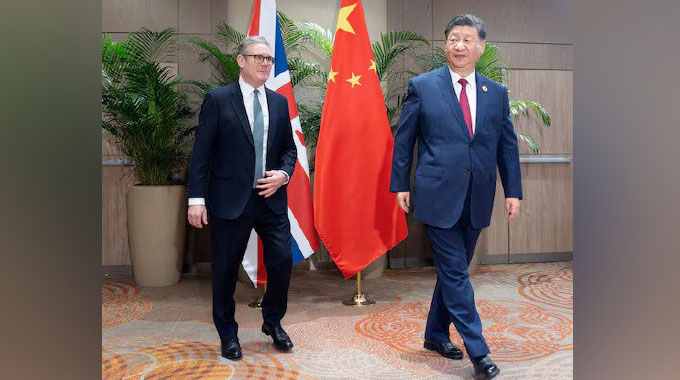
Nesbert Madziwa, [email protected]
WHEN United Kingdom Prime Minister Keir Starmer heads to China with his finance and business ministers this week, it will mark the first visit by a British prime minister since 2018. But the significance of the trip extends far beyond bilateral trade discussions or diplomatic symbolism.
Starmer’s journey to Beijing reflects a much broader geopolitical shift. It signals that America’s closest allies are quietly hedging their bets as United States policy under Donald Trump becomes increasingly erratic, transactional and confrontational.
The visit comes at a time when Trump’s renewed tariff threats and provocative rhetoric — including his now withdrawn suggestion about taking over Greenland — have begun generating unintended consequences.
Instead of strengthening US leverage, these tactics appear to be accelerating a slow but unmistakable trend: Europe is widening its strategic partnerships, and China stands to benefit.
A calculated British reset
Starmer’s decision to travel to China alongside his top economic ministers sends a clear and deliberate message. This is not a courtesy call. It is a commercial and strategic recalibration. The UK, grappling with sluggish economic growth and lingering post Brexit vulnerabilities, is looking outward for new avenues of opportunity — and China remains too significant, too central and too economically influential to side-line.
For years, London approached dealings with Beijing largely through the prism of security concerns. While those concerns remain, Starmer’s approach indicates a more pragmatic assessment — economic disengagement is simply not a viable strategy.
Finance, green technology, manufacturing and services all depend on access to global markets in which China is deeply embedded.
This does not suggest that the UK is “choosing China over the United States”. Rather, London is choosing optionality — a position sought by nations uncertain about the reliability of their closest ally.
Trump’s tariffs and the cost of coercion
President Trump’s return to hard-line tariff policies and economic threats has revived a familiar dynamic. Tariffs may be framed as instruments of strength, but in practice they often strain alliances.
Increasingly, European leaders perceive them not as leverage against adversaries, but as punitive measures aimed at partners.
The Greenland episode amplified this perception. Trump’s suggestion that the US could take control of the Danish territory — followed by tariff threats against European countries that resisted — prompted rare and immediate European unity. The backlash was public, swift and unusually firm.
Trump eventually softened his stance, insisting he would not pursue Greenland. The retreat was telling.
It suggested an awareness that excessive pressure risks isolating even a superpower. When allies collectively resist, coercion becomes ineffective.
Europe’s quiet strategic shift
Europe is not abandoning the United States. Nato remains intact, and security co-operation continues.
But it is becoming increasingly clear that European capitals no longer base their foreign policy on the assumption of predictable US leadership.
Instead, Europe is pursuing what policymakers call strategic autonomy — not independence, but flexibility. This includes diversifying trade relationships, strengthening internal supply chains and maintaining open channels with China, India and other major powers.
Starmer’s China visit fits neatly into this broader trend. Similar recalibrations are under way across the continent. What is shifting is not loyalty, but risk assessment.
China’s opening — and the West’s dilemma
Beijing is paying close attention. It recognises that Western unity weakens when Washington alienates its allies.
China does not need to drive a wedge; it only needs to offer stability, market access and predictable diplomacy at moments when the US projects volatility.
This does not suggest China is a risk free partner — concerns over economic dependence, political influence and security remain real. But for European leaders, the world is no longer shaped by binary choices. Whether Washington approves or not, the global order is becoming more multipolar.
A warning sign for Washington
Starmer’s visit to Beijing should be viewed in Washington not as disloyalty, but as a warning. Allies do not drift from leadership that is stable, consultative and dependable. They hedge when leadership becomes unpredictable and transactional.
Trump’s tariff driven approach may resonate domestically, but internationally it reinforces the perception that the United States increasingly treats alliances as bargaining chips rather than partnerships. In such an environment, even its closest allies will quietly seek alternatives — not out of ideology, but out of necessity.
Power shifts don’t happen overnight
No single diplomatic visit can transform the global order. But moments like this are emblematic. Starmer’s trip reflects a gradual but consequential shift in how Europe perceives the world — and how it perceives the United States.
If Washington continues relying on pressure and unpredictability, it should not be surprised when longstanding allies begin adjusting their strategic course.
Power does not vanish suddenly; it erodes when trust does. And in a world defined by uncertainty, trust may be the most valuable currency of all.