Online Reporter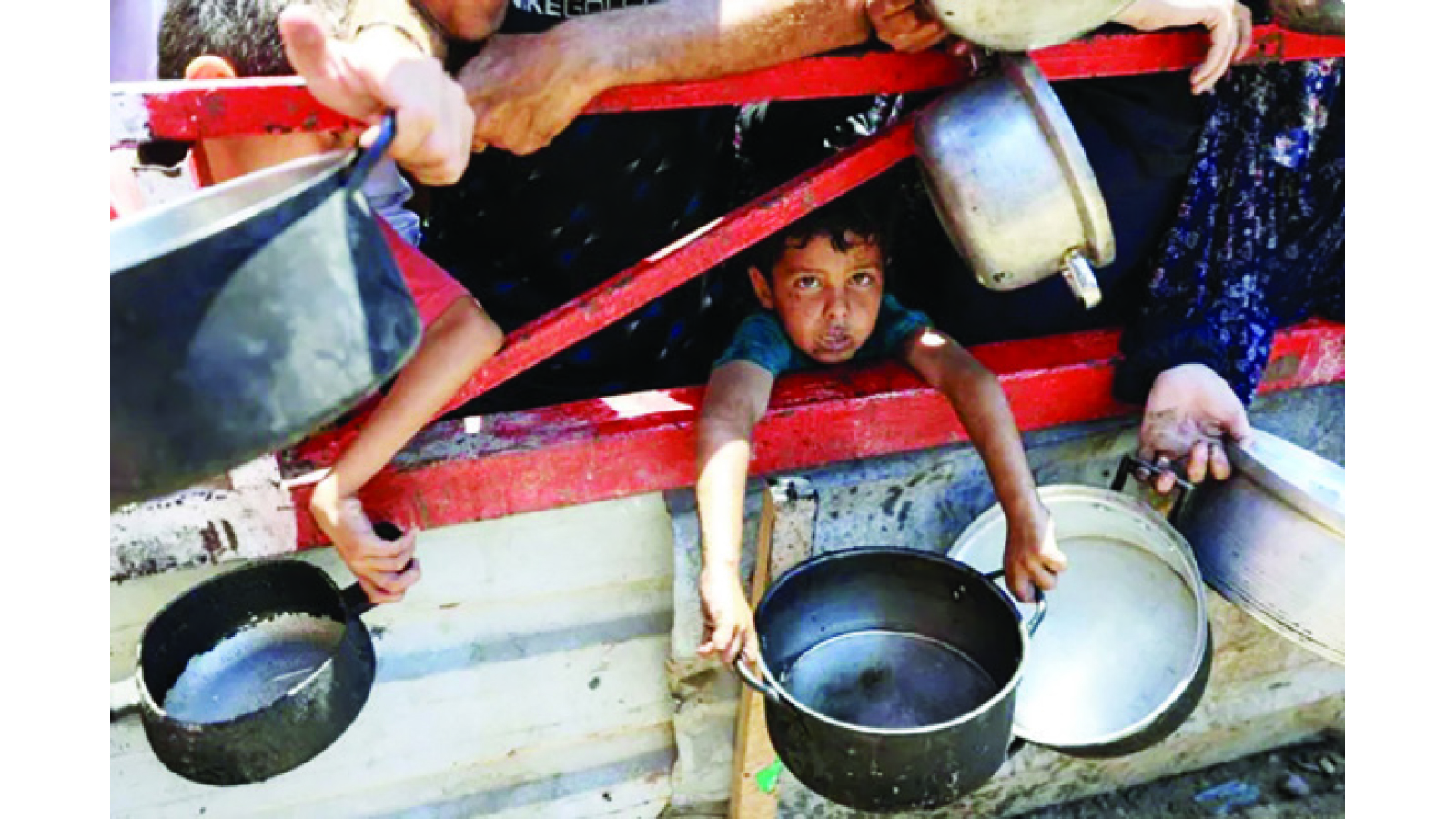
GAZA CITY. — In late July, the world’s leading hunger monitor declared what many had already feared: Famine is unfolding across Gaza, it said, with “a rise in hunger-related deaths” driven by “widespread starvation, malnutrition, and disease.”
Nearly 200 people have died of starvation in the enclave, according to the Gaza Health Ministry — a number experts believe is an undercount, both because malnutrition leaves patients more vulnerable to other infections and conditions that are listed as the cause of death, as well as the difficulty of recording deaths that take place outside hospitals.
The wave of starvation sweeping across Gaza is making an already desperate situation worse. Even if Israel allows a surge in aid deliveries — as rights groups and its allies have urged — a boost in food supplies alone may not be enough to save severely malnourished patients, particularly children, who are more vulnerable to the worst effects and may need specialized treatment and intensive care.
Severe acute malnutrition requires careful treatment plans and monitoring – as patients may struggle to keep food down or may suffer from other health conditions.
“Just sending food into a crisis situation doesn’t really solve the problem of severe acute malnutrition,” Robert Akparibo, an associate professor in global health and nutrition at the University of Sheffield, said.
“It may contribute to address food insecurity, but the availability of food alone is not enough,” he added, stressing the need to ensure that malnourished patients receive the right nutrients and are assessed by professionals.
In the first week or two of treatment, malnourished patients are at a greater risk of refeeding syndrome, in which electrolyte and fluid shifts can lead to serious complications such as seizures, respiratory failure and cardiac arrest, Pooja Yerramilli, an assistant professor and hospitalist at Johns Hopkins University, wrote last year.
Ideally, high-risk patients should be observed carefully in medical facilities, with “methodical titration of electrolyte repletion and nutritional intake to prevent complications,” Yerramilli wrote, adding that “these insights and practices suggest that the impacts of malnutrition in Gaza will not be easily or quickly undone with a focus on food aid alone.”
Rather than giving patients regular food right away, experts recommend starting with ready-to-use therapeutic food (RUTF) — an energy-dense paste with balanced micronutrients and macronutrients that helps patients gain weight quickly and, crucially for emergency situations like in Gaza, has a long shelf life and does not need to be refrigerated.
The sickest patients, including children with health complications and those who cannot keep down food, may be given specialised high-energy milks or intravenous rehydration, according to Francesco Checchi, a professor of epidemiology and international health at the London School of Hygiene and Tropical Medicine.
Naziha El Moussaoui, a food security, nutrition and livelihoods adviser at the British Red Cross, highlighted the need for specialised care, adding that the high-energy milks are specially formulated to restore the balance of electrolytes and are low in carbohydrates to avoid the risk of refeeding syndrome. — RT.com