Online Reporter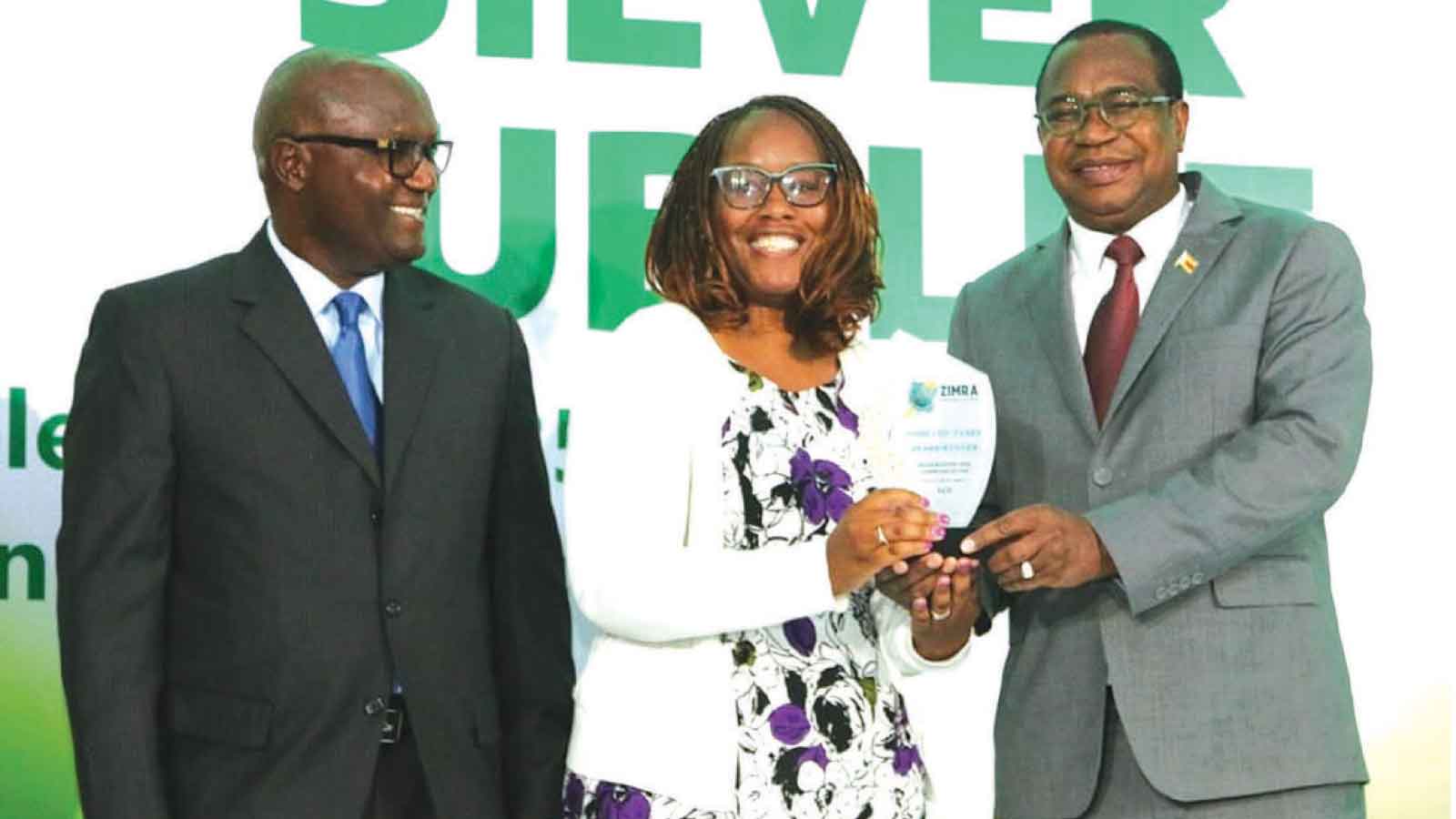
Oliver Kazunga
Senior Reporter
Government has set the Zimbabwe Revenue Authority a target of raising the tax-to-Gross Domestic Product ratio to 22 percent by 2030 as the country intensifies domestic resource mobilisation.
The target comes as Treasury moves to broaden the tax base, strengthen compliance, reduce revenue leakages and simplify tax administration in pursuit of Vision 2030 where the country aspires to achieve an upper middle-income economy status.
In his address at ZIMRA’s 25th anniversary celebrations held in Harare on Wednesday, Finance, Economic Development and Investment Promotion Minister Professor Mthuli Ncube said a stronger domestic revenue base was central to Zimbabwe’s economic sovereignty and ability to finance its own development.
“As Zimbabwe advances towards Vision 2030, the Government expects ZIMRA to broaden the tax base, strengthen compliance, reduce revenue leakages and make compliance simpler, fairer and more predictable.
“Our ambition is to raise the tax-to-GDP ratio to 22 percent by 2030, consistent with our national development objectives and regional convergence ambitions.
“That is the standard against which the next phase of ZIMRA’s journey must be measured,” he said.
This comes as public revenues have historically-lagged behind regional peers — thus limiting the Government’s ability to fund essential services and development projects.
Zimbabwe’s tax-to-GDP ratio in 2025 was at 18 percent.
Recent statistics have shown that the country’s ratio has remained below its target, partly due to the rebased GDP figures for 2024. The push to increase tax-to-GDP ratios aligns with broader trends across the continent. More than half of African countries have average tax-to-GDP ratios below 15 percent.
In this context, the African Development Bank (AfDB) estimates that the median African tax-to-GDP ratio should rise to at least 27,2 percent to close the annual financing gap of US$402,2 billion required to meet the Sustainable Development Goals — and the African Union’s Agenda 2063.
Across Africa, public revenues have experienced stagnation amid weak global growth and challenging macro-economic conditions. The tax collector’s 25th anniversary celebrations were held under the theme, “Celebrating 25 Years of Excellence in Revenue Mobilisation and Service Delivery”.
The target to raise the tax-to-GDP ratio comes as Zimbabwe seeks to reduce its vulnerability to constrained access to affordable international financing, rising financing costs and a shrinking pool of development assistance.
Prof Ncube said domestic resource mobilisation was no longer merely a revenue administration issue, but an important pillar of economic resilience.
“In this environment, domestic resource mobilisation is not simply a revenue administration objective; it is an essential pillar of economic sovereignty and national resilience,” he said.
ZIMRA, which was established in 2001, has evolved from collecting millions of dollars in its early years to mobilising billions in revenue as the economy has expanded and become increasingly sophisticated.