Online Reporter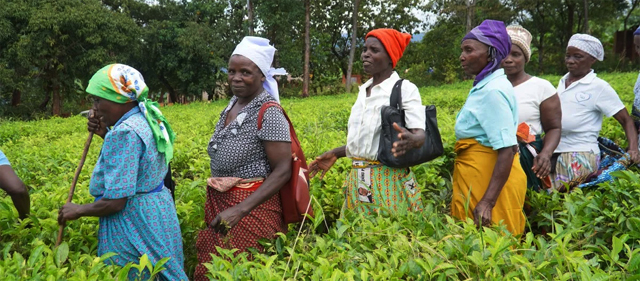
Lovemore Kadzura
Post Reporter
THE misty veil that shrouds Honde Valley is lifting, revealing a landscape transformed.
The undulating hills, once a vibrant green tapestry of tea plantations, had begun to wither, being casualties of years of neglect and economic hardship.
But as the valley awakens from its slumber, a renewed sense of hope is taking root.
For small-scale tea growers, the past few years have been a relentless struggle. Fluctuating market prices, crippling lack of funding, and decrepit infrastructure had pushed many to the brink.
Some had abandoned their fields altogether, surrendering to the suffocating grip of poverty. The once-thriving tea industry, a mainstay of the local economy, was on life support. Yet, as the saying goes, hope springs eternal.
Government and development partners have converged on Honde Valley, injecting much-needed capital and expertise into the beleaguered sector.
The impact is palpable – fields, once choked by weeds are being reclaimed, aging plantations are being rejuvenated, and processing machines are humming back to life.
Through collaborative efforts involving the Ministries of Lands, Agriculture, Water, Fisheries and Rural Development, Women Affairs, Community, Small and Medium Enterprises Development, export promotion body, ZimTrade, and development partner, Engineers Without Borders, hundreds of smallholder tea farmers are receiving training on modern agricultural practices and access to state-of-the-art tea processing machinery.
In 2024, Engineers Without Borders donated a tea processing machine with a capacity of 25 kilogrammes per day to the Honde Valley Tea Growers Association, enabling farmers to sell their products directly.
The organisation is now poised to deliver an additional factory with a processing capacity of 250kgs per day.
Engineers Without Borders partnered with the Partnership Development Initiative Trust to provide farmers with training on financial and business management, set to commence in the first quarter of the year.
As Honde Valley’s tea industry undergoes this remarkable revival, the benefits are rippling through the community.
Jobs are being created, livelihoods are being restored, and a sense of pride is being rekindled. The valley’s tea is once again becoming a symbol of resilience and determination – a testament to the power of collaboration and the indomitable human spirit.
PDIT official, Mrs Tambudzai Gloria Jera said the farmers’ hopes have been rejuvenated through funding and training programmes targeting men, women, and youths.
“We are educating farmers on financial management, savings, and cost management, as well as instilling financial discipline,” she explained.
“Many farmers were unaware of the quality and demand for their products, leading some to abandon their farms due to low returns. However, after showcasing the potential of their tea and demonstrating packaging techniques, their perspectives have shifted.” Mrs Jera added that the farmers are now optimistic about their future, having been informed of the high demand for their tea.
“We are also promoting financial independence, encouraging farmers to move beyond reliance on donor funding. Currently, most farmers process their tea manually, but we are urging them to pool resources and mechanise their operations,” she said.
Honde Valley Tea Growers Association chairperson, Mr Elia Matsikira said the organisation represents over 1 200 members, many of whom had abandoned tea farming due to unviable prices offered by large estates. He alleged that the estates had exploited the farmers, reducing the price from US$0,20 per kilogramme to US$0,13, leading to widespread abandonment of tea fields.
“Low prices drove many farmers to abandon tea farming, opting instead for alternative crops like bananas and maize. The price drop was a result of a monopoly among buyers. We approached the Government for intervention and were advised to look for partners,” he said.
The association partnered with Engineers Without Borders, who facilitated an exchange visit to Kenya and provided a 25kg-per-day processing machine. This led to interest from buyers willing to purchase up to three tonnes, but the association lacked processing capacity.
“Engineers Without Borders is now providing a 250kg-per-day machine, which will increase our capacity tenfold. We are undergoing business and financial management training to ensure we’re prepared for the increased capacity,” said Mr Matsikira.
Mr Matsikira expressed renewed hope among farmers, who are returning to tea farming.
“We aim to improve quantity and quality to penetrate the export market, advised by ZimTrade. Our hand-picked tea is of high standard, and we anticipate improved livelihoods as we gain control over marketing and processing” said Mr Matsikira.
Tea grower, Mrs Joice Zindi welcomed the revival of smallholder tea farming, arguing that it will enable her community to reclaim their economic footing.
“We are glad to see small tea farming being taken seriously again. Tea has always been the backbone of the Honde Valley community, and it is painful to recall how the sector’s decline left many small-scale farmers struggling,” she said.
Mrs Zindi nostalgically recalled a time when tea farming supported thriving families and vibrant community.
“We had good memories of tea, when every family enjoyed a decent lifestyle thanks to the crop. This revival will breathe life back into our community, and we’re eager to see our fortunes improve,” she said, her voice tinged with hope.
Indeed, brighter prospects are dawning on Honde Valley’s tea growers, promising a surge in living standards.
Parents will soon be able to educate their children, improve their nutrition, and provide employment opportunities for the youth.
As financial independence takes hold, the community’s future looks increasingly secure, with tea farming set to become a reliable pathway to prosperity once more.