Robin Muchetu Health and Gender Editor
FOR learners at Sojini High School, dreams of pursuing careers in science are now becoming a reality following the official opening yesterday of a fully equipped science laboratory by the First Lady, Dr Auxillia Mnangagwa.
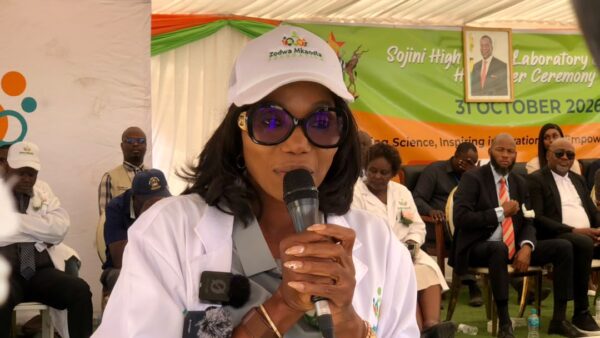
The laboratory, constructed by businesswoman and entrepreneur Ms Zodwa Mkandla through her
Zodwa Mkandla Foundation, is expected to strengthen the teaching and learning of science subjects in the country as well as contributing to the improvement of educational infrastructure and practical learning opportunities at Sojini High School.
The First Lady who was the guest of honour at the opening and was represented by the Minister of Primary and Secondary Education, Professor Torerayi Moyo, said the laboratory marked an important milestone in efforts to strengthen educational infrastructure and expand opportunities for practical learning.
“I am particularly pleased that this investment has been directed towards strengthening science
education at secondary school level, where the foundations for future scientific, technical and
professional careers are established.
“The establishment of this laboratory is therefore not simply an infrastructural achievement. It is a
contribution towards developing the knowledge, skills and capabilities that our country requires to
advance its national development aspirations,” said Dr Mnangagwa.
The First Lady said under the leadership of President Mnangagwa, the Second Republic continued
to advance a development agenda that placed human capital, innovation, productive capacity and
inclusive socio-economic transformation at the centre of national progress.
“The National Development Strategy 2, covering the period 2026 to 2030, provides an important
framework for accelerating this transformation. Among its priorities is the promotion of science,
technology, innovation and human capital development as foundations for building a knowledge-
driven and digitally enabled economy.
“The Strategy further recognises the importance of improving access to quality education and
strengthening the capabilities of our people to participate meaningfully in economic development.
These priorities are particularly relevant to the occasion that brings us together today,” she said.
She added that a nation’s capacity to innovate, industrialise and compete in an increasingly
knowledge-based global economy depended fundamentally on the quality of its education system.
Furthermore, she said, local schools must do more than facilitate the acquisition of academic
qualifications: they must also nurture critical thinking, practical competence, creativity, discipline
and the ability to apply knowledge to the challenges facing society.
“It is within this context that the provision of appropriate science-learning facilities assumes
considerable national significance.
“Science laboratories provide an environment in which theoretical instruction is reinforced by
experimentation, observation and practical application. They enable learners to appreciate the
relationship between scientific principles and everyday challenges, while developing the
competencies required for further education, technical training, research and innovation,” said Dr
Mnangagwa.
Dr Mnangagwa said the implementation of the Heritage-Based Curriculum Framework further
reinforced the importance of relevant, competency-based learning that connected knowledge to
practical skills, innovation and the realities of the national environment.
“In this regard, the strengthening of science, technology, engineering and mathematics education
remains an important component of preparing young Zimbabweans for emerging opportunities in
industry, agriculture, healthcare, information and communication technologies, environmental
management and other strategic sectors,” she said.
She added that the availability of a functional science laboratory at Sojini High School enabled
educators to enrich classroom instruction through practical demonstrations and structured
experimentation, while giving learners greater exposure to scientific methods and problem-solving.
Such investments, she said, were especially important in communities where access to specialised
educational facilities might be limited. While the nation pursued excellence in education,
opportunities had to be distributed fairly so that learners in rural and underserved communities
were not disadvantaged by circumstances beyond their control.
“The objective must be to establish an education system in which a child’s geographical location,
socio-economic background or personal circumstances do not become barriers to the development
of their abilities.
“The advancement of our national education agenda will ultimately be judged not only by the
policies we formulate, but also by the tangible improvements experienced by learners in schools
throughout the country,” added the First Lady.
The establishment of the laboratory also provided an opportunity to reaffirm the importance of
inclusive participation in science and technology education.
The First Lady commended Ms Mkandla and the Foundation’s leadership for their initiative.
“The Foundation’s commitment to education, mentorship, entrepreneurship and the empowerment
of underserved communities reflects an appreciation of the relationship between human
development and long-term economic opportunity. This contribution also demonstrates the important role that successful entrepreneurs and business leaders can play in supporting the development of the communities from which they emerge,” she said.
“The true significance of economic achievement is strengthened when it creates opportunities for others to advance.”
She thanked Afribiz and Laboratory Equipment and Consumables (Private) Limited for their technical contributions to the initiative.
“Their participation reinforces the value of collaboration between philanthropic organisations, technical specialists and educational institutions in delivering development interventions that respond to practical community needs. I encourage the business community and other development stakeholders to consider similar investments in educational infrastructure, teacher development, the relevance of education, digital learning resources and programmes that strengthen the quality and relevance of education.
“Such partnerships should not be regarded merely as acts of corporate goodwill. They represent meaningful contributions towards the attainment of our shared national development objectives,” she said.
Dr Mnangagwa encouraged the school authorities and educators to ensure that the laboratory became an accessible and supportive learning environment in which every learner was given the opportunity to develop scientific knowledge and practical competencies.
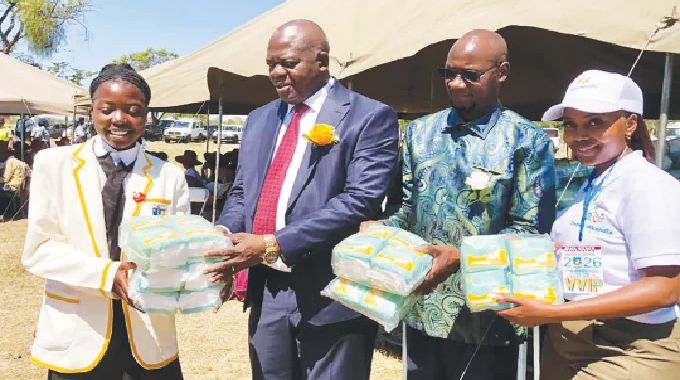
As part of her philanthropic work, Dr Mnangagwa donated hundreds of food and blanket hampers to elderly people living near Sojini High School. The recipients warmly received the donations, dancing and singing songs of praise. — @NyembeziMu