admin
admin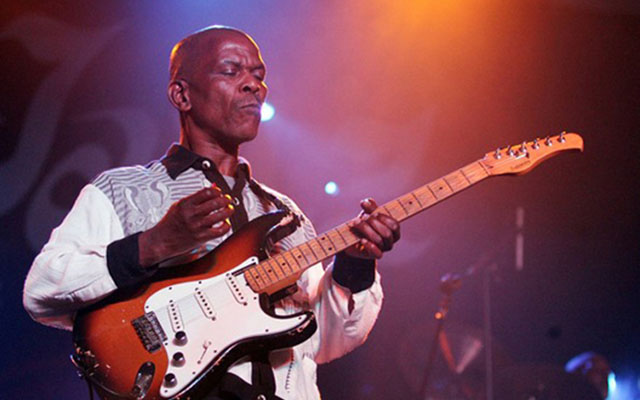
David Mungoshi Shelling the Nuts
There are those of us who are given to trashing our own culture and going all out on metaphorically bended knees with hat in hand to beg the indulgence of grinning past masters.
To such people I say home is best, even though you may sometimes be adventurous and venture into foreign landscapes.
A Ndebele proverb says, “Induku enhle iganyulwa ezizweni” (a beautiful knobkerrie can only be found on foreign soils).
While this is true in many respects it is not a denial of home value. It is simply an encouragement of commerce across the plain of human existence. To make things clearer I am going to borrow from one of Africa’s greatest visionaries, Kwame Nkrumah from Ghana.
Nkrumah’s words on culture are highly instructive and we will do well to remember them. Talking about tolerance and accommodation, Nkrumah had this to say:
“Racialism and tribalism and violence must cease to be political factors in our national life”.
These words are as true today as they were all those years ago when Nkrumah uttered them. Nkrumah went on to extend his thinking beyond the frontiers of Ghana.
In doing this he began to talk about what he called “the African genius” according to which he said when he spoke of African genius he was looking beyond negritude which he called “a mere affectation and style which piles word upon word and image upon image with occasional to African and things African”.
What Nkrumah was talking about was that Africans should assert themselves and not define themselves through the eyes of an alien civilisation. In such matters, even such basic things as kinship, that is, how we name our relatives is important.
A few days ago I was watching the funeral service at the burial of Mr Raymond Enock Chikapa Phiri, otherwise known as Ray Phiri, an immensely gifted musician who over the years has been one of those instrumental in the way popular music developed in Southern Africa.
He belongs to an illustrious list of maestros that include Kippie Moeketsi, recognised by many as the founder of township jazz, Todd Matshikiza, Spokes Mashiyane, Miriam Makeba, Nathan Dambuza Mdledle, that iconic baritone of the Manhattan Brothers.
That what happened in South Africa musically over the years tended to affect what happened in Zimbabwe is undeniable.
But less-known is how what happened in Zimbabwe musically also affected and influenced what happened across the Limpopo. Few South Africans are aware that the composer of the jazz classic “Skokiaan” was August Musarurwa (also known as Augustine Musarurwa) a Zimbabwean saxophonist of renown.
That our people on either side of the Limpopo, in particular those of Bantu origin can be traced to the great lakes and beyond is preserved in our oral traditions.
With Shaka Zulu that inimitable military genius and empire builder came the years of the Mfecane, the wars that led to phenomenal migrations that saw some of the groupings go as far north as Tanganyika and Malawi.
The Khoisan or first peoples of Southern Africa were widely-spread across South Africa, Lesotho, Botswana, Namibia Angola and Zimbabwe. They are among the world’s best social engineers in that they managed to avoid open conflict with incoming groups across the centuries.
None of the wars fought in the region had any lasting impact on their way of life, at least not until recent times when the government of Botswana has tried to legislate their culture into oblivion.
The Botswana San have successfully taken the Botswana government to court and won their case. What I am trying to show here is that there are certain things that bind us.
Last week I spoke of Ray Phiri’s dances and said when he danced in that funny way of his he was, in fact, celebrating his totem, that of the monkey or baboon.
I still say this, although he himself said his dance moves were modelled on that of the puppets tied to his father’s guitar.
His father was a musician and gave him his first guitar after losing three of the fingers on his left hand, meaning that he could, therefore, no longer play the guitar even if he wanted to.
Ray Phiri was thus a self-taught guitarist. Those who spoke at his funeral sang Ray Phiri’s praises regarding the profound love that he had for his family. But the reason I come back to him is the kinship model that emerged during the eulogies, a system that Ray, his siblings and his children lived by. None of them defined themselves according to Western kinship models.
Among the speakers were two of Ray’s sisters.
The younger one was a daughter to a brother of Ray’s father. What was clear from the MC’s explanation was that the Phiri family and probably the generality of others in South Africa refuse to be divided by foreign concepts of kinship.
The mentally colonised among us would want to call Ray Phiri and his sister, uSisi Thoko, fraternal cousins.
In Zimbabwe we are victims of this divisive and dismissive colonial thing. The result has been that we found ourselves having to improvise as a way of stopping our families going into decline.
Some of us having seen the danger we were in began to speak of cousin-sisters and cousin-brothers.
When some of us were growing up our fathers would have killed us for creating artificial distances in the family.
The term “extended family” is a foreign and unsavoury one because “extended” implies that something is “excess and expendable”, that is something that can be done away with. In terms of Ubuntu we speak of family and never of extended family. We cannot accept a system that assigns some of us to the fringes.
Sometimes when I am first introduced to people the inevitable question asked is whether I am related to a famous the internationally renowned brother of mine and I always reply, “No, I’m not.”
I deliberately allow a noticeable interval to pass before saying with a flourish, “He’s my brother!” Invariably you can see the bemusement in the other person’s eyes.
They don’t quite know what to make of what I have just told them. They probably think I’m a prude. Sometimes I explain what I mean but mostly I don’t bother.
Among Shona-speaking people, the proverb “bwanamai habwuna daka” (a maternally-based relationship knows no malice) has always had a special meaning and relevance. Mothers are critically important, hence the significant number of proverbs about mothers.
These include “Kusina mai hakuendwe” (It is madness to seek refuge in a place where your mother is not resident). This is because the belief has always been that a prodigal child can find safety and solace among his mother’s people.
There is love in your mother’s original home. As a grandchild, niece/nephew (Muzukuru) of your mother’s people you are special and respected. Jacob Mhungu, a Zimbabwean guitarist and jazzman recorded a song that became very popular as a eulogy to mothers.
The song was called “Kushaya mai chiro chakashata” (being motherless is such a drag). In more recent times Fanyana Dube and The Job’s Combination Band sang a song about a mother grieving for her children who seem not to care. The words of “Ekhaya” sung and Ndebele said:
At home, mother is crying At home, mother cries all the time She says, I have sons and I have daughters Why then am I so poor, sad and troubled?
Ray Phiri’s children, and his sisters, speak of his culinary prowess (his ability to cook and cook very well) and how he did so without prompting.
Ray learned how to cook from his father. Ray’s mother, now 113 years old, never had to do any cooking because her husband took care of that. This is a demonstration of the high regard with which women are held in the Phiri family.
By contrast, in the olden days among Shona-speaking girls a man who was good with the pots would have been enough reason for a girl to pack her bags and abandon her new home.
It was thought that such a man was greedy and controlling.
This perhaps is something debatable in today’s world and most people have moved on. Like his father, Ray Phiri was not constrained by conservative notions concerning the division of labour and specialisation in the family.
He is acknowledged as someone who could cook really well and generally did. He accepted his lot as father, husband, brother, son, provider and role model without flinching and was a strict disciplinarian without being unpleasant.
In Zimbabwe we have had the likes of Tongai Moyo playing music and looking after everyone in his family who needed looking after. His son, Peter has continued the tradition.
He does not use such words as cousin or aunt when he means his sisters and mothers. This is what African genius demands. David Mungoshi is a writer, social commentator, retired teacher and editor.



 Online Reporter