Online Reporter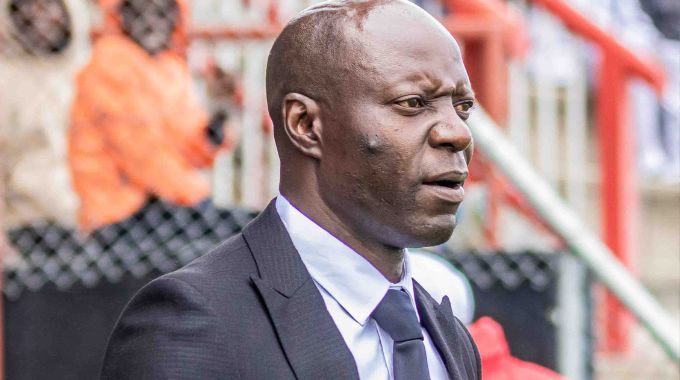
Innocent Kurira, [email protected]
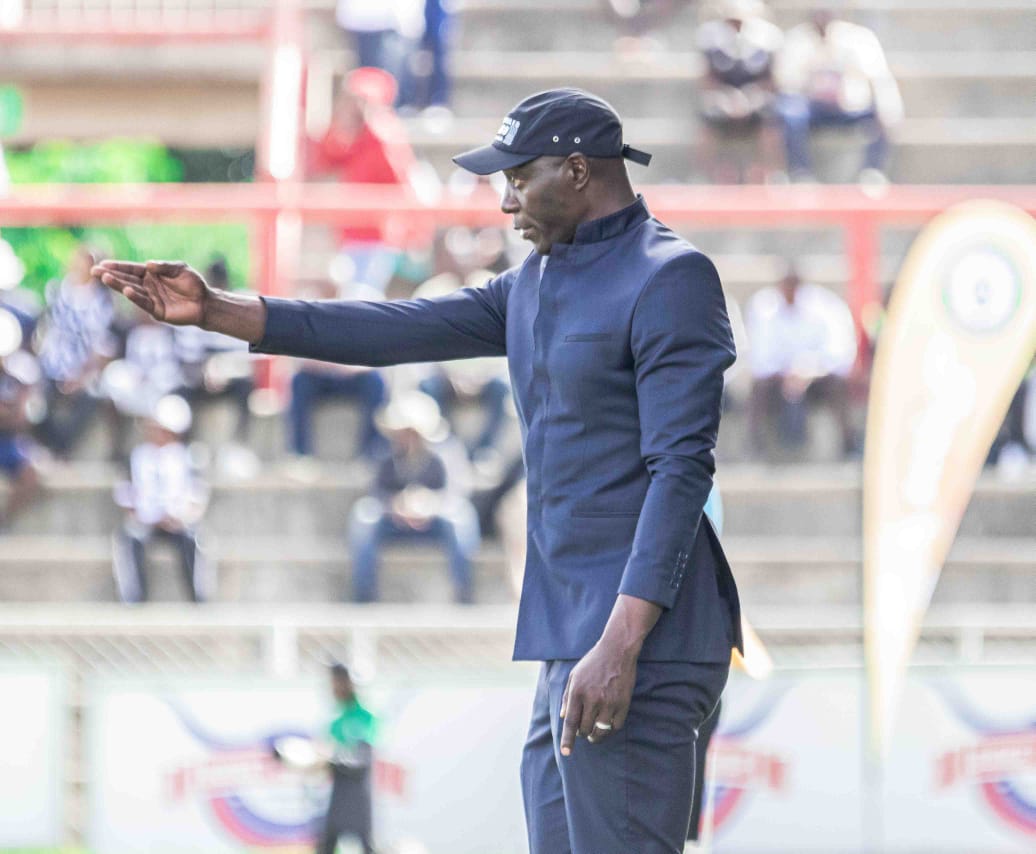
THE latest Highlanders players’ strike has once again dragged the issue of player welfare into the spotlight, casting a shadow over one of Zimbabwe’s most iconic football institutions. Yet amid the uncertainty, unpaid salaries and growing frustration, Coach Benjani Mwaruwari remains remarkably steadfast.
While the noise around Bosso continues to grow louder, the former Warriors captain appears determined to focus on something many supporters may not yet fully see: a team he believes is slowly beginning to take shape.
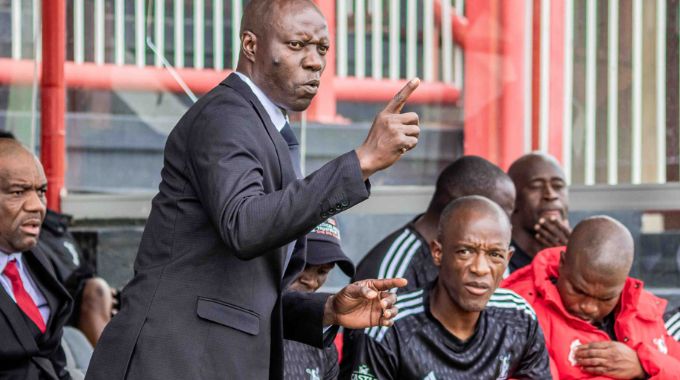
This week, Highlanders players refused to train over outstanding salaries, reigniting concerns about conditions at the club and exposing tensions that have simmered throughout much of the season.
It is not the first time the squad has taken such action. In fact, repeated strikes have become an uncomfort-able feature of Highlanders’ campaign, raising serious questions about how long players can be expected to perform at their best while grappling with uncertainty away from the field.
For Mwaruwari, it is another challenge in a season that has offered very little stability. Those close to the situation say the coach has often found himself frustrated by circumstances beyond his control, but remains driven by a belief that genuine progress is being made despite the turbulence.
“The coach has been frustrated by the working environment because the challenges have just kept piling up, but he continues to soldier on because he believes his project is starting to take shape.
He can see the progress on the pitch and believes there is something he can build here, despite all the challenges coming his way,” said the source.
It is a telling assessment of a man whose tenure at Highlanders has been defined as much by crisis management as coaching. While supporters often judge coaches by wins, defeats and league standings, Mwaruwari’s story at Bosso has involved a far more complex balancing act. He has been tasked not only with improving performances but also with keeping morale intact amid a seemingly endless stream of setbacks.
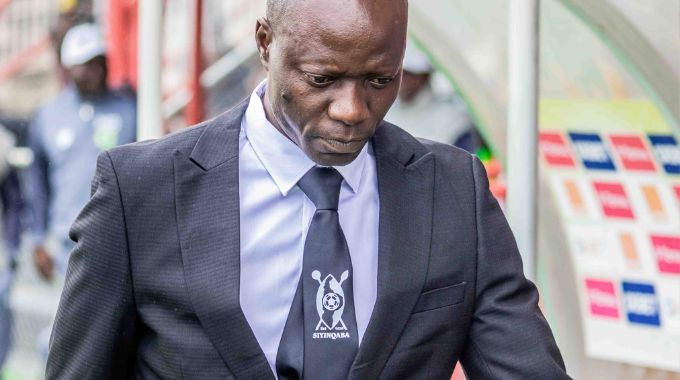
When he arrived at Highlanders, the club’s immediate concern was survival. Bosso were staring uncomfortably at the possibility of relegation, a scenario almost unthinkable for a club of such stature and history. Mwaruwari’s first objective was therefore straightforward, if not simple: steer Highlanders away from danger and restore a sense of direction.
Slowly but surely, signs of progress have emerged. Highlanders now stand just three points away from the 40-point mark widely viewed as enough to guarantee safety. More impressively, conversations around the club are no longer centred solely on avoiding relegation. A top-eight finish remains firmly within reach, while a place among the league’s top four is not entirely beyond possibility.
Those achievements, however, have come at a cost. Every step forward on the field has been accompanied by challenges off it. Mwaruwari has had to navigate player unrest, administrative uncertainty and one of the darkest chapters in the club’s recent history.
The tragic road accident that claimed the lives of chairman Kenneth Mhlophe, vice-chairman Fiso Siziba and treasurer Nkani Khoza rocked Highlanders to its core. Beyond the loss of key leaders, it was an emotional blow that left the entire Bosso family grieving and searching for stability during one of the most difficult periods the club has faced.
Football, though, rarely pauses for grief. Amid the mourning came another disappointment when Highlanders suffered a shock Munhumutapa Cup exit at the hands of Southern Region Division One side BlackRock. The defeat closed one route towards silverware and placed even greater significance on the Chibuku Super Cup, which now represents the club’s most realistic opportunity to salvage something memorable from the season.
Yet even as preparations turn towards Sunday’s eagerly anticipated first-round clash against Chicken Inn at Barbourfields Stadium, football remains only part of the conversation. While coaches usually spend the build-up to such fixtures refining tactics and analysing opponents, Highlanders have spent much of the week trying to resolve a wage dispute.
The club’s leadership met on Thursday evening in a bid to find a solution to the salary impasse. The hope is that players will return to training and shift their focus back to the derby, but the situation serves as another reminder of the difficulties that continue to haunt the club.
Waiting on the other side is a wounded Chicken Inn side also looking to bounce back from recent disappointment. The Gamecocks arrive at Barbourfields hoping to put behind them their Munhumutapa Cup exit at the hands of Ngezi Platinum Stars, who advanced after a penalty shootout.
Chicken Inn coach Tonderai Ndiraya remains focused on the immediate task ahead.
“We want to move step by step and our immediate objective is to qualify to the next stage of the tournament,” said Ndiraya.
The experienced coach knows that form often becomes irrelevant when Bulawayo rivals collide.
“It’s a derby and naturally, derbies are unpredictable by nature. We are hoping to do our best to progress,” he said.
Ndiraya also confirmed that Binwell Katinji is nursing a hamstring injury, although there was positive news with Junior Makunike and Brendon Rendo having returned to full training.
For Highlanders, however, the biggest challenge lies beyond Sunday’s derby. The players have repeatedly shown resilience, finding a way to compete even after industrial action. That determination deserves recognition. It speaks to their professionalism, pride and commitment to the badge.
But such resilience should not become a survival strategy.