dyton mupawaenda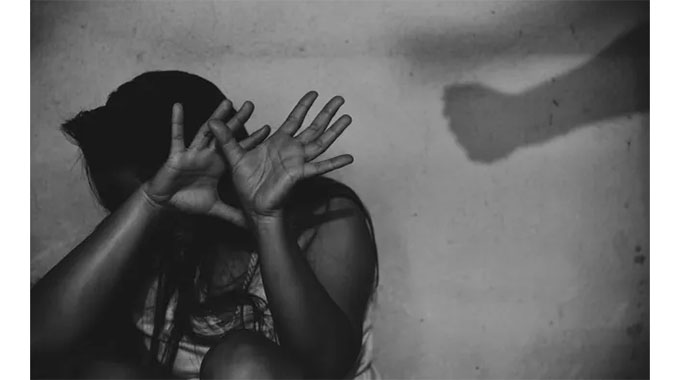
Dr Masimba Mavaza
Even after a lot of talk about life in Diaspora being good, women still suffer at the hands of their husbands. Maybe Goto, arrived in London from Zimbabwe last year to join her husband she had married in Harare. She was thrilled at the prospects of a new life in England. As is the norm, many people believe that being in England is an accomplishment. In Maybe’s case London was a plunge into trouble.
As soon as Maybe moved in with her husband and his family in Croydon she said, they started treating her like a servant. Her husband revealed that he loved another woman. When Maybe complained, her sister-in-law beat her, with the consent of the husband, who often looked on, smiling. Maybe could not make a police report as she felt it would destroy the relations forever.
“I can’t even remember how many times I got bruises,” said Maybe
“I knew I could call the police but involving the police would be viewed in a very bad light. I grew up being told that family fights could not be taken seriously by the police”
She had thought this kind of abuse was a part of the life she had left behind.
In Zimbabwe 43 years after freedom, and the rise of an influential women’s rights movement, the violent subjugation of women remains broadly accepted.
A culture of domestic violence — not only by husbands but also by husbands’ families — has followed Zimbabwean immigrants to destinations like London where women’s advocates say they are now discovering just how widespread the problem is.
Most women had suffered domestic violence but were still afraid to report it. The worst abusers are the sisters of the husbands. Some sisters are so vindictive such that one would think that they did not want their brother to marry. You must draw healthy boundaries between yourself and his folks. Your marriage depends on it but do the in-laws abide by the boundaries.
Dr Mavis Mateo commented on the in-laws relationships
“Not exactly friends with your sister in-law? It might be a good thing. Keeping your husband’s sisters at arm’s length could be good for your marriage.
The discrepancies in gender come down to how men and women view relationships differently.
“When a wife sees that her husband is really trying to bond with her family, she interprets it as a sign of love – he’s trying to be close with them because it’s important to her,”
But when wives devote time to their husbands’ parents, it doesn’t always have the same result. “If a woman is spending lots of time improving the relationship with her in-laws, she may have a difficult time setting emotional boundaries,” And often, when you get too close, you might interpret whatever your in-laws say as interference or meddling.”
Want to give your marriage a fighting chance? The key is to create healthy boundaries.
Prepare your responses if your in-laws frequently say offensive things, or make you feel as if they’re meddling or judging your lifestyle, prepare responses to their common quips in advance of seeing them.
“Instead of being defensive, respond with a simple answer and move on to another topic, or shift focus to someone else at the table. If that’s not easy to do, politely excuse yourself.”
Understand that some people will just push your buttons, and it’s up to you whether you choose to rise to the bait. The more you respond, the more enmeshed you might get—and sometimes, it’s best to simply refuse to engage.”
Mitchelle Ndlovu a social scientist advised.
In some ways, the United Kingdom can be worse than Zimbabwe for abused women. Many find themselves isolated in their new country, far from their families, and entirely dependent on husbands and in-laws. Most are unaware of their legal rights or fearful of the authorities.
And many Zimbabweans in the diaspora, resistant to full assimilation, hold on to traditional practices even tighter than they would in their home country — even in families that immigrated decades ago.
“All my relatives in the United Kingdom are more conservative, religiously and culturally, than my relatives in Zimbabwe said Mandinema Nezi executive director of the group, which runs a network of women’s shelters in London.
Domestic abuse is common in many cultures, and the belief that women are their husbands’ property is an age-old convention of some Zimbabwe’s rigidly patriarchal, tribal society.
In the United Kingdom where many people of Zimbabwean descent live, 10 percent of them in London according to census figures — the law provides many more protections for abuse victims. But these measures may not feel like enough to Zimbabwean women, for whom turning against one’s in-laws, particularly families long established in UK can be terrifying. Ten abuse victims agreed to be interviewed for this article; most asked to have their names withheld from publication because they feared retribution from families and a stigma in Zimbabwean society.
Growing up in a working-class family in Harare Maybe was aware of domestic violence; her father once rescued a woman from an abusive husband and brought her to live with them. But Maybe said she never imagined such things could happen in the United Kingdom. She had envisioned a quiet life raising children and perhaps continuing the education she had ended at Ordinary level.
When the abuse began, she felt trapped. She knew nobody else in the country, and was reluctant to tell her parents in Zimbabwe and fly back home, because, she said, she did not want to bring shame to herself and to them. Zimbabwean women say the presumption of guilt in a failed relationship usually falls on the woman.“If I went back to Zimbabwe Maybe said, “everybody would blame me. They’d say I was a bad girl.”
While most victims of domestic violence are brutalised by their husbands, advocates say, other family members sometimes join in or, as with Maybe serve as the husband’s proxy.
After one particularly brutal beating by her sister-in-law, Maybe was hospitalised with head and abdominal injuries. She said the family intimidated her into lying to hospital officials about the cause of her injuries; she told them she had fallen down the stairs. she was told if she told the truth she would be deported.
After another attack, last August, Maybe sought refuge in a neighbourhood park. There, a stranger approached her and put her in touch with a Zimbabwean nurse who connected her with the women’s centre. The centre gave her shelter in its network of safe houses and helped her get an order of protection against the family. She also found part-time work as a baby sitter, enrolled in college and filed for divorce.
But her nightmare was not over. In October under a police escort, she returned home to pick up her belongings and, in front of the officers, her husband berated and threatened her, she said. He was arrested and charged with obstructing governmental administration.
In Zimbabwe family problems have historically been resolved through the mediation of religious and tribal leaders, sometimes in the form of a village or family meeting. Pastor Gabriel Mugari said that in the past few years he had counselled about 35 couples with domestic violence problems. “We have to sit down with them,” he said. “We have to try to solve the problem before going to the police or the court.”
The women’s centre has also sought his help with clients who wanted to resolve disputes through other means. I always tell people, ‘I don’t want to disrespect the religion and culture that we have,’ ” Ms. Dhliwayo said.
One woman said she sought mediation because, despite the abuse, she still loved her husband and had faith that he could change.
Whenever she accused him, he verbally abused her, said the woman, who is now 25. He forbade her to socialise with others. After he failed to file an application for her visa as he had promised, she decided to file the paperwork herself. When he discovered that she had begun the process, she said, he beat her so severely that she was hospitalised.
Though the police charged him with assault and a court issued an order of protection, she decided to remain with him. “I didn’t have any friends,” she said. “I couldn’t do anything without him.”
The beatings continued, she said, until another woman she met in at college told her about Women for Women. Margaret who frequently works with the centre met with the abused woman and advised her to seek a divorce, but she refused.
“We were telling her to leave him, but we had to respect her feelings,” Ms Bentura said
Since the intervention the woman said, her husband has treated her “better than before.” She added: “No beatings.” They have moved to a new home in Leeds and she got her visa.
While her situation is far from ideal, she said, it is better than living alone or returning to Zimbabwe where she feared she would be ridiculed for being a divorcee. “I had no other choice but to live with him,” she said.
Women from Zimbabwe are always threatened that if they protest they will be returned.
Abuses are wide spread and the government is taking no time in acting.
Many women suffer the abuse while they have to work for the family. The husband expects the wife to cook and serve him while he watches television. This is the life Diaspora has given to its innocent caring mothers.



 Online Reporter