admin
admin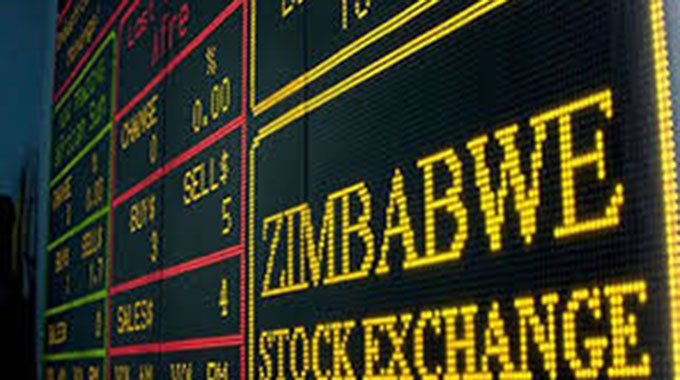
The Zimbabwe Stock Exchange (ZSE) maintained an upward trend as the earnings reporting season comes to an end. Counters with December year-end have been releasing their earnings that show performance was negatively affected by the challenging operating environment.
Foreign currency shortages for procurement of essential materials has been one of the key factors, resulting in product supply gaps in some instances. During the second half of the year, the situation worsened as inflationary pressures pushed the foreign exchange rate on the parallel market while disposable incomes were also eroded.
In the week to Wednesday, all key indicators but the Minings Index closed in the black. The ZSE All Share Index put on 3,89 percent to 138,89 points. The market’s elite club, the ZSE Top 10 Index had a 3,61 percent jump to 132,27 points, subsequently narrowing its year to date loss to 8,79 percent.
At 464,22 points, the Industrials Index was 3,96 percent above prior week’s 446,52 points. The resources index of two active counters- Bindura and RioZim was the only indicator to close the week in the negative with a 1,67 percent decline to 183,35 points.
Total market value rose 3,99 percent to $18,2 billion driven by gains in the market’s heavies. Hospitality group, RTG was the best performer after it doubled its value to 4,8 cents from 2,33 cents recorded in the previous week.
Pharmaceuticals and chemicals firm – MedTech added 28,57 percent to 0,18 cents while Mashonaland Holdings was 20 percent firmer to close pegged at 2,9 cents.
National Foods put on19,96 percent to $6,85 from previous week’s $5,71. Insurance Group, Fidelity Life wrapped the week’s top five performers with a 19,89 percent jump to 8,44 cents.
Hospitality group, African Sun had an 19,18 percent jump to 27,47 cents. African Sun pointed out the recently terminated deal it had with Legacy Hospitality Management Services Limited (Legacy) was just a management contract and did not require the latter putting money into the business.
This is contrary the impression on the market that Legacy had planned to invest US$60 million towards refurbishing African Sun hotels.
Other gains were recorded in Axia that rose 15,77 percent to 42 cents while CBZ and Innscor put on 14,38 percent to 24,02 cents and 13,31 percent to $1,85 respectively.
Largest media group, Zimpapers ticked 10,05 percent to 8,98 cents.
The market was not short of fallers. Turnall led the fallers with a 6,98 percent decline to 8 cents. FMP faltered 4,52 percent to 5,7 cents while parent company FML fell 4,41 percent to 13 cents. Resources group, RioZim weakened 2,28 percent to $1,72 while ZPI decline by 0,4 percent to 2,5 cents. Wrapping up the week’s fallers was TSL which backtracked 0,26 percent to 62,09 cents.
Cigarette manufacturer, BAT remained flat at $30 as it remains the bourse’s most expensive counter while clothing retail group, Edgars was also static at 13 cents.
Also maintaining prior week levels was Masimba that closed pegged at 8,8 cents. The building and associated industries firm is upbeat of a good 2019 performance on the back of its strong order book.
For the full year to December 31, 2018, Masimba’s turnover jumped 46 percent to US$40 million from US$27 million recorded in the prior year on the back of a strong order book which was dominated by retail and commercial buildings, agriculture, mining, housing and road infrastructure projects. Lafarge, FCB, Meikles and Nampak were unchanged at $1,10, 5 cents, 60 cents and 30,1 cents in that order.
Nickel producer, Bindura also remained flat at 5,5 cents. Fellow resources group, Hwange, currently under suspension recorded a 27 percent jump in revenue to US$69 million driven by firm sales volumes, despite widening losses for the year to December 31, 2018.
The coal miner’s sales volumes jumped 25 percent, closing the year at 1,5 million tonnes to generate US$69 million. However, the performance was way below a budget of 3,5 million tonnes while loss shot to US$78,4 million compared to US$43,8 million in the comparative period due to impairments of some assets and increased costs raising concerns over its going concern status.



 Online Reporter