Online Reporter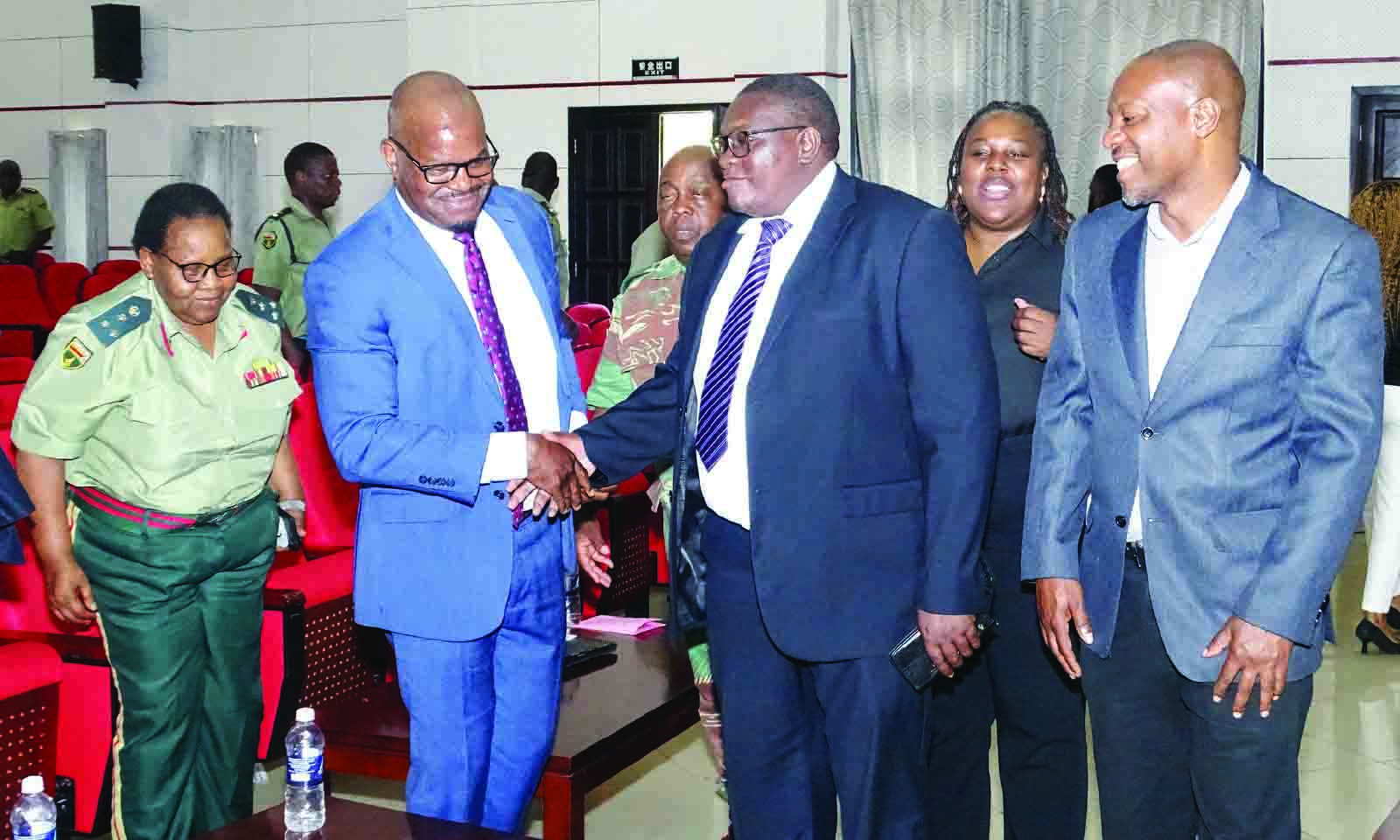
Trust Freddy
Herald Correspondent
THE attainment of Vision 2030’s targets requires a unified and strategic communication effort, extending beyond mere economic and social reforms, Information, Publicity and Broadcasting Services Permanent Secretary Mr Nick Mangwana has said.
He made the remarks during a presentation to students on the role of the media in national security at the Zimbabwe National Defence University’s Media Day.
The event ran under the theme, “The role of the media in national security: Telling your own story, telling it fully, and telling it on time”.
It attracted key players from the media industry, including Zimpapers (1980) Limited, ZBC, Jester Media Services and the Zimbabwe Media Commission (ZMC).
“Achieving Vision 2030 is not just an economic or social project; it is fundamentally a communication project,” said Mr Mangwana.
“A nation that cannot define itself is defined by others. Telling our own story, telling it fully, and telling it on time is not merely a media slogan; it is a national security imperative.
“This requires a collaborative effort from Government, media and security institutions.”
Mr Mangwana emphasised that a free and responsible media environment is crucial for the success of Vision 2030.
He added that by fostering a media landscape that is both free and responsible, innovative and credible, Zimbabwe can secure its narrative, strengthen its sovereignty and build the unified national consensus necessary to realise the ambitions of Vision 2030.
“The media plays a critical role in informing the public, setting the narrative and pushing the agenda that serves the national interest. Therefore, we cannot discuss security without the media collaborating with all members of the security cluster,” he said.
Zimpapers acting Editorial Executive Elias Mambo weighed in saying: “The point we are making here is that we need to take charge of our narratives. You go the world over, the Americans will be telling their own story, the British will be telling their own story.
“We must also take charge and tell our own story in our own way, in our own languages. And we are also saying we need to take charge of the digital spaces because that’s the new battlefront.”
Mambo warned that an unregulated digital space poses significant national security risks, making it essential to implement new measures to regulate platforms that could threaten security.
“There is a thin line that separates journalism and activism. So, it’s up to the regulator now to separate and say these are the journalists and these are activists, or these are content creators.
“As media practitioners, we are saying enough is enough. We cannot allow other people to be speaking on our behalf. We need to take back our space.”
ZBC chief executive officer Mr Sugar Chagonda affirmed the broadcaster’s commitment to ensuring that the media fulfils its role in national security.
“We are telling the Zimbabwean story from our point of view as Zimbabweans. So, we are creating space to make sure that there are no gaps in between, because if we don’t occupy that gap, definitely someone will occupy it on our behalf and chances are that the story will be mistold.
“Right now, from a national broadcaster’s point of view, we are pushing national development and national cohesion, making sure that we celebrate good things that are happening in Zimbabwe, talk about infrastructure development, and discuss programmes that enhance unity and solidarity among our people,” he said.
Zimbabwe Media Commission director of media development and governance Ms Nyaradzo Makombe emphasised the importance of professionalism in media reporting.
“It is very important as the regulator that we ensure that our media tells Zimbabwe’s story the way it is supposed to be told.
“If our media does not exercise professionalism, or does not report ethically, it puts a dent on the national image and it produces a vulnerability for the country.”