Online Reporter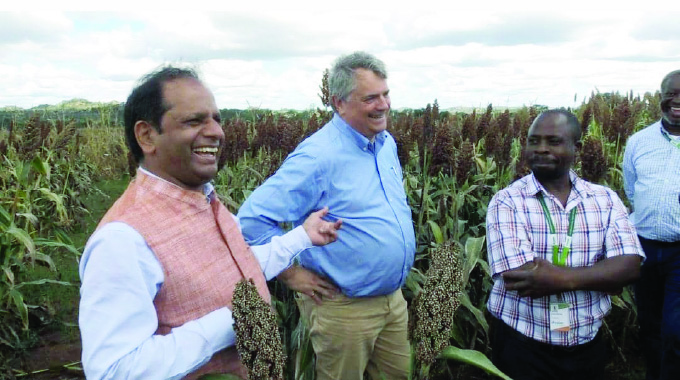
Judith Phiri, Features Writer
FILABUSI, in the sprawling Insiza District of Matabeleland South Province, is located in a drought-prone area with low rainfall and agriculture relies heavily on irrigation schemes. For smallholder farmers in the area, traditional grains are a critical source of food.
In Zimbabwe, traditional grains such as sorghum, pearl millet, and finger millet are gaining popularity, especially as drought-resistant and nutritious alternatives to maize. These small grains have been cultivated in Africa for millennia and are now experiencing a revival due to their resilience and nutritional value.
These traditional grains are also part of both formal and informal seed systems. Formal systems involve seed production, multiplication and distribution through certified outlets, while informal systems rely on farmer-saved seeds, local markets and community exchanges.
For Ms Lucia Nhliziyo of Qinangokubambana Village in Filabusi, having the right seeds is critical for good yields, contributing to food security for her family and community. This entails ensuring that farmers get the right seeds, making the concept of seed systems a critical component.
Recognised organisations such as the International Crops Research Institute for the Semi-Arid Tropics (Icrisat) are collaborating with the Government to ensure they enhance research and development of small grains and seed systems.
Such collaborations have ensured that the genetic potential of crop species and their varieties are continuously improved for crop productivity and food security.
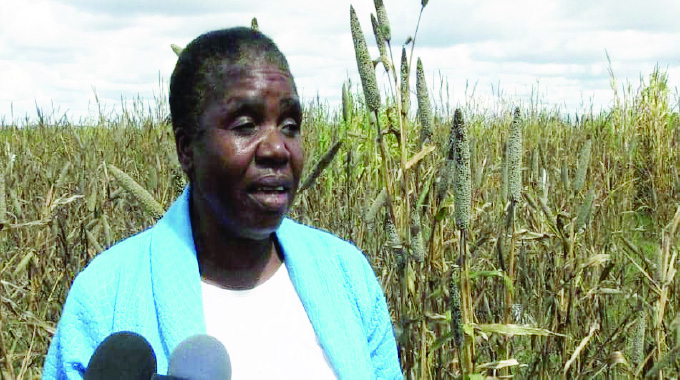
“We are grateful to the Government for working with organisations such as Icrisat to strengthen seed systems. Such initiatives have equipped us with knowledge that ensures we use seeds that are suitable for our agro-ecological region,” said Ms Nhliziyo who is a lead farmer in traditional grains.
She said the seed varieties they have adopted were producing significantly higher yields compared to traditional varieties, which is crucial for increasing food production.
Ms Nhliziyo said they have also received training and capacity building on circular food systems.
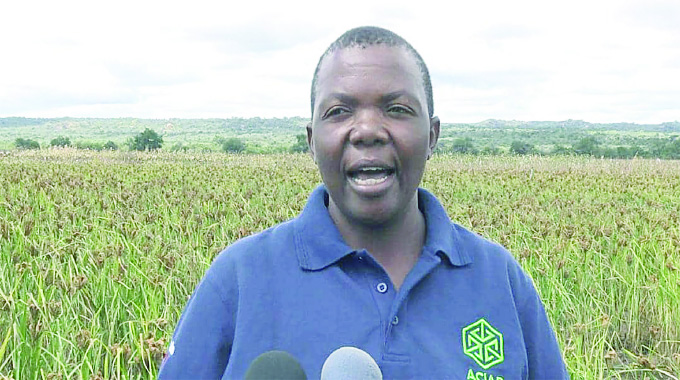
The Circular Food Systems in Africa project is funded by the Australian Centre for International Agricultural Research (ACIAR). The project explores the application of circular food systems in Eastern and Southern Africa, testing how smallholder irrigation can drive resilience and economic growth by integrating livestock and dryland farming.
“Through research, the project focuses on integrating irrigation, livestock, and dryland agricultural production to accelerate rural development and circularity, with the goal of optimising water, carbon, and nutrient cycling without increasing greenhouse gas emissions,” highlights ACIAR.
“When we are farming and harvesting, we don’t throw away anything. We have learnt that when we harvest, it’s not only the grain we get from sorghum, we also get seed, crop stover and residue that can be used for livestock feed. From the livestock, we then get manure which we put in our fields and the cycle goes on, which is then called a circular food system,” said Ms Nhliziyo.
Another farmer who has adopted the same concept, Ms Madalina Moyo from Lunyame Village under Chief Sibasa in Filabusi, said they were ensuring that no by-product goes to waste.
“Crop residues are creatively repurposed to produce hay (from groundnuts and cowpeas), compost for soil fertility enhancement, urea-treated stover (from sorghum and maize) for livestock feed, and poultry waste used to enhance quality of livestock feed, exemplifying a truly closed-loop system,” she said.
Ms Moyo said the key premise of the project is that it is sustainable, resource-efficient, and climate-smart, benefiting household livelihoods and value chain performance. She said the system is cutting down on expenses they face as rural farmers in dryland regions.
“We now know that we work with what is available and we buy less. Such projects and programmes should be maintained and more people should be taught about circular food systems,” said Ms Moyo.
The Icrisat Governing Board and management team recently toured their Zimbabwean facility located at the Matopos Research Institute in Matabeleland South Province and engaged with Filabusi farmers who are beneficiaries of seed systems at the facility.
Headquartered in India, Icrisat maintains offices across Eastern and Southern Africa, West and Central Africa. The offices are in Kenya, Malawi, Ethiopia, Mozambique, Mali, Niger, Nigeria and Zimbabwe.
Icrisat Director General, Dr Himanshu Pathak, highlighted that since 1983, the organisation has been working with the Zimbabwean Government to develop climate-resilient crop varieties and had established the research centre to help mitigate drought impacts.
“Icrisat has been active in this area since 1983, developing high-yielding varieties of sorghum, millet and pulses, as well as climate-resilient cultivars. This centre was set up specifically to address drought mitigation in Zimbabwean agriculture,” said Dr Pathak.
He noted that several high-yielding varieties had been developed since the centre’s inception.
Dr Pathak said two years ago, they released a new sorghum variety which is now available in Zimbabwe.
“On average, the yield of sorghum is less than one tonne per hectare but the high varieties which we have developed at Icrisat can give more than eight tonnes per hectare yield. So, by adopting this particular variety, farmers in Zimbabwe can increase their yield by two, three or even four times,” he said.
Dr Pathak said they were also developing climate resilient varieties that can withstand drought and high temperatures, which are increasing due to climate change and global warming. He said the organisation is also developing bio-fortified varieties which are rich in vitamins, minerals and other nutrients.
“We are also looking at the management of water and soil nutrients which are extremely important for increasing yields and improving climate resilience. We want to develop technologies to produce more with less amounts of water and without applying many chemicals,” he said.
Seed systems projects, Dr Pathak said, are critical in improving the productivity and profitability of Zimbabwean agriculture.
To strengthen the seed systems, he said they were working with the Government and some private companies which are producing good quality seeds.
“These are then sold at places easily accessible to farmers so that they can use these high yielding seeds to produce more with less costs. This is what Icrisat has been doing here in Zimbabwe since 1983.”
Turning to the future, he said, plans are afoot to strengthen the Icrisat Zimbabwe facility so that it can develop more hybrid varieties in numbers which will be suitable for the country’s different agro-ecological climatic regions.
“We will also strengthen the capacity of farmers, scientists and students to enable them to conduct research and training to improve Zimbabwean agriculture,” he added.
Icrisat Deputy Director General for Research and Innovation, Dr Stanford Blade, said the organisation works closely with seed houses to ensure the dissemination of high-yielding and drought-tolerant seed varieties.
“We collaborate with companies such as SeedCo and others here in Zimbabwe, to ensure that once this cutting-edge science and innovation is complete, the material reaches the hands of farmers — allowing them to benefit from these climate-resilient, food-secure varieties,” he said.
Dr Blade said the institute is focusing on integrating new technologies using cutting-edge science such as artificial intelligence (AI) and geospatial sciences, to better understand and improve farming systems.
He added that advanced methods are now being used to analyse crop maturity and root development in ways that were not possible five years ago. “Some materials here at Icrisat Zimbabwe and other centres are being characterised to identify optimal root structures that can be integrated into crops to enhance drought tolerance even further,” said Dr Blade.
He said it is important to ensure farmers get the best possible varieties that produce higher yields, are resistant to insects, diseases and are drought tolerant. Dr Blade said they were also addressing aflatoxin challenges where toxins produced by certain fungi that contaminate crops such as maize, peanuts, and tree nuts are posing health risks and economic losses.
“It’s a particular fungus that can develop especially in the storage of grains and we do a number of activities to find crop varieties that do not have as many aflatoxins and are resilient. This also includes ways to manage storage in unique ways to ensure that there are no issues,” he said.
Zimbabwe recently reviewed its seed certification regulatory frameworks which are critical to seed systems.
The review came after realising that the framework, established 25 years ago, is in dire need of an update to align with international standards.
The consequences of inaction were dire: counterfeit seeds, crop failures and economic losses that could cripple the agricultural sector.
Zimbabwe has made significant strides in seed certification, with the Government recognising the importance of a robust seed industry.
The country has subscribed to international platforms such as the Organisation for Economic Co-operation and Development (OECD), International Seed Certification schemes and the International Seed Testing Association (ISTA) among others, to enhance seed quality development and trade.