peter
peterPatrick Chitumba, Midlands Bureau Chief
LIVING in harmony with nature has been so elusive in the country’s communities with human action continuously scarring the environment and grossly distorting the natural balance that should exist for sustainable the ecosystem.
The pronouncement by the government that there shall be strict enforcement of Environmental Impact Assessments (EIA) by the Environmental Management Agency (EMA) in the interest of protecting the environment while also promoting economic growth in line with aspirations of the National Development Strategy (NDS1) is likely going to see an improvement in the interaction between people and the environment.
EIA identifies environmental risks, lessens conflict by promoting community participation, minimizes adverse environmental effects, informing decision makers, and helps lay the base for environmentally sound projects.
This was said by the Minister of Environment, Climate, Tourism and Hospitality Industry, Mangaliso Ndlovu addressing miners, villagers, school children and Government officials gathered at Msasa Primary School in Shurugwi North District in the Midlands province for the World Environment Day belated national commemorations last week.
The day is observed each year on June 5, following the proclamation in 1972 by the United Nations General Assembly, to mark the Stockholm Conference on Human Environment but due to other national engagements the ministry postponed the commemorations.

The day was held under the theme, “Only One Earth – Living Sustainably in Harmony with Nature.”
Minister Ndlovu said the theme highlights the need to live sustainably in harmony with nature by bringing transformative changes through policies, and national choices towards cleaner and greener lifestyles.
“Let me point out that the theme; ‘Only One Earth’, was the motto for the first 1972 Stockholm Conference and 50 years on, the motto still holds true –and indeed this planet is our only home, whose finite resources humanity must safeguard,” he said.
This therefore, Minister Ndlovu said, leaves humanity with the only option of transforming social and economic systems through improving relationships with nature, understanding its value and putting that value at the heart of decision making.
“This in turn gives us the challenge to continue to face the triple planetary calamities of climate change, nature loss and pollution, with man at the helm of establishing the future we want through adopting and adapting transformative interventions in building resilient and healthy ecosystems,” he said.
Minister Ndlovu said the earth faced numerous planetary crises, such as global warning due to climate change as the earth was heating up too quickly for nature to adapt.
He said habitat loss and other pressures mean countless species were threatened with extinction and pollution continues to poison the air, land and water.
Minister Ndlovu said importantly, as humans there was need to seriously introspect as most of the environmental challenges were directly due to human activities.
“The country is battling with changing rainfall patterns resulting in failed farming seasons almost every year now. This, coupled with the devastating veld fire scourge on an annual basis, results in the loss of thousands of hectares of land and massive land degradation due to mining and other human drivers,” he said.
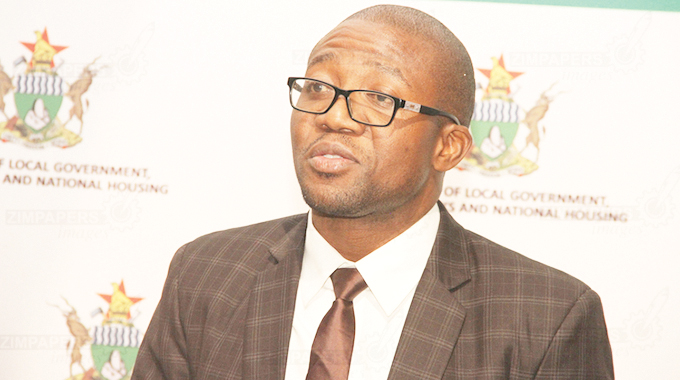
Minister Ndlovu said the unfolding phenomena of biodiversity depletion, desertification, pollution, land degradation and irrational use of finite natural resources remain serious pre-occupations for Zimbabwe and the world at large as they pose real threats to human survival and sustainable development efforts.
“We need urgent action to address these pressing issues, making our “Only One Earth,” and its focus on living sustainably in harmony with nature, as pertinent as ever. In my view, the only way out of this dilemma is to transform our economies and societies to make them inclusive, fair and more connected with nature,” he said.
He added that there was a need to shift from harming the planet in the name of sustaining mankind but to healing it for posterity.
“The foods we eat, the air we breathe, the water we drink, all come from nature. We are more reliant on nature’s services than most can ever imagine. Survival of mankind is unfortunately hugely dependent on the natural capital whose importance cannot be ignored.
“Ladies and gentlemen, coincidentally these are exceptional times in which nature is telling us to wake up and take notice. The onus is on us to do right with nature by living sustainably in harmony with it.
“Lest some think as ministry we are opposed to economic activities that enhance economic growth to the contrary that is far from the reality. We acknowledge and celebrate with the nation each time a new project is commissioned,” he said.
Minister Ndlovu said where the environment had been inevitably damaged people simply need to rehabilitate the area.
He said the government was deeply concerned at the level of environmental degradation in Shurugwi district mainly attributable to lack of rehabilitation strategies after the mineral extraction process.
“I am also aware of the invisible scars inflicted on some of our rivers by some who are illegally engaged in riverbed mining. Besides being illegal, the practice in most cases discharges mercury in our rivers and in the process becomes potentially harmful to unsuspecting citizens downstream. So, there shall be strict enforcement of EIA in the interest of protecting the environment while also promoting economic growth in line with our NDS1 aspirations,” said Minister Ndlovu.
He said it was important to note that the global economy was intricately tied to biodiversity.
“We therefore, need to embrace the opportunities and value of the natural environment and not work against it. Let us live in harmony with nature, for indeed we only have this one earth. Without action, exposure to air pollution beyond safe guidelines will increase by 50 per cent within the decade and plastic waste flowing into land and aquatic ecosystems will nearly triple by 2040,” said Minister Ndlovu.
He implored communities to sustainably utilise natural resources taking into consideration that future generations would also want to benefit from them.
“Our actions such as streambank cultivation, destruction of wetlands, deforestation and wanton land degradation through among others, illegal mining activities, are just but an injustice to us and future generations, hence the only option is to adopt environmentally friendly approaches in pursuit of other economic activities,” said Minister Ndlovu.


 Online Reporter