admin
admin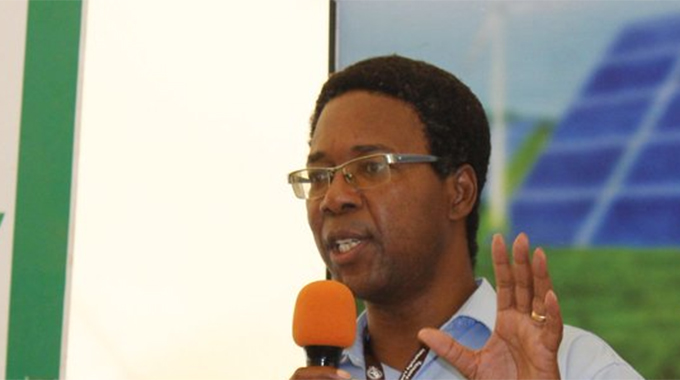
Edgar Vhera-Agriculture Specialist Writer
STAKEHOLDERS in the agriculture value chain have challenged financial institutions to support agriculture by extending structured financial packages that promote sustainable production critical for reviving the country’s agro-based economy and boosting food security.
Livestock and Meat Advisory Council (LMAC) administrator, Dr Reneth Mano yesterday observed that the agriculture sector was diverse — comprising grain crops, horticulture, oil seeds, industrials crops such as sugarcane, cotton, timber and tobacco among others with livestock also part of the matrix.
“When the Government effected structural changes on vast tracts of land that were being underutilised, no consummate financial sector transformation was proffered for sustainability.
“Now that the Government has restructured the AFC into a Land Bank, as well as CBZ Agro-Yield with guarantees, these ought to pay particular attention to the peculiarity, seasonality and duration of agricultural production,” said Dr Mano.
He said in the past AFC used to give commercial farmers financing that was separate from life-style loans so that capital meant for agriculture would be used for optimal production.
He observed that today most financial institutions/contractors were offering farmers input loans without working capital and such farmers were bound to make forays into the loans to strike a balance between production and subsistence expenses at the detriment of productivity.
Dr Mano highlighted that extending loans strictly for agricultural expenditure minus something for miscellaneous expenses was compromising the effectiveness of the financing.
He said if there was a US$10 million beef revolving facility for livestock farmers to get proper breeds, it would be necessary to address supply mechanisms first before disbursing it so that demand does not outstrip supply, which will see prices skyrocketing.
“We need to create the supply chain for delivery of superior genetics that are needed for commercial beef production, dairy production and quality breeder stock.
“We need elite farmers in each province who are certified to produce quality assured breeding heifers, breeding bulls of hard Mashona, Nguni, Brahmah, Boran and Thuli who are able to multiply these breeds with these certified suppliers linked to our banks.
“The seed crop will be purchased by banks who will lend to farmers in newly resettled commercial areas. This is a low-risk money maker, as the suppliers are producing for the bank that in turn make money from the contract arrangement.
“If a Zimbabwean farmer is given money and goes to Namibia to get the heifer, we are exporting our foreign currency and jobs to Namibia,” said Dr Mano.
There is need for Government to give farmers production targets, for instance, when it gives a farmer a piece of land, the farmer will be expected to produce 150 cattle for slaughter per year with a 50 to 60 percent calving rate, he added.
“Some people might say the land reform is a failure yet it’s the institutional response to land reform that is failing the people,” added Dr Mano.
The Horticultural Development Council (HDC) chief executive officer, Mrs Linda Nielsen recently presented a proposal for the new financial structure during an engagement with Government and financial institutions. The restructuring of agriculture loans need to take into consideration the duration of perennial and tree crops such as citrus that ought to be different from annual crops.
Tobacco Farmers Union Trust vice president Mr Edward Dune added his voice saying tobacco farmers lacked working capital in their input packages, which was affecting sustained and intensive production of the crop.



 Online Reporter