Online Reporter
Ambassador Ibrahim Elsheikh
On January 1, 1956, Sudan got its independence.
It is considered one of the first countries to gain independence on the continent.
Now it marks the 70th anniversary, henceforth it supported and still does support all liberation movements in Africa and the Middle East against colonisation.
This has been through providing military, political and financial aid to groups in Angola, Mozambique, Zimbabwe and South Africa, supplying arms, ammunition and even specialised support like donkeys for ferrying supplies, believing continental freedom was linked to its own.
For instance, Sudan sent military experts to Zimbabwean liberated areas and many Zimbabwean fighters were trained in the Sudan.
In essence in spite of Sudan’s proud history of supporting African liberation, it is realisable that some African countries are involved in conspiracies and machinations to destabilise the country through supply of high tech weapons, strategic drones and also harboring officials of the Rapid Support Forces (RSF) terrorist militia.
These African countries permitted their territories to be used for destruction purposes such as transit and recruitment of mercenaries, financial transaction and support, smuggling of Sudanese goods via their territories.
Their media repeatedly disseminate misleading campaigns for the RSF terrorist militia. Even the concept of forming a counter government in the Sudan was conceived in an African country.
Due to the Sudan’s attitude and stance against colonialism, it has encountered many challenges and problems to undermine its role in the continent.
As history repeats itself, on April 15, 2023, as a result of a failed coup d’état by the RSF terrorist militia with support and sponsorship of foreign powers, it launched a war against the state of Sudan and its people, unfortunately with support from some African countries.
Some hostile powers describe the current war in the Sudan as a war between two generals or two parties.
This narration is in conflict with reality, just as when someone depicts a raid between police and a gang as a conflict between two parties.
Police are a legitimate force that implements the law against criminals.
The Sudanese army is a constitutional body whose duty is protection of Sudan’s soil and constitution on one hand.
On the other hand, RSF – as its name connotes – is a force established to support the constitutional army.
This force, with foreign hostile powers support, carried out a failed coup d’état.
As a result of its failure, it launched a war against the state.
The army’s constitutional duty is restoration of order so it fights this terrorist militia.
Many times, the army negotiated with the militia and signed agreements, but because the said terrorist militia has a hidden foreign agenda it does not fulfill its commitments.
These countries backing the terrorist militia targeted the Sudan, devastated, looted and ransacked civilian properties and even diplomatic missions.
Over 12 million people were forcibly displaced, famine conditions confirmed in many occupied areas, tens of thousands of people have been killed by the terrorist militia with reports of torture and mass killings.
In addition, the terrorist militia has committed gender-based violence, including rape, gang rape, sexual slavery and forced marriages, which are being systematically used a weapons of war.
Over 70 percent of hospitals are non-functional due to damage caused by the RSF terrorist militia.
It also destroyed water supplies, electricity grids and telecommunication networks.
Nearly 19 million of children are out of school, threatening a “lost generation”.
Even the terrorist militia disregarded and disrespected UNSC resolutions.
Sudan was the founding State of African union (AU), then known as the Organisation of African Unity (OAU).
The reasons of the suspension of its activities in AU are unrealistic.
The October 25, 2021 measures to rectify the political situation in the country were misinterpreted as a coup d’état.
The suspension of Sudan’s activities thus undermines African problems to be solved within the AU.
That definitely led foreign powers to intervene in African issues.
The Sudan Transitional Sovereignty Council is keen to lead the country to a democratic path via a fair election process.
The Sudan signed the Jeddah Agreement, but the RSF terrorist militia violated it.
Sudan also submitted a roadmap to the United Nations, which aims to end the war and put the country on the right track of a well-established democratic process.
I discussed with the President of Zimbabwe that he could use his country’s influence in the AU to end Sudan’s activities suspension, hence His Excellency President Mnangagwa many times expressed his solidarity with the Sudanese people.
In addition, he calls for Africanism and solving the continent’s problems from within instead of internationalising them.
The suspension of Sudan’s activities undermines the AU’s role in solving African issues.
On Sudan-Zimbabwe relations
The relationship between the two countries traces back to the revolution against the white minority regime in Zimbabwe.
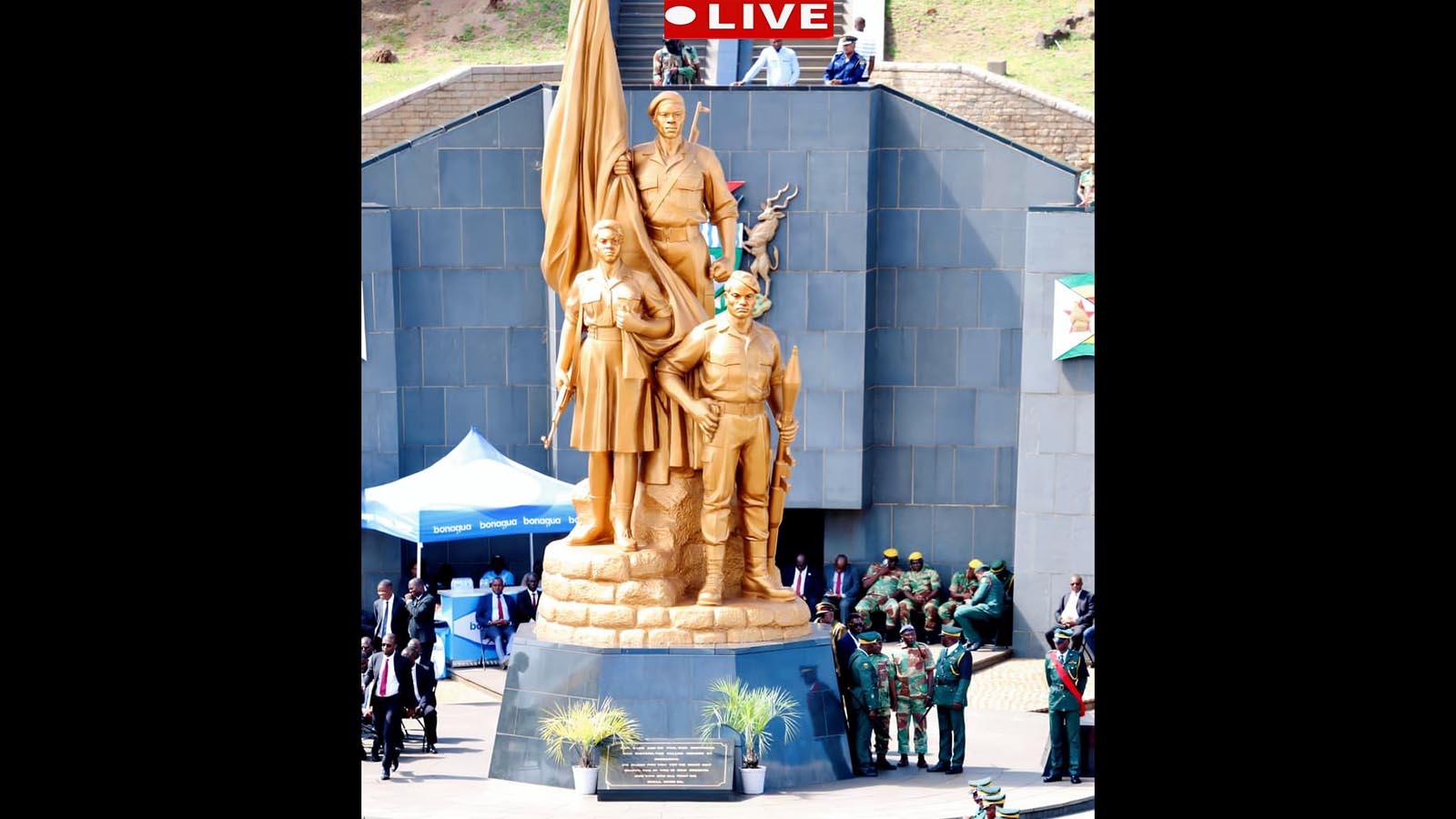
Since Sudan supported the Zimbabwean revolution, many warriors were trained in Sudan even after Zimbabwe’s independence in 1980.
Although the relation between the two countries is historical and longstanding, it is still undeveloped.
As Ambassador, I have pledged to enhance and promote bilateral sisterly relations, extended an invitation to Professor Amon Murwira (Foreign Affairs and International Trade Minister) to visit Sudan and encouraged exchange visits of officials in both countries.
There are proposed Drafts of Agreements and MoUs of Cooperation, which were being exchanged since April 1993 that need to be followed up and committed on.
Sudan and Zimbabwe have played significant roles of strategic importance for both countries in Africa’s security landscape, particularly in the context of regional cooperation.
The pending agreements and MoUs that are ready for signing cover many areas and fields of cooperation such as investment, trade, education, health, mining and justice.
In addition, we are proposing setting up a joint commission and political consultation framework to pave the way of cooperation and signing of the rest of MoUs.
The Sudan is keen to strengthen ties with Zimbabwe since Zimbabwe can satisfy the needs of Sudan’s tea market.
Some Sudanese businessmen paid a visit to Tanganda factory to purchase more than 2 000 tons of tea and there are plans to operate flight lines between the two countries in services of passengers and cargo.
Sudan with no doubt will support Zimbabwe in its quest for non-permanent seat at United Nations Security Council 2027-2028.
Mr Ibrahim Elsheikh is the Sudanese ambassador to Zimbabwe. He was talking to Zimpapers Politics Hub journalist Gibson Nyikadzino