

 Chronicle Editor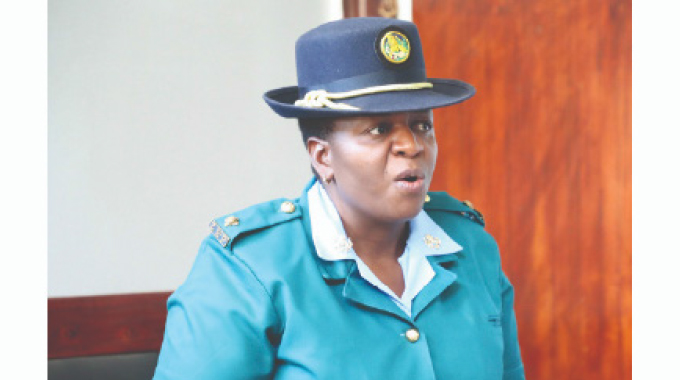
Flora Fadzai Sibanda, [email protected]
“Pamela to the world”, “Sisterhood is proud of you Pamela”,
“These men deserve to be taught a lesson. You did good”, “How can a grown man go and report a woman for abuse, he is weak”.
These were some of the comments on the Chronicle Facebook page following the publication of a story about a prominent Bulawayo businesswoman who was arrested for abusing her husband.
The post had more than 300 likes within a few minutes after it was posted.
What was surprising was that most of the comments were from women who are always screaming gender-based violence (GBV) when a man does the same thing to them.

Not only did the comments shed light on how we are far from ending gender based violence but they also revealed the major reason why men do not speak out when they are abused.
Instead, they retaliate, become abusers and are later arrested or they succumb to the abuse and later commit suicide.
Bulawayo deputy police spokesperson Assistant Inspector Nomalanga Msebele said according to statistics from June this year, 21 people committed suicide with 20 of them being men.
“Since June, we’ve observed a worrying increase in suicide cases, with incidents occurring almost every fortnight. The ages of those affected range from 10 to 79 years,” she said.
Asst Insp Msebele said the reasons behind the suicides are varied.
“There are many reasons people commit suicide, and some motivations may not even seem suicidal on the surface,” she said.
“For example, one man took his life just before a maintenance court appearance, while another did so after being contacted by the police regarding a case.”
She noted that domestic disputes, life challenges, and feelings of helplessness are often underlying factors.
Emphasising the importance of seeking help, Asst Insp Msebele urged people to open up and talk to someone during difficult times.
“We encourage individuals, especially men, to talk to trusted friends, pastors, or community leaders.
Our community relations and liaison officers are available at all police stations to provide support and counselling, including referrals for free counselling services. Remember, suicide is not a solution to life’s challenges,” said Asst Insp Msebele.
Social norms around gender teach young men that they should be emotionally strong and avoid showing vulnerability or asking for help from others, which exacerbates mental health issues. In addition, men sometimes lack mental health literacy — the ability to recognise, identify, and describe their emotions.
In an interview, Mr Hlaisane Mjono, the director of a movement project, Men, which deals with men and their mental health said the country still has a long way to go in ending gender based violence against men as men do not speak out.
“People often laugh at a man when he cries GBV. Our societal norms dictate that men should hide their feelings, toughen up and get over the abuse.
Because of that, it becomes really hard for men to open up and share what they are going through.
They will always act like everything is ok and hence whenever you ask a man how he is, the response is always ‘I am good bro,’” he said.
Mr Mjono said that is why many men end up being abusers because bottled emotions often lead to anger, depression and stress.
He said apart from being abusers, a lot of men end up becoming self-isolated as a result of bottling up their emotions, which is why a lot of men are emotionally absent in their families.
Mr Mjono said a man who is abused is often seen by a lot of unexplained injuries or loss of interest in activities they might have loved doing before.
He said another common signal is increased substance abuse and suicidal behaviours.
“The good thing about all this is that men can also be helped just like women are being helped. The first stage to overcoming this abuse is self acceptance.
A man should be able to accept that abuse is there and that there is nothing wrong with him because he is being abused.
Another important thing is for men to know that they are also allowed to be vulnerable and that seeking help is in fact a sign of strength,” said Mr Mjono.
He urged men to seek counselling when they see that they are being abused.
“This is not a fight for men only but for everyone in society. As society, we should encourage a lot of conversations about mental health and offer counselling to men so that they know we support them all the way and that society is also a safe space for them just like it is for women,” he said.
Gender-based violence is a widely known problem that affects both men and women.
Community members and individuals who tolerate negative masculine practices also perpetuate gender based violence.
Ending violence in our communities is the responsibility of the whole community and it is significant that both men and women are active participants and promoters of change to get rid of the status quo.
On the same scale, it is also critical to combat not only the individual instances of violence, but also the systemic forms of violence, as violence does not occur in a vacuum but rather in a society that condones and encourages it. — @flora_sibanda


 Online Reporter