admin
admin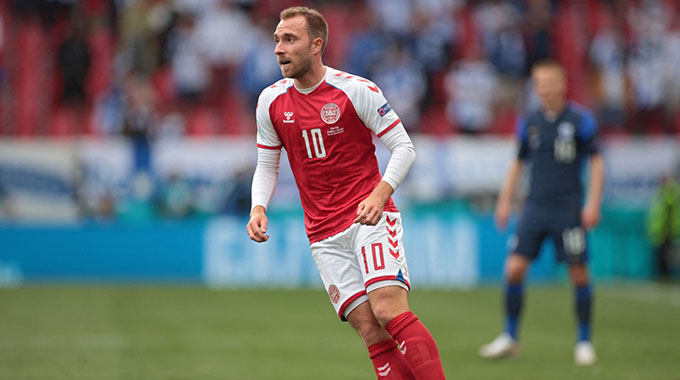
Robson Sharuko Senior Sports Editor
ON this day, 29 years ago, I walked into The Herald newsroom for only my second day at work, as a young sports reporter driven by an ambition, to try and make a name for himself.
It was a Monday.
And, as fate would have it, I had started my journey the previous day, on a Sunday, as if to remind me that’s how everything works in this profession.
A day largely reserved for worship, relaxing with family and football matches in this country, is also the day the working week starts, at this grand old newspaper.
Around the world, things were changing.
The following day, on November 3, 1992, Carol Moseley-Braun became the first African-American woman to be elected, into the United States Senate.
Even the Church of England approved the ordination of female priests.
On November 8, 1992, an estimated 350 000 demonstrators rallied against racism in Berlin, in what was a significant moment for humanity.
After all, this was the city which used to be the heart of racial prejudice, during the Nazi regime.
The city where, at the 1936 Olympic Games, fate appeared to remind Adolf Hitler black people were not an inferior lot. Jesse Owens won four gold medals, as Hitler watched, inside the Olympic Stadium in Berlin.
It’s a sensational feat, pitting good versus evil, the beauty and the beast, which the world still remembers to this very day.
“If the Berlin Games, with all its pomp and politics, is remembered as Hitler’s project to exhibit his supremacist ideology, it is also recalled to this day as the summer when Jessie Owens defied the narrative and emerged as an unlikely hero,’’ wrote Deeptech Sen, in The Indian Express, in July this year.
“It was the summer of 1936 in Berlin, red, white and black Nazi swastika flags flew out of every shop window.
“Throughout the Olympic Games, German Chancellor Adolf Hitler had put in his best possible effort to put on the greatest show on earth and showcase his warped political utopia in which any athlete, or any human being for that matter, of non-Aryan descent had very little space.
“But, it was the summer when Jesse Owens ran — against his opponents, against time and against the Nazi grand narrative — too light-footed to touch solid ground.
“And, when he broke the tape in 10.3 seconds in the 100-metre finals, tying his own Olympic record, his customary bow to Hitler from the victory stand was only acknowledged with a stiff salute.
“When an aide asked the German Chancellor to invite Owens over to his viewing box, multiple accounts state that Hitler had savagely replied, ‘Do you really think that I will allow myself to be photographed shaking hands with a Negro?’’’
But, times change, and in November 1992, the same Berlin was now the stage of a mass demonstration against racism and right wing violence against immigrants.
Little did the world know, but it was also a landmark year for football with a number of boys, who would later become the stars of the beautiful game, being born.
Christian Eriksen, Neymar, Koke, Casemiro, Mohamed Salah, Son Heung-min, Lucas Moura, Granit Xhaka, Allison Becker and Ahmed Musa were all born in 1992. And, so were Wilfried Zaha, Serge Aurier, Isco, Thibaut Courtois, Mario Gotze and Philippe Coutino.
That was the year I arrived on this newspaper, as a fresh recruit from the journalism school and, on November 2, 1992, I marked my second day, in the newsroom.
Little did I know, back then, that this would be a big part of my life and that, 29 years later, I would still be writing for the grand Old Lady of Zimbabwe’s newspapers.
But, here I am now, still around, with all the changes which life has brought along, and all the challenges which it has thrown to me, and those I have been working with, who have become family.
Collin Matiza, who is now the Sports Editor of this newspaper, was already here, when I arrived.
Along the way we lost Sam Marisa, the gentle giant of our desk, the father-figure who used to provide so much comfort, and counsel, for us, during our younger years.
There were only 10 million mobile phones, in the world, in November 1992, and life was very different from what it has become now.
Today, there are about 7,1 billion mobile phone users, around the world, with estimates projecting a rise to 7,26 billion users, by 2025.
The mobile phone, and all its technology, has changed the world in a way which probably beyond imagination, back in 1992.
It has also changed our working environment given that, back in 1992, results from a match featuring Dynamos and CAPS United were not shared, on various mobile phone platforms, immediately after the game.
The debate around the game, among the fans, was limited to the time they would be together at the stadium, on their journey from the stadium and in the bars where they would meet later, in their neighbourhoods.
Today, they spend hours debating about the match, on their mobile phones and by the time the newspaper comes out the following morning, they are now just looking for that expert analysis.
Of course, the newspaper remains a key source of information because, unlike on the unregulated platforms of social media, where everything can be posted, it is still looked up to, as the provider of facts.
Given much of the social media debate is subjective, it’s the objectivity which makes us retain our relevance and it’s been common to hear many say, ‘’Let’s wait for the report in the paper tomorrow.’’
November 1992 looks like a long time ago.
Willie Mtolo is now 57.
He was just 28, back then, and stunned the world when he became the first South African to win the prestigious New York Marathon.
In that moment, long before the Springboks won the 1995 Rugby World Cup to bring the Rainbow Nation together, this Zulu boy gave his country, still trying to find its soul after Nelson Mandela’s release from prison, a reason to believe in its future.
His tale, including setting off the fire alarm after cooking sadza, on a gas stove he had smuggled into the Hilton Hotel, on the eve of the race, is one for the archives.
After winning the race, he received US$20 000, for coming first, US$30 000 as a bonus and a US$36 000 Mercedes Benz.
Not bad for someone who used to run five kilometres, every day, to school, because his father could not afford to buy him a bicycle.
Dreams can really come true.


 Online Reporter