Online Reporter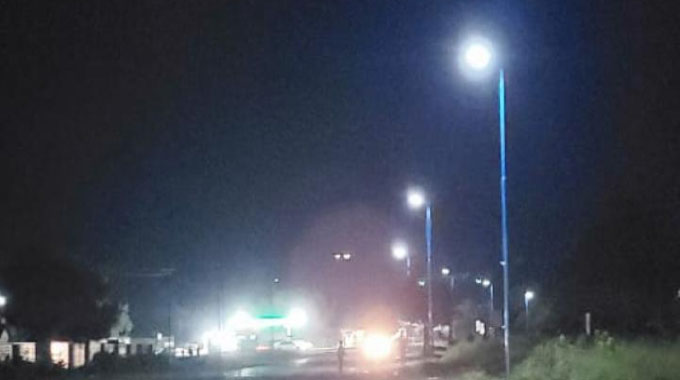
Nothando Zondo , [email protected]
THERE is something quietly powerful about what a simple light can do. In places where the night used to bring everything to a halt, where people moved carefully through darkness or stayed indoors altogether, a new kind of life is beginning to unfold. In Insiza and Umzingwane districts, that change is now clearly visible. The recent introduction of solar-powered street lights has enhanced the transformation of infrastructure and modernisation of rural communities in Insiza and Umzingwane districts.
Instead of relying solely on unreliable power supplies, the two councils have turned to what they have in abundance – the sun. Authorities at the two councils have turned to clean energy which is naturally in abundance in their areas to address service delivery issues related to public safety. It is a simple idea, but one that is already making a noticeable difference.
In Insiza district, the Rural District Council (RDC) has completed the installation of 100 solar-powered street lights across key areas. These lights are now part of everyday life, stretching across roads, shops and homes, bringing a sense of comfort and visibility that many residents did not have before. The initiative is being rolled out as part of the council’s drive to modernise the largely rural communities in line with envisaged Vision 2030. It reflects a wider effort to ensure that rural areas are not left behind as the country moves forward.
The council has backed this plan with real investment. The local authority committed a total of US$35 452 to boost public lighting in strategic locations including residential areas, the central business districts, and major access roads. These are the places where people live, work and travel, and where better lighting matters most.
Some of the lights are doing more than just shining. In addition, some of the solar lights are equipped with cameras in busy areas, strengthening security while advancing the district’s Smart City agenda. This adds another layer of safety, especially in areas with higher activity.
Insiza RDC Council Chief Executive Officer, Mr Shepherd Tahoma, sees this as a turning point for the district.
“This project is part of our broader vision to improve service delivery, enhance public safety, and promote environmental sustainability. The installation of solar-powered street lights demonstrates our commitment to adopting modern infrastructure and smart technologies,” he said.
One of the biggest advantages is reliability. Even when there are power cuts, the lights stay on. Mr Tshuma highlighted that the use of solar energy ensures reliable lighting even during power outages, while reducing dependence on conventional electricity.
The system itself is designed to last and to save money over time.
“These systems are powered by renewable solar energy and use energy-efficient LED technology with battery storage, ensuring uninterrupted illumination and long-term cost savings for the council,” he said.
Already, people are seeing the benefits in their daily lives. Streets feel safer, and moving around at night is no longer as stressful as it used to be. Mr Tshuma added that the public lighting project had started delivering tangible benefits to the communities.
“Improved lighting has enhanced security by deterring criminal activities and increasing confidence among residents to move around at night. It has also improved business operations, as people can now work beyond daylight hours,” he said.
The council is not stopping here. Mr Tshuma said the council was planning to expand the programme to cover more areas, while also exploring the integration of smart monitoring systems for real-time performance tracking and maintenance. This suggests that even more communities could soon benefit from the same changes.
Meanwhile, Umzingwane District is also moving in a similar direction, adopting solar-powered street lighting as part of efforts to modernise rural infrastructure and improve livelihoods. The approach is similar, but the impact is just as meaningful.
Umzingwane RDC Chief Executive Officer, Mrs Sithembiso Sibanda, said the adoption of solar technology reflects the district’s commitment to sustainable development.
“As a council, we are focused on transforming our communities through innovative and climate-friendly solutions. Solar street lighting is key in improving safety, supporting businesses, and ensuring reliable services in our areas,” she declared.
Better lighting is already changing how people use public spaces. She also noted that improved lighting in public spaces contributes significantly to economic growth and community well-being. Some centres that were once quiet after sunset are now busier and feel safer. Mrs Sibanda said with issues of public lighting have been improved in the area, some business centres have become more vibrant and safer spaces for members of the community.
This, she said, was an encouragement for some entrepreneurs to extend trading hours.
Taken together, these changes show how something as simple as light can reshape daily life. The solar street lighting initiative marks a significant step towards the realisation of smart, resilient, and sustainable rural communities, as both districts continue to invest in clean energy solutions and modern infrastructure. It is a quiet transformation, but one that people can see and feel every evening as the lights come on.