admin
admin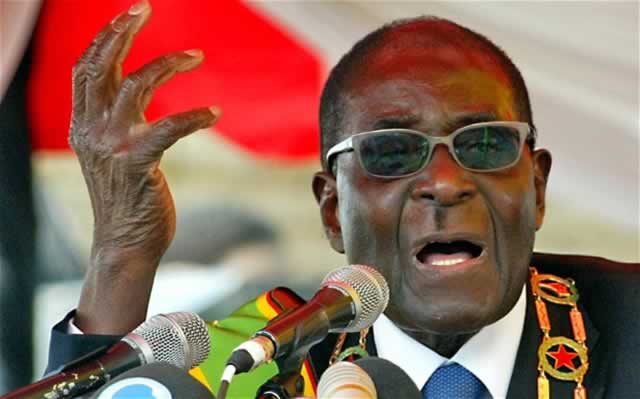
 On 31 July, millions of Zimbabweans went to the polls to elect their new councillors, legislators and a president. They exercised their vote in a free and fair environment that saw Zanu-PF winning by a landslide in the presidential, parliamentary and local government races.
President Mugabe got 2 110 434 votes or 61,09 percent of the 3,4 million votes cast. Mr Morgan Tsvangirai, his main rival, and MDC-T president, mustered 33,9 percent of the vote. MDC leader, Professor Welshman Ncube got 92 637 votes, Dr Dumiso Dabengwa of Zapu getting 25 416 and Mr Kisinoti Mukwazhe managed just more than 9 900 votes. He had pulled out of the race on the eve of the election and thrown his weight behind President Mugabe but because his withdrawal came a bit late, his name appeared on ballot papers.
Zanu-PF won 160 directly-elected National Assembly seats, 20 more than the 140 threshold for a two thirds majority. With other seats of lawmakers selected under proportional representation, the revolutionary party enhanced its majority to 197 in the National Assembly. MDC-T won 49 seats in the lower chamber and with others added through proportional representation, the British-backed party secured 70 seats.
MDC, which did not win any seats in the open election, got a few seats thanks to proportional representation. Zanu-PF also controls the Senate which is structured under proportional representation as well. It also controls a crushing majority of wards countrywide at least 1 493 wards against MDC-T’s 442. At least three by-elections have been held since 31 July and the ruling party has won all, by bigger margins.
MDC-T, and its traditional backers, Britain, America, Canada, Australia and Botswana have predictably refused to accept the results of the election, but Russia, China, the African Union, Sadc and basically all of Africa praised the election as free, fair and representative of the will of the people. They also sent congratulatory messages to Zanu-PF and President Mugabe for winning a transparent election that was also peaceful.
Sadc leaders went a step further in accepting the election at their summit in Malawi by electing Zimbabwe as the deputy chair of the regional bloc meaning that the country would assume the chair next year. The AU also expressed its endorsement of not only the outcome of the election, but also the personnel that manages them when it appointed Zimbabwe Election Commission chairperson, Justice Rita Makarau as head of its election observer mission to Rwanda recently.
African support is critical in consolidating legitimacy of any election outcome on the continent. It gives the winning party more confidence to face its detractors from the West for whom a free and fair election is one in which their preferred candidate wins. For Zimbabwe, the widespread endorsement goes a long way in enhancing the credibility of its new government.
“Today we tell those dissenting nations that the days of colonialism and neo-colonialism are gone, and gone forever,” President Mugabe said in his inauguration speech.
“The era of white colonial ‘whispers behind the African throne’ passed on and got buried together with Lord Laggard the author of this anti-African, neo-colonial notion. Having struggled for our independence our fate has irrevocably orbited out of colonial relations, indeed can no longer subsist in curtsying and bowing to any foreign government, however powerful it feigns itself to be and whatever filthy lucre it flaunts. We belong to Africa.
We follow African values here. We follow our conscience. We abide by the judgment of Africa as indeed, we did in 2008 when Africa advised us to set aside results of the disputed elections. Today it is Britain, and her dominions of Australia and Canada who dare tell us our elections were not fair and credible. Today it is America and her illegal sanctions which dare raise a censorious voice over our affairs. Yes, today it is these Anglo-Saxons who dare contradict Africa’s verdict over an election in Zimbabwe, an African country. Who are they, we ask? Who gave the gift of seeing better than all of us?
“Excellencies, Ladies and Gentlemen, Comrades and Friends,
“With the elections now behind us, we can now focus on rebuilding our nation which has been ravaged by illegal sanctions imposed on us by the West. If yesterday the pretext for imposing those sanctions was to do with a deficit of democracy here, today we ask those culprit nations what their excuse is now? Whose interest are those sanctions serving? Zimbabwe is an open, friendly country. We seek friendship across geographies, across cultures, and quite often against past wrongs.
We seek partnerships with all nations of goodwill, but partnerships based on sovereign, equality and mutual respect. Those are the sacred principles that upon which the global architecture, as defined by the United Nations is founded.”
President Mugabe has appointed an exclusively Zanu-PF Cabinet that would govern the country for the next five years. The indigenisation and economic empowerment programme will define the next five years, like the land reform programme over the past 13 years.
Based on the Constitution and the Indigenisation and Economic Empowerment Act, the wealth localisation agenda seeks to ensure that at least 51 percent shareholding of foreign-owned companies with assets worth $500 000 and more is bought by indigenous Zimbabweans. The indigenisation programme also entails the setting up of community share ownership trusts by companies involved in the extractive sector as well as the creation of employee share ownership trusts.
The law was enacted in 2007 but its earnest implementation started some two years ago.


 Online Reporter