Rutendo Nyeve in Plumtree
THE National Railways of Zimbabwe (NRZ) and the Botswana Railway (BR) have signed an agreement that is set to help improve efficiency in service delivery by the two entities.
The “Through Working Agreement” will now see locomotives from both companies allowed to cross borders and deliver goods either in Bulawayo or Francistown.
Prior to the agreement, locomotives from Botswana would make a u-turn in Plumtree and wait for locomotives from Zimbabwe to continue with the goods while locomotives from Zimbabwe carrying Botswana bound goods would also do the same.
That caused delays as it would take up to four to five days for a locomotive to come through and collect the goods.
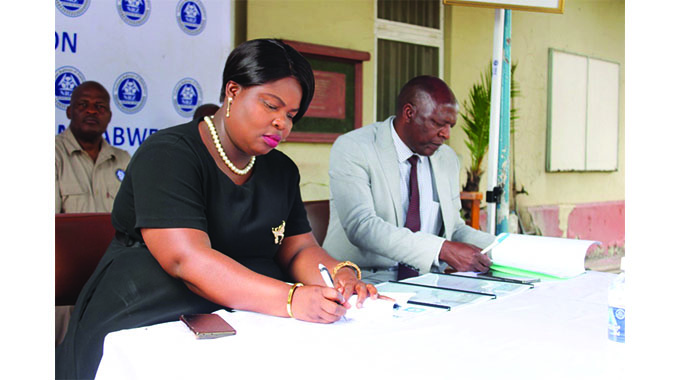
On Friday, NRZ management led by its general manager, Ms Respina Zinyanduko and the BR team led by its director of operations Mr Palalani Mari signed the agreement at Plumtree train station.
In an interview with Sunday News soon after the signing ceremony, Ms Zinyanduko said the agreement will ensure smooth flow of traffic between the two countries.
“Today (Friday) we signed one of the most crucial agreements. It is the Through Working Agreement where the Botswana locomotives and wagons will go through to Bulawayo and also the National Railways of Zimbabwe when it brings traffic meant for Botswana will take it right through to Francistown about 100 kilometres either side.
“This will assist us in terms of smooth working especially for the benefit of our customers. We had situations whereby traffic would go for three to four days waiting for locomotives from either side. So with this arrangement, we are going to have a situation whereby traffic does not stop at Plumtree but go through all the way to its destination thus bringing operational efficiency and also expediting movement of customer goods to their destination,” said Ms Zinyanduko.

NRZ general manager, Ms Respina Zinyanduko and the BR director of operations Mr Palalani Mari sign an agreement at Plumtree train station on Friday
One of the bottlenecks that the national railway company has been facing is that of expediting the movement of customer goods and services, as a result most customers were now shunning the use of railway and opting for road because of operational efficiency.
Ms Zinyanduko said the agreement is in line with the Second Republic’s goal of ensuring regional integration.
“This agreement is in line with the New Dispensation’s mantra of regional engagement and cooperation where we have to work with other regional or Sadc countries in executing our mandate. This should assist us in terms of our mutual customers,” said Ms Zinyanduko.
Mr Mari gave an insight on how both railway administrations came up with the agreement.
“This agreement came to be after a series of interactions between the two entities. Our interactions were informed by our strategies. If you look at our strategies, there is the pillar of customer satisfaction. We then zoned our discussions on that pillar so that we could come up with a solution to improve the service delivery of our customers.
“You will agree with me that as NRZ and Botswana Railways, we have bottle necks both affected by internal and external factors. When we looked at ourselves internally, we said we were not efficient in as far as service delivery is concerned. We then identified some delays along the network,” said Mr Mari.
Cognisant of the fact that the two entities operate on a strategic alliance model where they leverage on each other’s resources, Mr Mari says they then saw it fit to improve on the alliance.
“Previously when our trains came here, they would detach locomotives and go back. We then said let’s close this gap and agreed that it is possible for NRZ locomotives to transverse up to Botswana and BR trains transverse to Bulawayo as it is an equal distance. Hence we have signed this agreement,” said Mr Mari.
Follow on Twitter @nyeve14