admin
admin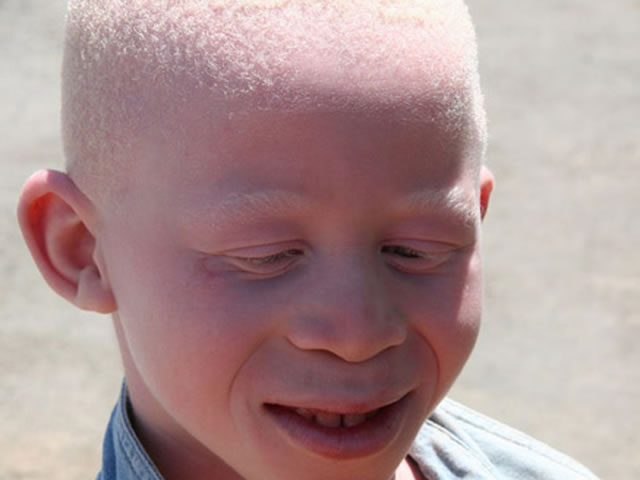

Richard Nyathi
I GOT the biggest shock of my life on Monday, April 7, 2014, watching the Zimbabwe Broadcasting Corporation’s prime-time news at 8PM.
I could not believe the headlines until I heard the whole story repeated in greater detail in the main news. It was reported that Joey Chifamba, the Director of Cornelder Industries Group who is also a pharmaceutics lecturer at the UZ School of Pharmacy, Harare Institute of Technology Pharmaceutics Tech Department, had successfully produced a skin cancer prevention formula in the form of sunscreen medication cream for people with albinism. Skin cancer is a deadly disease that kills above 90 percent of the affected.
The Zimbabwe Albino Association (Zimas) welcomes this breakthrough. Zimas was created on October 3, 1996 primarily to lobby government to take the responsibility for the manufacture and distribution of sunscreen medication throughout the country. Zimas has been arguing that it does not and will never have adequate resources and logistical capacity to source sunscreen medication and distribute it to all health centres in a sustainable manner. Zimas has only been able to reach a few hundreds of people from a population in excess of 15,000. People with albinism who live in remote rural areas have largely not benefited from this intervention, yet these are the people in most need of the preventive medication. Zimas has, up to now relied on donor funding for the purchase of sunscreen medication but donor funds have not been consistent and this has affected the regular supply of sunscreen medication even to those reachable people with albinism.
Whenever sunscreen medication is available, provincial representatives of people with albinism are invited to collect the medication at their own expense. Only a fraction of these are either willing or have resources to collect the medication from the Zimas head office in Harare and at times in Bulawayo. The government Department of Social Welfare has been helpful in some districts by participating in awareness programmes and distribution of sunscreen medication.
Albinism is a common genetic condition in Zimbabwe. Persons with albinism face a myriad of challenges that can be broadly classified into health and social categories. The latter has to do with the myths surrounding albinism and the consequent discrimination. The former has to do with the fragility of the skin that makes it vulnerable to sun damage that eventually develops into skin cancer. Persons with albinism are white in appearance which makes them strangely different from those with black skin. It is this totally different appearance which gives rise to stigmatisation and marginalisation in all areas of social activity including basic health care.
Apart from skin-related health concerns, persons with albinism are short-sighted. The low vision disability is caused by uncontrolled light coming into the iris which is hypo pigmented. Hypopigmentation in the fovea leads to poor central vision, nystagmus, and photophobia. Poor vision adds on to the health challenges of persons with albinism as their education is compromised and therefore their chances of employment and ability to pay for basic health care.
Oculocutaneous albinism (OCA) comprises a group of genetic conditions resulting in reduced melanin synthesis, leading to little or no pigmentation in the skin, hair and the eyes. OCA2 is a variant of OCA and is found in Southern Africa where in Zimbabwe the prevalence is one in 4,000. Those with OCA2 have pale, white or chalky coloured skin, sandy to yellow and light brown hair and blue eyes.
Skin cancer is a serious health risk for persons with albinism. Unprotected exposure to ultraviolet rays damages the skin resulting in skin cancer which is often fatal.
There is no official record of the number of persons who have died of skin cancer in Zimbabwe. However, an indicative mortality rate from the disease can be deduced from the fact that Zimas has lost an average of 15 people (known cases) every year due to skin cancer in the past 10 years. All these people were below 35 years.
Corroborative findings indicate that in Zimbabwe and Southern Africa in general persons with albinism do not live beyond 30 years due to skin cancer.
A report by the World Health Organisation titled Albinism as a Public Health Issue of 2006 revealed that persons with albinism in Africa were deprived of basic health services vital for their survival. The key recommendations outlined in the study were that individual states should conduct surveys to determine the prevalence of albinism. States should also develop appropriate strategies for assisting people with albinism that include the following:
Integrate albinism awareness in the school curricula, especially to correct misconceptions about the etiology of albinism
Educate counsellors in schools about albinism
Train health care providers at clinics and hospitals about albinism and the effects that ultra-violet exposure can have on this condition
Encourage community self-help support groups.
Implement programmes to aid people with albinism in finding indoor occupations.
Prior to 1996 albinism was a neglected disability even among conventional disability rights advocacy organisations. However, Zimas has successfully managed to lobby for inclusion in these umbrella movements. In 2007 the Zimas vice chairperson was appointed to the National Disability Board.
I urge Chifamba and the Ministry of Health and Child Care to speedily seek the cooperation of international agencies like the World Health Organisation (WHO) and United Nations Children’s Fund (Unicef) to assist with the necessary funding for the mass production and distribution of the sunscreen medication. Unicef would be crucial in funding awareness and education programmes targeting children in schools and of course their parents. Zimas is more than willing to work with the cooperating partners to launch this programme.
Skin cancer prevention medication must be consistently used throughout a person with albinism’s life. Therefore I sincerely hope it would be free or heavily subsidised. Failure to take that into consideration would again render the medication inaccessible to the majority of people with albinism, the majority of whom are either unemployed or live in the rural areas because of family and societal pressures. It must be noted also that the majority of parents of school going children cannot afford the extra expense of buying sunscreen cream.
I am fortunate to see my dream come true, the dream that one day sunscreen medication will come in my lifetime. I sincerely thank you on my behalf and on behalf of Zimas, Chifamba and your team, Harare Institute of Technology, and the University of Zimbabwe for this sterling work. Your people-centred work to improve the lives and in relation the wellbeing of the country shall forever be to your credit. In Zimas’ view you have contributed immeasurably to our efforts to mainstream people with albinism in the productive activities of society for their own wellbeing and the development of Zimbabwe as a whole. Perhaps for the first time since 1996 I can now give time to my family. Thank you.
Richard Nyathi is the chairman of the Zimbabwe Albino Association


 Online Reporter