Online Reporter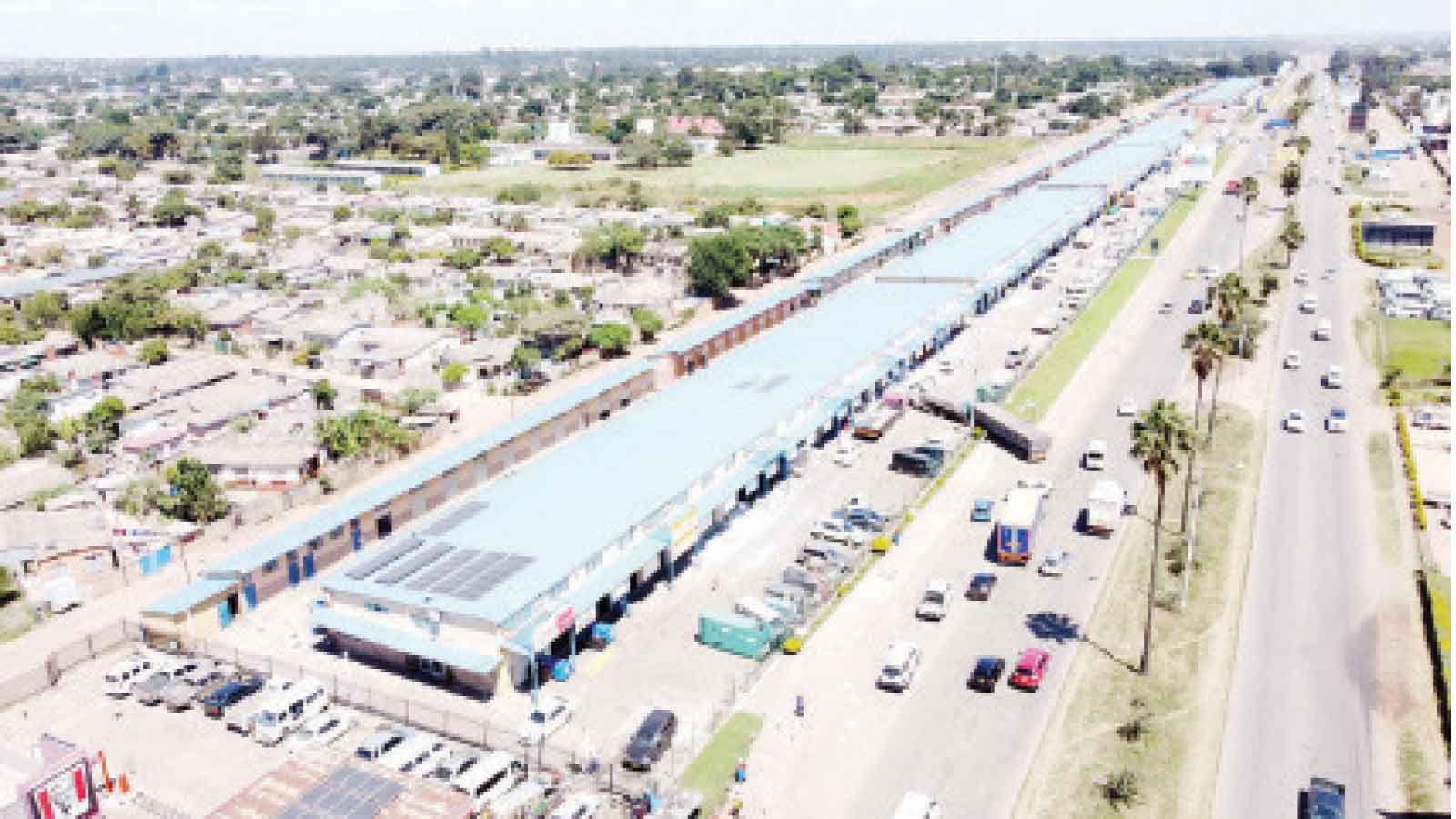
Nelson Gahadza
SUNSHINE Bazaar, a joint-venture trading complex developed in partnership with the City of Harare nearly eight years ago, is stepping up efforts to absorb informal traders as part of measures to decongest the CBD and bring order to urban commerce.
The multi-purpose complex was conceived as a long-term solution to Harare’s persistent challenge of informalisation, designed to accommodate large, medium, and small entrepreneurs under one roof while easing pressure on the CBD. While uptake by large operators, particularly hardware businesses, has been encouraging, management says more work is needed to draw smaller traders into the formal trading environment.
Speaking in an interview, Sunshine Bazaar managing director Mr Ali Ezzedine said the vision behind the project remains firmly intact, despite slower-than-expected uptake of small trading spaces and tables aimed at informal traders.
“Sunshine Bazaar was designed to cater for large, medium, and small businesses. In terms of uptake for big business and hardware, it’s okay.
“But our challenge is with the small enterprises which are located at the back,” he said.
He estimated that small shops at the complex are about 55 percent occupied, while trading tables specifically meant to accommodate informal traders have recorded very low uptake; the reasons for this remain under assessment.
“We don’t know where the challenge lies,” he said. “Is it the location, or is it that people prefer to operate those small businesses in Mbare Musika or Magaba?”
The layout of Sunshine Bazaar was deliberately structured to place larger shops facing the main road, with smaller units and trading tables positioned at the back.
The front-facing section is now dominated by hardware operators, a development he said is a positive signal for the construction sector and broader economic activity.
“We have quite a lot of business people working with hardware, and we hope the country’s construction industry is booming,” said Mr Ezzedine.
To further enhance business activity and strengthen the complex’s role in decongesting the CBD, Sunshine Bazaar partnered with the City of Harare to develop a road port on adjacent municipal land under Build-Operate-Transfer (BOT) terms. Although the road port was not part of the original agreement, Mr Ezzedine said it was later incorporated as a strategic addition to support the project’s objectives.
Located along a major regional route linking Harare to South Africa and other neighbouring countries, the road port is designed to accommodate intercity buses and reduce congestion caused by bus terminals in the CBD.
However, operations at the facility are still below optimal levels.
He added that the launch of the road port is slow and it is perhaps one-third occupied.
“But we hope it will reach full capacity with time.”
Mr Ezzedine said discussions are now underway between Sunshine Bazaar and the City of Harare to re-strategise traffic flow and parking arrangements, including proposals to relocate some intercity bus operations from the CBD to the complex.
Authorities believe this move could significantly ease congestion while boosting activity at Sunshine Bazaar.
Beyond occupancy levels, the project has faced infrastructure challenges common to many urban developments, particularly water shortages and power cuts.
To cushion businesses from electricity outages, Sunshine Bazaar has invested in solar energy systems and allows individual traders to install their own solar solutions.
“Water supply remains a major constraint. Although boreholes were drilled earlier this year, they failed to yield adequate water.
“Public toilets are supported by water tanks to ensure hygiene and sanitation during prolonged water cuts.
“Flooding during heavy rains has also posed challenges, largely due to blocked drainage systems.
“While drainage maintenance falls under the City of Harare, Sunshine Bazaar management frequently intervenes to minimise damage to the complex and surrounding residential areas,” said Mr Ezzedine.
Despite these hurdles, management remains confident that Sunshine Bazaar will ultimately fulfil its mandate of empowering local entrepreneurs and organising informal traders into a structured, regulated trading environment.
“Small shops occupy about 55 percent, and the tables are almost entirely empty,” management said.
“But those informal traders give headaches to governments on issues of informalisation. So, we need to organise them into proper businesses, and we can accommodate them all.”
As part of its support for emerging enterprises, Sunshine Bazaar has introduced flexible rental arrangements to help small traders stabilise before facing full rental obligations.
“We give a great service to small businesses so that they can get on their feet; we have a lot of small businesses which have become big businesses.”
Mr Ezzedine said security and cleanliness at the complex are managed through contracted service providers, with performance reviews conducted annually.
He noted that there have been significant improvements in security conditions compared to the early years of operation.