Online Reporter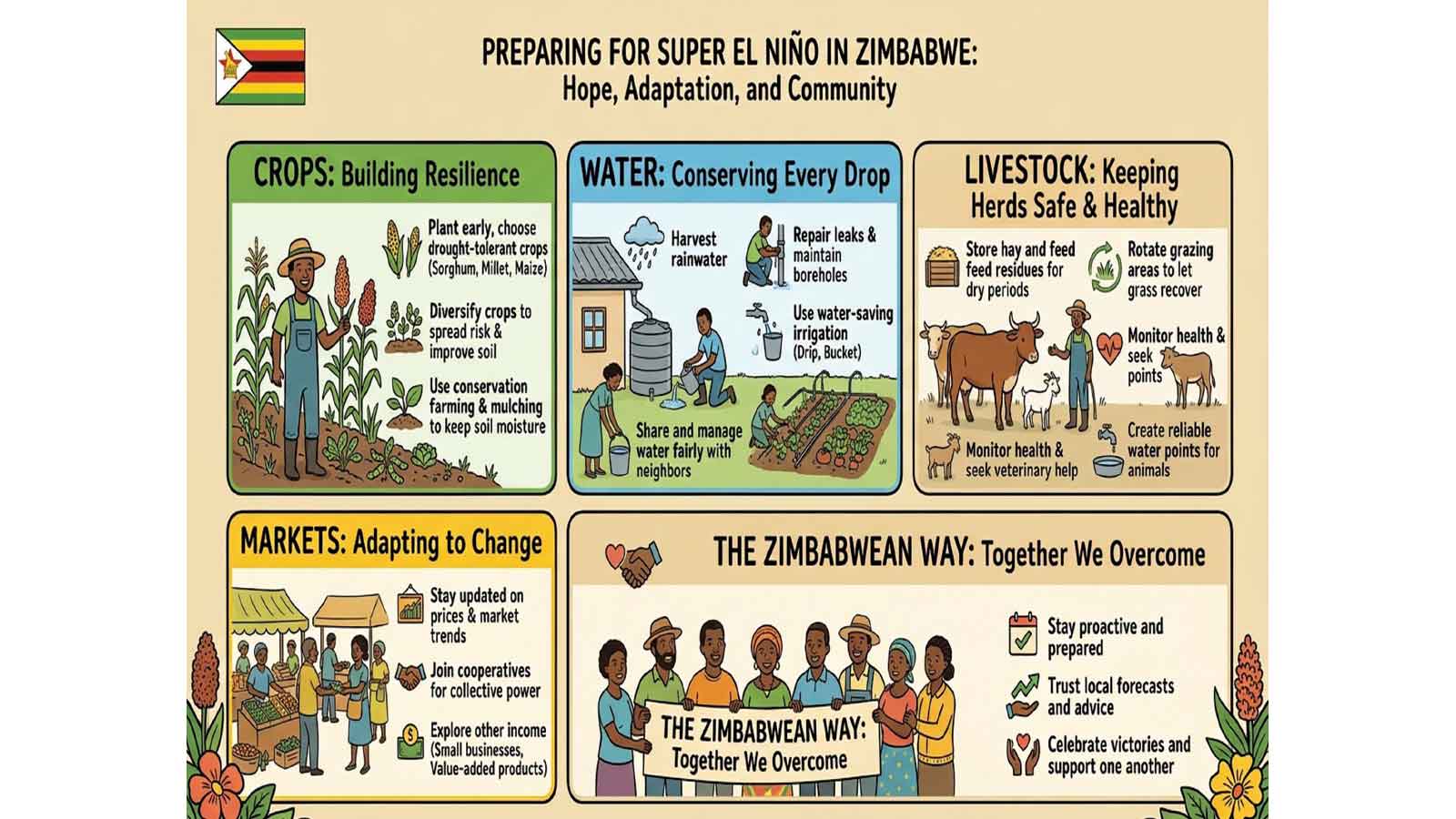
Prof Obert Jiri
Zimbabwe has experienced several Super El Niño events-most notably in 1982-83, 1997-98, and 2015-16.
Each event brought unique challenges and lessons, teaching our farmers and communities the value of preparation, adaptability, and unity.
As another Super El Niño approaches, understanding these past events helps us face the future with confidence and practical solutions.
Crops: Building Resilience, One Season at a Time
During previous Super El Niño years:
- 1982-83 saw reduced rainfall in some regions, with maize yields falling, but areas using drought-tolerant crops fared better.
- In 1997-98, some districts experienced dry spells, yet farmers who diversified with sorghum or millet managed to harvest reasonable yields.
- The 2015-16 event brought widespread drought, but those who practiced conservation farming and early planting saw improved results.
Action Steps
- Plant early, with drought-tolerant and short-season crops like sorghum, millet, and specific maize varieties.
- Diversify crops to spread risk legumes and groundnuts add food security and soil health.
- Apply mulching and conservation farming techniques to retain soil moisture and boost yields even in dry conditions.
Water: Conserving Every Drop
Super El Niño years have sometimes led to lower river levels and dwindling dams. Still, communities that managed water resources carefully were more resilient.
Practical Measures:
- Harvest rainwater in any form or small catchments for use during dry spells.
- Repair leaks and maintain boreholes to avoid unnecessary loss.
- Use water-saving irrigation like drip or bucket irrigation for gardens.
- Work with neighbours to share and manage community water sources, ensuring fair access for all.
Livestock: Keeping Herds Safe and Healthy
Past Super El Niño events have shown that livestock need special attention during dry periods:
- Store crop residues and hay in good years for use as feed when grazing is scarce.
- Rotate grazing lands and rest pastures to help grass recover.
- Monitor animal health closely and seek veterinary help if any signs of illness appear.
- Dig small dams or wells where possible for reliable watering points.
Markets: Adapting to Change
Super El Niño years can lead to changes in food prices, sometimes making basic goods less affordable. However, communities that worked together often weathered these changes better.
Smart Strategies:
- Stay updated on market trends and adjust planting or selling plans as needed.
- Join cooperatives or savings groups for better bargaining power and information sharing.
- Explore alternative income streams such as small businesses, crafts, or value-added farming products.
The Zimbabwean Way: Hope, Adaptation, and Community
If history has taught us anything, it’s that Zimbabwe is resilient. Super El Niño years can be tough, but they do not last forever and with every event, we learn and grow stronger. By preparing early, working together, and staying informed, Zimbabwe’s farmers and communities can overcome challenges and safeguard their future.
Remember:
- Stay calm and proactive.
- Trust local forecasts and extension advice.
- Celebrate small victories and support one another.
With unity and readiness, Zimbabwe can face any season, even a Super El Niño, with hope and determination.
Prof Obert Jiri is the Permanent Secretary for Agriculture, Mechanisation and Water Resources Development