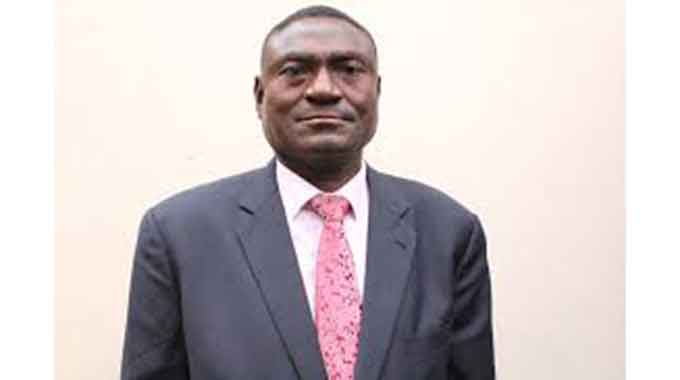
Londile Moyo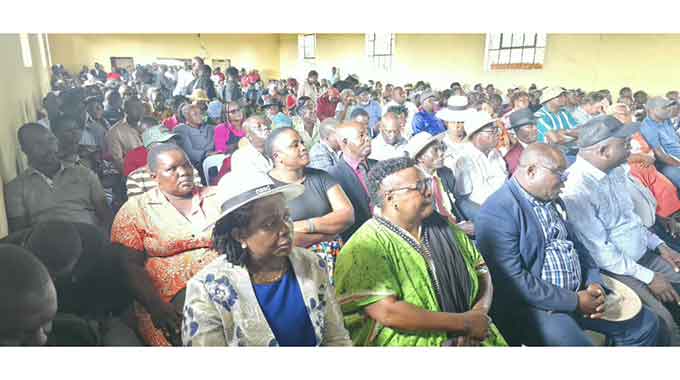
Sikhulekelani Moyo [email protected]
ZIMBABWEANS should fully support the proposed Constitutional Amendment No. 3 Bill (#CAB3) to consolidate the gains achieved since independence, including strengthening local control of the economy, political science expert Mr Richard Runyararo Mahomva has said.
Since its gazetting by Government on 16 February, 2026, CAB3 has attracted widespread attention and support, emerging as one of the most consequential legislative proposals in recent years.
The Bill seeks to amend the Constitution of Zimbabwe by extending the presidential term from five to seven years and introducing a parliamentary process for the election of the President.
It also proposes to modernise and rationalise aspects of the country’s constitutional framework, while safeguarding the foundational principles enshrined in the 2013 Constitution.
The recent public consultation process drew significant interest nationwide, with many Zimbabweans expressing support for the proposed amendments.
Addressing a public lecture held on Friday at the National University of Science and Technology (Nust), Mr Mahomva said the commemoration of this year’s Independence Day marked a critical turning point in the revolutionary continuity of Zimbabwe.
At this stage, he said, the country finds itself immersed in a crucial national dialogue around constitutional reform.
As Zimbabwe marks 46 years of independence, Mr Mahomva said the nationalist movement must remember that the dismantling of colonialism was meant to return power to the people.
ν Full story on www.sundaynews.co.zw
“The mandate of our national liberators was that of ensuring that the law was humanised, to ensure that the dignity of black men is restored. This means that the primary basis of constitutionalism in our case is to preserve the gains of independence more than anything else.
“Today, as we discuss the Constitutional Amendment, Bill No. 3, we should be asking ourselves, how are the gains of independence consolidated. These gains include economic democratisation, which destroys what dismantles white monopoly capital. As such, the real post-colonial constitutionalism should be more focused on increasing control of the economy by the people.”
Mr Mahomva traced the evolution of Zimbabwe’s constitutional framework from the colonial era to independence, arguing that limitations embedded in the 1980 Constitution were gradually challenged as the country moved beyond idealistic constitutionalism towards reforms that addressed property relations by 1990.
While constitutional realism typically centres on the retention of state power, he said Zanu- PF had over the years introduced a broader ideological layer, using power as a means to achieve economic democratisation.
“This means that the constitutional realism is not about mere acquisition of power for the sake of power, but it is the acquisition of power for economic democratisation. Therefore, the proposed electoral life cycle from five to seven years guarantees longevity of sustained majorities’ economic growth.
“This also means leaping in the durational terms of presidency from being an executive power capture to setting a sustainable framework of keeping wealth in the hands of the black majority under a leadership system which understands the importance of economic democratisation,” he said.
Mr Mahomva also addressed concerns around presidential tenure, saying the proposed extension of the electoral cycle was not about entrenching the power of an individual, but about safeguarding economic control for black Zimbabweans.
He urged students to demand accountability from political leadership, noting that academia has a responsibility to conduct audits and ensure that governing parties remain faithful to their mandates.
He further said that CAB3 emerged from resolutions adopted by Zanu-PF at its 2024 and 2025 conferences, where the party advocated for extending presidential terms.
“We have proved over time that the other political parties are there to ensure that wealth is returned to colonial enterprises. So, you need to look at this beyond the literal interpretation to say it is about extending the term of a certain man in power. That is not correct,” said Mr Mahomva.
He added that the passage of CAB3 would also benefit opposition parties by affording them more time to reorganise and strengthen their structures.
Responding to the lecture, Nust Student Representative Council president Rassel Mashinya said the engagement had broadened students’ understanding of the country’s development trajectory.
“By educating us from outside the real life of the 2030 economy, you have empowered us to see beyond the classroom and into the heart of our nation’s future. We are proud to be the generation of progress, witnessing first hand the successes of the Second Republic as a beautifully resilient, affluent income society that leaves no one and no place behind. As students, we are no longer just observers or developers. We are the skilled workforce and innovative minds ready to defend and advance this nation’s future.”


 Online Reporter