

 admin
admin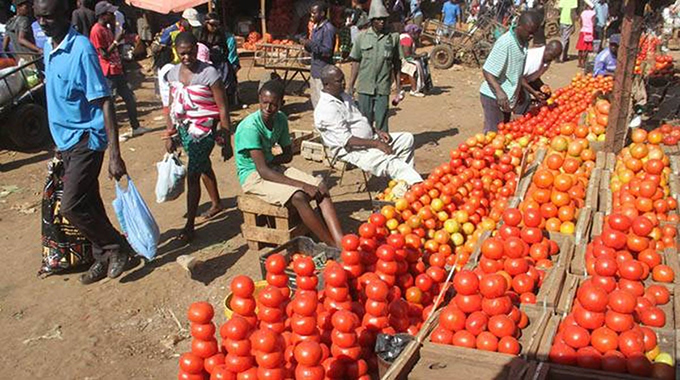
Martin Kadzere Senior Business Writer
African governments should support informal businesses whose activities have been disrupted by coronavirus to limit the risk of social unrest, the African Union (AU) has warned.
In a recent report on the impact of coronavirus pandemic on African economies, the AU warned that livelihoods of nearly 20 million Africans in both formal and informal economic sectors, are under threat due to severe business disruptions as a result of Covid-19.
Some analysts estimate livelihoods losses could be higher given the World Health Organisation (WHO) has hinted the next epicentre of the disease could be Africa. Nearly 220 000 people have succumbed to the diseases while 3,2 million have been infected worldwide.
It therefore becomes critical for African governments to have strategies strong enough to fight second wave of the pandemic.
The highly contagious disease was declared a pandemic by WHO on March 11, 2020 and has become a global emergency, given its devastating effect on the entire global population and the economy. Some analysts fear the pandemic could plunge the world economy to depths unknown since the Second World War, adding to the woes of an economy that was already been struggling to recover 2008 financial crisis.
Beyond its impact on human health (materialised by morbidity and mortality), coronavirus, is disrupting an interconnected world economy through global value chains.
The AU said while the governments were coming with economic packages to support the formal sector, it was critical “to be conscious of the fact” that the informal sector in developing countries contributes to about 35 percent of gross domestic product.
It also employs more than 75 percent of the labour force. The size of informality represents nearly 55 percent of the cumulative GDP of sub-Saharan Africa, according to the African Development Bank. Further studies show that it ranges from a low of 20 to 25 percent in Mauritius, South Africa and Namibia to a high of 50 to 65 percent in Benin, Tanzania and Nigeria. Excluding the agricultural sector, informality represents between 30 percent and 90 percent of employment in Africa.
“The destruction of value chains, the lockdown of the population and the closing of restaurants, bars, retailers, informal commerce etc, would lead to a disruption in many informal activities,” the report said.
“Supporting the informal sector, not only will ensure effectiveness of measures to limit the spread of the disease and support household consumption, but it will also limit the risk of social unrest. In the medium and long run, African governments should support the formalisation of informal sector with emphasis on social protection extension to the sector’s workers. In the formal sector, employees of airlines and companies involved in tourism will be the most affected, in the event of non-support from the African Governments.
Some analysts say African governments should put in place mechanisms to support informal businesses affected by the pandemic to avert “massive” job losses.
“Support measures have been announced by governments to support formal businesses; such support should also be extended to the informal sector given its significance.
“Every formal activity has its counterpart in the informal sector and we need kind of a balanced equation,” Mr Kelvin Rungano, a Harare-based independent researcher said.



 Online Reporter