Online Reporter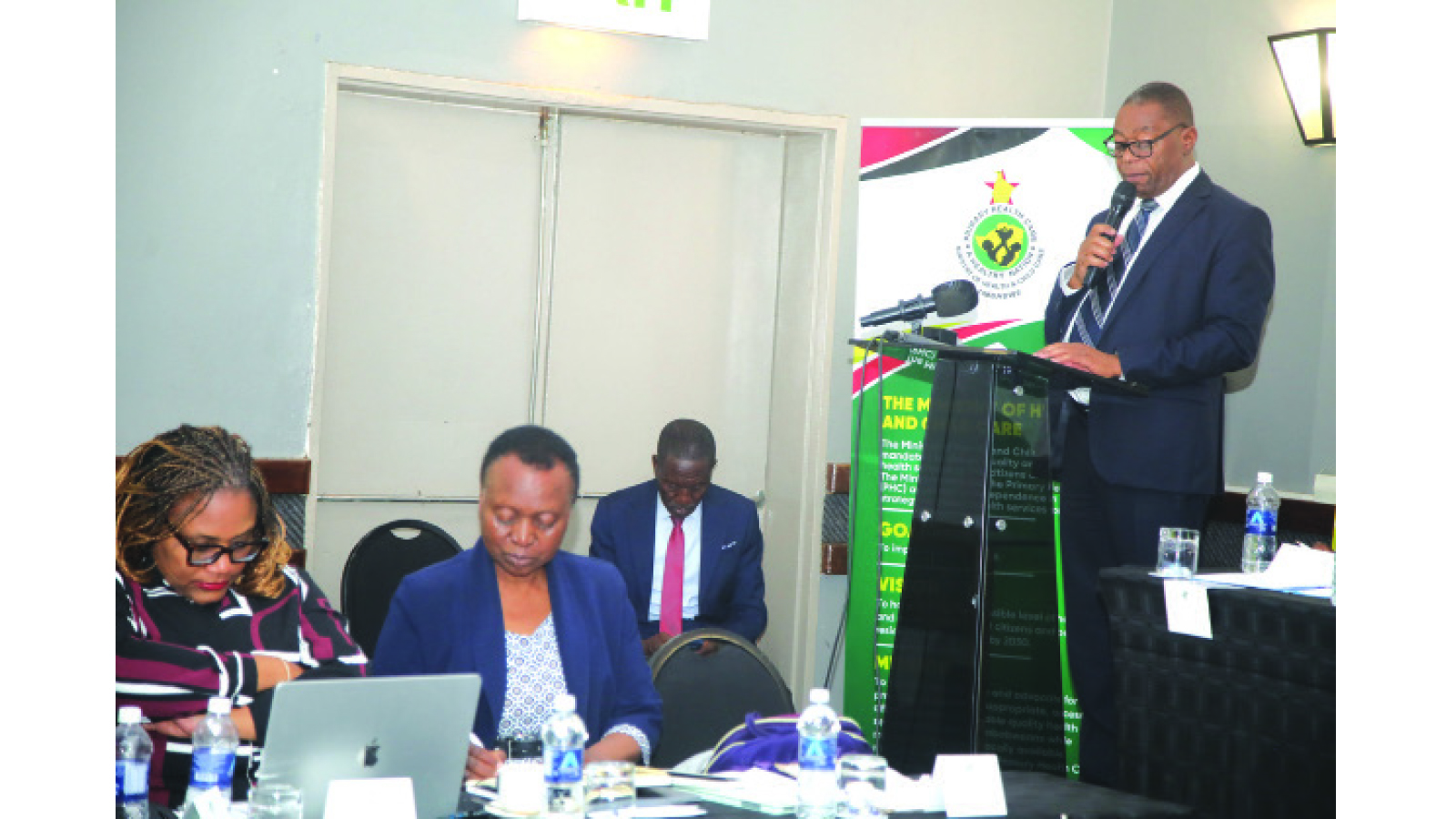
Nyore Madzianike
Senior Reporter
MEN have been urged to support their partners during antenatal care and accompany them for testing to detect diseases associated with the prenatal period.
Speaking during a meeting of the national validation committee for the triple elimination of mother-to-child transmission of HIV, syphilis, and hepatitis B in Harare yesterday, the Minister of Health and Child Care, Dr Douglas Mombeshora, underscored the critical role of male involvement in improving maternal and child health outcomes.
Dr Mombeshora said HIV prevalence was on the decline, while mother-to-child transmission rates were showing significant improvement.
He noted that the rate of mother-to-child transmission had dropped to 6.5 percent, steadily progressing towards the 2026 target of five percent.
“So, I want to urge our men, please support your partners, accompany them to antenatal care and get tested together,” Minister Mombeshora said.
“HIV prevalence is declining, and mother-to-child transmission has dropped to 6,5 percent, moving steadily towards our target of less than 5 percent by 2026”.
Dr Mombeshora described the meeting as a vital step towards achieving an HIV-free, syphilis-free, and hepatitis B-free generation.
“Let me begin by commending this national validation committee for the expertise and commitment you bring. Your work is critical in helping Zimbabwe move forward towards gold-tier validation for the triple elimination of mother-to-child transmission,” he said.
The Minister expressed confidence that the country could reach its targets, citing Botswana as an example of a nation that had successfully eliminated mother-to-child transmission of HIV.
“If Botswana can do it, then Zimbabwe certainly can do it,” he said.
Dr Mombeshora said although nearly all pregnant women are now being tested for syphilis, efforts to eliminate hepatitis B are also gathering momentum.
He urged provincial medical officers to evaluate their programmes and adopt community-specific strategies.
“Nearly all pregnant women are now tested and treated for syphilis and efforts for hepatitis B elimination are gathering momentum. More work is needed, especially on testing and the birth dose vaccine.
“Colleagues, each of our 10 provinces must rigorously examine their programmes, confront their unique challenges, and find solutions that fit their communities.
“This validation process is not about ticking boxes, it is about ensuring that no child in Zimbabwe, whether born in Harare, Gwanda, or Binga, or anywhere in Zimbabwe, begins life carrying an infection we can prevent,” he said.
Dr Mombeshora acknowledged the challenges posed by limited financial resources, saying his ministry was focused on mobilising domestic support to sustain progress.
“We must also face the reality of constrained global financing. This is why my Ministry is prioritising sustainability roadmaps and mobilising domestic resources.
“Progress must not stall because external funding has declined,” he said.
The Minister expressed optimism that Zimbabwe would achieve its goals, citing the country’s available human capital and expertise.
“Our vision is clear — a Zimbabwe where every child is born free of HIV, syphilis, and hepatitis B. It may sound ambitious, but remember, it can be done. Let us now look at ourselves. Big dreams can become reality. Together with the expertise and dedication in this room, I am confident that Zimbabwe will join the ranks of nations validated for triple elimination. We owe this to our children, the leaders of tomorrow,” he said.