Online Reporter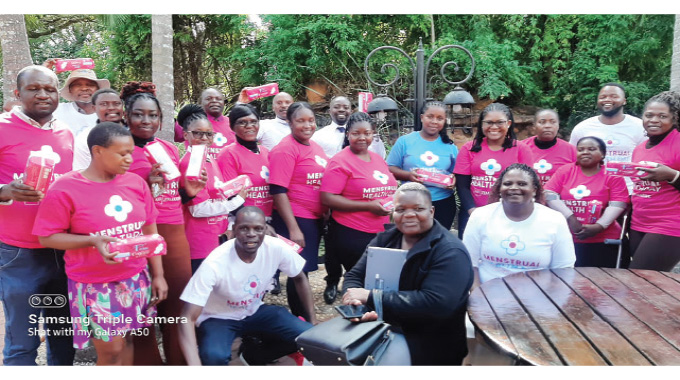
Locadia Mavhudzi, Midlands Correspondent
SUSAN Hove, a Form Two learner at a rural school in the sprawling Mberengwa District in the Midlands Province wraps her jersey around her waist, as she struggles to conceal that she has messed her school skirt.
She tries to act normal, but the wintry weather is taking too much out of her lean body. It becomes evident that she needs the jersey on her body than on her waist. But she is afraid of the embarrassment it will cause, if other learners discover that she was not adequately prepared for her menstrual cycle.
Like other rural learners, pads are a luxury that households can hardly afford, making some skip lessons when the cycle comes.
She is not alone in that predicament, but with the help of different organisations the challenge is becoming less of a burden.
Spurred by the realisation that supporting girls’ menstrual health is crucial for achieving their educational dreams, as it directly impacts school attendance and academic performance, thereby influencing sustainable development. The Government has been mobilising partners to ensure that the learners, especially those in remote schools, do not miss lessons due to period poverty.
When girls can manage their periods with dignity and without fear of shame or stigma, they are more likely to stay in school and succeed.
Adolescence, the period between childhood and adulthood, is a critical window of opportunity in a person’s life. It is a time of profound physical, emotional and social change when trajectories are shaped. Pathways are established toward success and empowerment or toward vulnerability and risk. Experiences, choices and support systems can define a future.
This year’s International Menstrual Health Day, celebrated on the 28th of May under the theme, “Together for a Period Friendly World” took stakeholders in the Midlands Province, with support from the Aids Healthcare Foundation AHF, to reflect on the state of menstrual healthcare and support for adolescent girls.
Midlands Provincial Medical Director Dr Mary Muchekeza, said Zimbabwe has taken a bold stance of leaving no one and no place behind, in line with President Mnangagwa’s Vision 2030 taking a holistic approach and co-ordinated efforts from policy-makers, educators, employers, healthcare providers and civil society, to make menstrual health a priority.
“Addressing period poverty is essential for achieving several United Nations Sustainable Development Goals (SDGs) under Agenda 2030. It also starts from our homes. When menstrual health is neglected, it can exacerbate gender inequalities and limit education, economic opportunities and participation in society. Conversely, improving menstrual health can drive gender equality and sustainable development.
Menstrual health is closely tied to gender equality as the menstruation experience is shaped by social, economic and structural inequalities. Menstrual stigma reinforces negative gender stereotypes and norms and perpetuates harassment and discrimination.”
The Aids Healthcare Foundation (AHF) Zimbabwe has rolled out a campaign to help over a million girls in a pads campaign, in an effort to address the stigma, cultural taboos and lack of menstrual hygiene access that undermine dignity and increase HIV risk, among women and girls.
AHF programme manager Mr Clever Taderera, said the campaign is targeting vulnerable communities, school-going children and highlighting how menstruation intersects with HIV vulnerability and its adverse effects on mental health.
“No girl should have to endure an undignified menstrual experience or miss school because she cannot access sanitary products. Menstruation is a natural bodily process, yet too often it’s treated as a shameful secret. We all have a role to play in ending period poverty — from ensuring access to pads and other essentials, to including fathers and boys in menstrual health conversations to break the taboo,” he said.
Mr Taderera emphasised the broader impacts of neglecting menstrual health.
“When young people lack support and resources for managing their periods, the consequences go beyond just physical discomfort. Girls may suffer anxiety or low self-esteem and some are even forced into risky situations, like transactional sex, just to obtain pads, which increases their vulnerability to HIV and other dangers. We can protect girls’ health, boost their confidence and safeguard their futures by promoting menstrual dignity, providing access to affordable or free sanitary products and fostering open, inclusive dialogue.”
Miss Florence Makutya, a 24-year-old young woman from Zvishavane, reminisces her adolescent menstrual experiences as shameful. The inability to afford sanitary products and related hygiene items significantly impacted her educational achievements due to missed school days, health risks and stigma.
“I vividly remember the embarrassment I faced when I started my monthly periods as a Grade Seven learner at Mhondongori Primary School. I became the talk of the day, amongst boys and girls in the corridor. Despite being a prefect, I lost confidence.”
Miss Makutya said she had learnt about menstruation in the guidance and counselling sessions with a senior lady teacher at the school. However, there were no sanitary pads easily available at the school to sustain her flow and no running water to support hygiene.
“My first menstrual experience really taught me the importance of running water. There was no tap water or borehole, but we relied on the borehole available at the nearby secondary school. When it got into my Guidance and Counselling Teacher’s ears that I had spoiled my uniform, she instructed me to go to her house and quickly sent out some girls to fetch water for me to bath. My teacher, Mrs Moyo provided me with sanitary pads and instructed me to request them back home but alas, I knew it was a tall order for my grandmother.
“It took me three days to regain my confidence and join others at school. Indeed my experience was shamefully unforgettable, but opened my eyes to the realisation that water provision and adequate support can close the menstrual health gap, amongst adolescents in school,” she said.
A study by SNV Zimbabwe found that 72 percent of menstruating schoolgirls do not use sanitary products due to unaffordability and 62 percent of girls miss school every month due to a lack of sanitary wear. This can result in over 40 days of missed learning annually, affecting their academic performance.
Ms Merjury Makunere, chairperson of Gweru Chapter Women’s Coalition of Zimbabwe said its high time government institute mechanisms to protect adolescent girls, in line with signed regional and international treaties.
“Thirty years after the landmark Beijing Declaration and Platform for Action, the world must follow through on its promise to ensure every girl has the chance to fulfil her potential. We call upon the Government to invest more to protect adolescent girls’ rights and scale up programmes to meet their unique needs, by providing sanitary pads in all schools.”
Conclusively, by addressing period poverty, it’s possible to make significant strides towards achieving in the areas of health, education, gender equality and economic empowerment. This includes promoting access to affordable and sustainable menstrual products, providing education and awareness about menstrual health and ensuring access to safe and hygienic sanitation facilities.