Sharuko on Saturday
IN the post-mortem which followed the unveiling of the latest bunch of the Soccer Stars Of The Year, a colleague asked me an interesting question.
He is also a journalist but he isn’t into sportswriting, but his speciality is covering business and politics.
His question was simple as it was straightforward — Rob, don’t you think Benjani is the Coach of the Year?
I told him that, if I was one of those who voted, I would have cast my vote for Kelvin Kaindu. I told him you can’t ignore history and that Kaindu was the first foreign coach, of African descent, to guide a local team to the league championship, was too special to ignore.
When one considers that the domestic top-flight league championship has been running for 64 years and Kaindu is the first foreign coach of African descent to win the championship, you can understand how special it is.
However, he kept insisting he had a different view.
He said Kaindu, alongside Norman Mapeza, were in charge of clubs which had the best resources — the biggest and best squads of players, the best technical supporting staff, the best working environments, the best incentives for players and so forth.
In sharp contrast, he said Benjani was in charge of a broken and bankrupt team, whose players staged several strikes, because of non-payment of their dues.
And, instead of concentrating on coaching, he spent a huge amount of time trying to douse the flames in his dressing room and, on many occasions, he watched helplessly as the players boycotted training.
He noted that one weekend, when the Scottland players were handed almost US$200 000 to share among themselves, the Bosso players did not get even a cent despite having posted a good result earlier that week.
Therefore, he said, it was important for those who chose the Coach of the Year to acknowledge that Benjani was working in a very hostile environment and the playing field was not level for the Undertaker.
Against that background, he said, for Benjani to guide Bosso into the final of the Chibuku Super Cup, where they will meet Hardrock at Chahwanda today, was a huge achievement.
Yes, Bosso have been in the Chibuku Super Cup final before, and actually won the tournament a few years ago, but my colleague said the circumstances were different.
He said Bosso then was not the charity case that they are now.
A broken club which even fails to fulfil a fixture because players have staged another mutiny, demanding their dues and where it’s now normal for them to forget the last time they were paid.
He said Highlanders, back then, was a proud and powerful football institution, a defining symbol of both excellence, and endurance, a fountain of hope for its followers and an island of joy for those who believe in its cause.
Even in their darkest hour, Bosso remained true to the values of their founding fathers and the men who were tasked to provide leadership did so knowing that this was an honour, a privilege, and a service to their community.
They were driven by the pursuit of excellence and a burning desire to make Bosso a better football institution.
In the year that Highlanders are celebrating turning 100 years old, he said, the people’s team was in its worst possible shape and for Benjani to take them to the final of the Chibuku Super Cup was a huge achievement.
To illustrate how times have changed, he said back when Bosso were real giants, this final would have been guaranteed to be played at Barbourfields but now it’s at Chahwanda.
FOR BENJANI, THIS IS A FREE HIT
Benjani became the first coach to win at Chahwanda when he guided Bosso to a 1-0 win in a league match in Kwekwe.
But, things have changed since then.
Hardrock strengthened their team mid-season, they brought Prince Dube back home, they signed the most exciting player in the domestic Premiership right now, midfielder Thubelihle Mavuso and they come into the final boosted by the confidence of being a league champion.
For Benjani, this is a free hit.
If Bosso lose the final, it’s something that is expected because the opponents are not only stronger but the Highlanders camp has been in disarray; they don’t appear to be in the right frame of mind for the final.
If Bosso win, then Benjani is a hero.
But, this game is being played under a cloud of controversy and, for me, that is the bigger story than whether Benjani should, or should not, have been named Coach of the Year.
I understand my colleague’s argument that Benjani’s Bosso beat both Scottland and Hardrock in league matches and I agree with him that such feats show that he had a great season, given the circumstances he was operating under.
But, for me, the elephant in the room today, as it was on Saturday at Chahwanda and as it was on that Sunday when Hardrock came to Barbourfields and urged Bosso 1-0, a result which probably won them the championship, remains MONGAMELI TSHUMA.
Somehow, Mongameli did not play in that game and Bosso, without him, did not have the same authority to push for a winner, or even settle for a draw, which would have changed the championship race.
By then, Mongameli had already agreed a move to Hardrock, from January 1 next year.
Just as well he didn’t play in that game because some had already started asking how committed he would be in a game where he was expected to destroy his own dreams to play in the Champions League with Hardrock next year.
Given the best case scenario for him was for Hardrock to win the championship, so that he could play in the Champions League for the first time, the worst thing he could do was to help Bosso win and destroy those dreams.
That he didn’t play in that game suited both sides of the coin but it defrauded the Bosso fans, the innocent souls in all these transactions, whose only prayer is for their team to win which, in this case, means having their best players in action.
SURELY, HOW DOES MONGA PLAY AGAINST HARDROCK?
This week, Benjani said Mongameli was available for selection for today’s Cup final showdown against Hardrock at Chahwanda.
Something just didn’t feel right about that statement from the Undertaker, a very good friend of mine for more than two decades now.
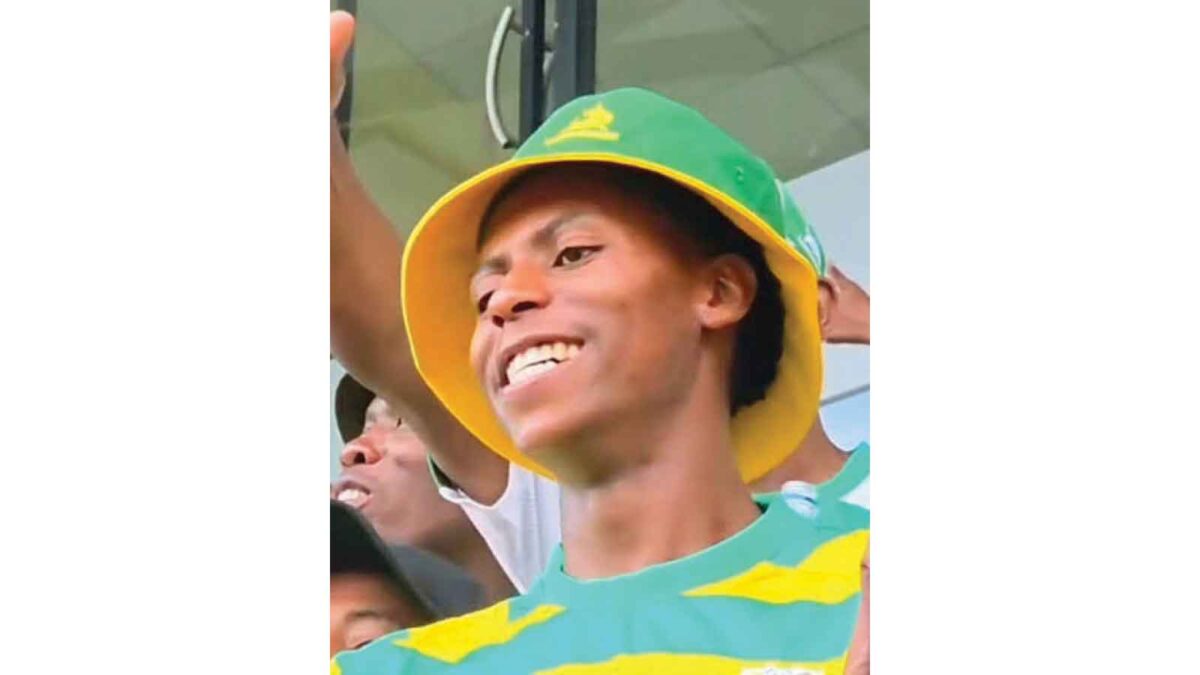
How is it possible that a man who was wearing a Hardrock jersey at Chahwanda on Saturday, and was cheering as a fan from the stands and celebrated wildly after the championship was secured, could now come dressed in Bosso colours for a clash against Hardrock in a Cup final?
How does one transition from being a fan of one club to an opponent of the same club in just one week?
It’s something which worried Bosso legend Alexander “Cool Ruler” Maseko so much this week that he posted a number of questions on the controversy this week.
Bosso official Kindman Ndlovu replied to the post and said Mongameli was contracted to Highlanders until December 31, this year, and he will become a Hardrock player on New Year’s Day.
The message from Kindman is that Mongameli was not signed by Hardrock and loaned back to Bosso.
FIFA rules do not allow a player to sign for two clubs at the same time.
Yes, a player can sign a pre-contract with another club, in the final six months of his contract with his parent club, but that doesn’t mean he has two clubs to serve.
He remains an employee of his parent club.
That is why you don’t see clubs unveiling players they have agreed pre-contracts with because they are not their players and they will only become their employees at the end of their contracts with their parent clubs.
The Mongameli saga appears to suggest that he is a Hardrock player and Highlanders are only junior partners in the deal when, in reality, Bosso are the principal club here.
His management should have advised him that wearing a Hardrock jersey and cheering them from the stands was not advised, especially with his parent club having a Cup final against the same opponents, one week later.
What if he plays today and misses a penalty or, accidentally, scores an own goal?
You can’t blame Hardrock because they saw an opportunity and approached Highlanders and a deal was agreed.
You can only blame the player for the way he has behaved which has complicated matters.
Maybe, we should adopt what they do in England where a player, who is in the final six months of his contract, is allowed — with the permission of his club — to talk to other teams but those teams should only be from outside England. In England, players moving to another English club as a free agent cannot negotiate a pre-contract six months out and domestic talks are restricted until the final month of the existing contract.
They say this is meant to prevent mid-season conflicts of interest within The FA’s jurisdiction.
That is the kind of scenario we have faced from the Mongameli Tshuma issue.
To God be the glory.
Peace to the GEPA Chief, the Big Fish, George Norton, Daily Service, Sitting Bull, Crazy Horse and all the Chakariboys still in the struggle.
Come on Warriors!!!!!!!!!!!!
Antoniooooooooooooo!
Text Feedback — +263772545199
WhatsApp — +263772545199
You can also interact with me on
Twitter (@Chakariboy), Facebook, Instagram (sharukor)IN