malvernmugadzikwa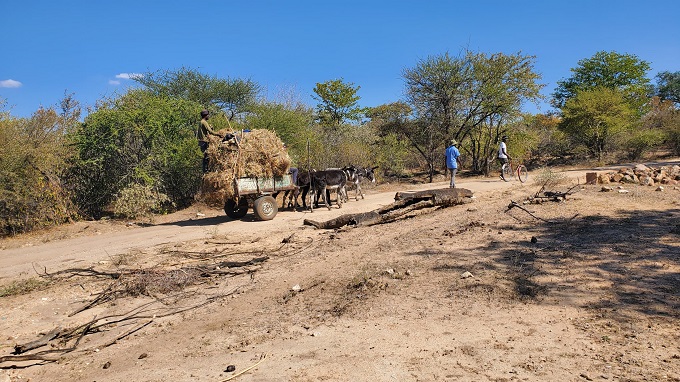
Theseus Shambare
IN the scorching heart of Matabeleland South Province, a devastating drought has left a trail of destruction, leaving farmers and villagers in a desperate struggle for survival.
The El Nino-induced disaster has withered crops, decimated cattle, and depleted food stocks, plunging vulnerable households into a dire food crisis.
For 62-year-old Sipho Moyo, the drought has been a crushing blow.
“Our area has become a cursed place,” she lamented.

“We adjusted to the harsh climate by planting small grains, but the rains never came. Our crops never germinated, and the few that did succumbed to the heat prematurely.”
Mkhumbulo Mpofu, 67, has lost his entire herd of 10 cattle, leaving him with only three donkeys.
“Life has become tough,” he said, his voice laced with despair. “I had a good herd, but they all died after the water sources dried up.”
But hope is on the horizon.
Sipho Moyo of Madabi village under Chief Wasi Mangwe District
Since President Mnangagwa declared a State of Disaster, development partners have rallied to support the affected communities.
The Catholic Relief Services Zimbabwe (CRS) has launched the Zwitile project, a US$2 million initiative funded by the United States Agency for International Development (USAID).
The project aims to provide immediate food assistance to 13 400 people in dire need while promoting climate-smart agriculture practices.
“We want to ensure households meet their basic food requirements,” said Dr Tapfuma Murove, CRS Zimbabwe country representative.
“We are providing 50kgs of cereals, 10kgs of pulses, and 3.75 litres of cooking oil every month for five months to each household, conditional on their participation in community asset-building activities.”
The project employs community-led participatory planning, technical skills training, and asset-building activities to ensure community resilience.
Communities receive technical skills from Government and non-governmental organisations, enabling them to address underlying causes of food insecurity.
As the project is rolled out, communities are beginning to rehabilitate dams and restore natural landscapes.
They receive training in water harvesting techniques, soil conservation, and rangeland management practices to improve crop and livestock productivity.
By addressing systemic underlying causes of food insecurity, the Zwitile project aims to reduce communities’ dependency on humanitarian assistance.
“We look forward to working collaboratively with all stakeholders to help vulnerable people during this difficult time,” Dr Murove said.
The Zwitile project is a beacon of hope for the vulnerable households in Gwanda and Mangwe Districts, offering a chance to rebuild their lives and restore their dignity.
As the project gains momentum, it is clear that the resilience and determination of the communities will ultimately triumph over the devastating effects of the El Nino-induced drought.



 Online Reporter