Online Reporter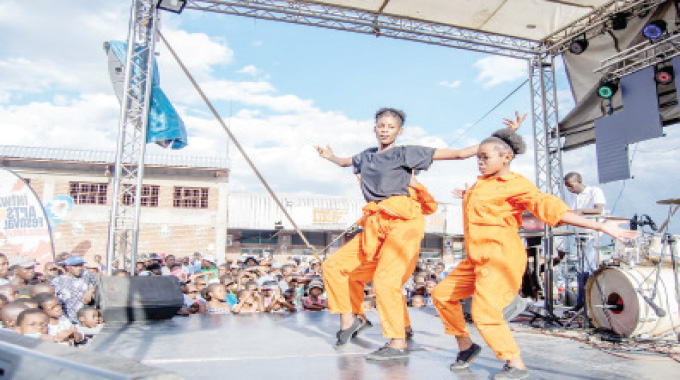
Silenkosi Moyo, [email protected]
Bulawayo’s creative sector often bursts into life with new festivals, packed exhibitions, and ambitious award initiatives. Yet without stable funding, many of these promising ventures fade before they can grow beyond their initial spark.
From theatre to music, literature to dance, Bulawayo’s artists have proven time and again that talent is not in short supply. What is scarce, however, is the infrastructure and systems that sustain creativity. The challenge is not the absence of vision, but the lack of consistent support. Once donor funding dries up, most projects fade away, leaving behind memories, photos and sometimes, debts.
Across the city, from the National Gallery in Bulawayo to the Bulawayo Theatre, Intwasa Arts Festival koBulawayo, and independent creative hubs, artists and administrators share the same struggle: keeping doors open and programmes running in a tough economy. Many institutions occupy rented spaces, some rely on temporary funding, and most operate with skeleton staff. The passion is there, but passion alone doesn’t pay the bills.
So, what models are we using to ensure continuity once donor funding ends? How do we keep programming alive when the grant period is over? Do we have audiences willing and able to pay for the art we create, and can those audiences sustain us?
These are uncomfortable but necessary questions. Many artists in Bulawayo are part-time practitioners, juggling day jobs to support their creative practice. A few are fortunate enough to be full-time, but often, their stability is tied to short-term funding cycles. The result is an arts community that’s vibrant in spirit but precarious in structure.
We speak often about building an arts industry, but industries are built on systems that generate consistent income, employment, and innovation. For as long as our creative economy relies primarily on donor funding, we are arguably not yet an industry; we are a sector in transition.
That is not to say donor funding is bad. On the contrary, grants have played an essential role in nurturing the arts, especially where Government and private sector support have been limited. But donor funding should be a springboard, not a lifeline. The real question is: what happens after the funding ends?
To move towards sustainability, the sector must embrace the creative entrepreneurship model, one that blends creativity, business acumen and community engagement. Here are a few proposed starting points:
1. Cultivating Paying Audiences
Audiences must see art not as a luxury but as part of daily life, something worth paying for. This calls for consistent engagement, storytelling and value creation. Ticket pricing, programming and marketing, all need to balance local economic realities while affirming the worth of artistic labour.
2. Diversifying Income Streams
Institutions and individual artists need to think beyond grants. Merchandise sales, space rentals, membership schemes, and educational workshops can all generate income. Even small initiatives, hosting art classes, selling limited-edition prints, or offering artist residencies, can create meaningful revenue over time.
3. Corporate Partnerships
Businesses in Bulawayo can play a bigger role in sustaining the arts through sponsorships, collaborations, and endorsement programmes. The arts, in turn, offer visibility, goodwill, and a sense of civic pride that no billboard can buy.
4. Philanthropy and Endowments
Globally, philanthropy is a cornerstone of arts sustainability. Many museums and galleries in the West are supported by endowment funds, large financial reserves built through donations and bequests from patrons.
The Metropolitan Museum of Art in New York, for instance, has an endowment exceeding US$3 billion. The interest earned from this fund supports operations, exhibitions, and educational programmes year after year, ensuring stability regardless of economic fluctuations.
An endowment functions like a long-term investment: the principal amount remains untouched, while only a portion of the annual returns is used to fund activities. It is a model that allows institutions to plan long-term, maintain artistic integrity, and remain independent of short-term donor cycles.
While Bulawayo’s arts sector may not yet have this level of endowments, it can start by cultivating a culture of giving, where individuals and families support artistic projects not as charity, but as an investment in our collective cultural identity. Imagine if every successful Bulawayo businessperson adopted one artist, gallery, or arts space each year. The ripple effect would be immense.
By the way, donor funding and philanthropy are often used interchangeably, but they operate quite differently.
Donor funding is usually project-specific and time-bound; it supports certain activities for a defined period, after which the funds stop. Philanthropy, on the other hand, is relationship-based and long-term, often coming from individuals or families who believe in the enduring value of the arts. Where donor funding responds to proposals, philanthropy responds to vision.
5. Policy and Institutional Support
Sustainable arts require enabling environments, fair taxation policies, accessible venues, arts education and municipal support. The City of Bulawayo could, for instance, create an arts development fund, channelling a small percentage of, say, stadium gate takings or event licensing fees into a cultural pool administered through its Culture Office.
Ultimately, sustainability in the arts is not just about money; it’s about mindset.
It’s about artists seeing themselves as entrepreneurs, audiences seeing art as essential, and institutions seeing their work as part of a broader cultural economy.
Our city has always been rich in creativity. Bulawayo has produced icons in visual art, music, theatre, and literature, from Taylor Nkomo, Lovemore Majaivana and Cont Mhlanga to Ndabezinhle Sigogo and many others, who carried the torch of cultural expression with resilience and ingenuity. Their stories remind us that sustainability is not only financial but also spiritual; it is about endurance, adaptation and relevance.
The next chapter of our story should be written not by donors, but by us, the artists, institutions, audiences, and citizens who believe that art is not just entertainment, but an essential part of who we are.
If you know of self-sustaining events, artists, or festivals that have managed to thrive without donor crutches, please reach out. Your story could inspire the rest of us.
Silenkosi Moyo is an arts manager with over a decade of experience in visual arts. She serves as the regional manager at the National Gallery of Zimbabwe in Bulawayo.