Online Reporter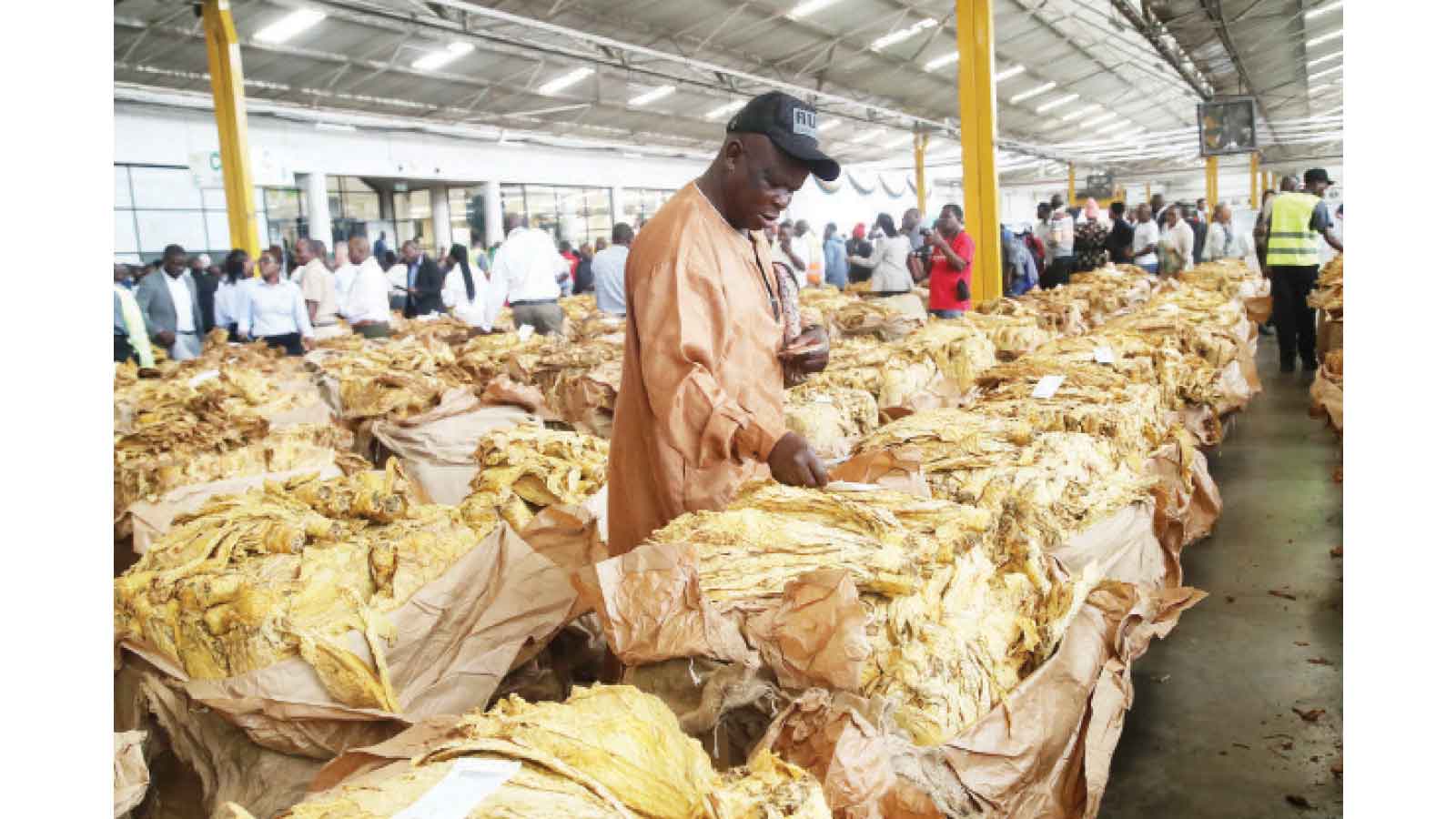
Theseus Mauruki Shambare
WHEN Mrs Charity Munaki expanded her irrigated tobacco crop from one hectare to five hectares last season, she expected her biggest harvest to deliver her biggest pay day.
It certainly delivered the biggest harvest.
Like thousands of Zimbabwean farmers, she became part of the country’s largest tobacco crop on record.
But, as the selling season is set to officially close on July 31 with mop-up sales continuing into early August, she is realising that the bumper harvest has only produced bitter returns.
Despite producing more tobacco than ever before, Mrs Munaki found that rising production costs and depressed prices on the market had significantly eroded her profits, exposing a growing contradiction within one of Zimbabwe’s most successful agriculture sectors.
“I produced more tobacco than before, but the costs also increased,” she told The Sunday Mail.
“Fertiliser, chemicals, labour and curing fuel all became more expensive.
“At the end of the day, a farmer looks at what remains after all expenses have been paid.”
Her experience reflects a question increasingly confronting Zimbabwe’s tobacco industry: If record production is no longer translating into better incomes, should the country’s focus now shift from producing more tobacco to creating more value from every kilogramme grown?
Latest figures from industry regulator Tobacco Industry and Marketing Board (TIMB) show that 354 100 747 kilogrammes of tobacco had been marketed by Day 95 of the season, already exceeding the 347 731 632kg sold over the same period last year.
The achievement is even more significant considering that smallholder farmers, many of whom benefitted from the Land Reform Programme, now account for about 85 percent of total production.
Observers say this demonstrates how the sector has transformed from one dominated by large-scale commercial farmers into one driven by thousands of indigenous communal and A1 producers.
However, while deliveries are on the verge a new high, farmer earnings have moved in the opposite direction.
Decline
By July 21, tobacco sales had reached 354 million kilogrammes worth US$883 million.
Overall, last year’s crop of about 355 million kilogrammes generated approximately US$1,2 billion in export earnings.
Although this year’s harvest is likely to eclipse last year’s, farmers have earned roughly US$247 million less, illustrating how increased production alone is no longer guaranteeing higher incomes.
The average tobacco price fell sharply from about US$3,33 per kilogramme last season to US$2,49 this year, leaving many growers questioning whether chasing ever-higher production targets remains economically sustainable.
Experts attribute the weaker prices to an oversupplied global market, particularly following increased production in Brazil, one of Zimbabwe’s major competitors.
At the same time, softer international demand, changing buying patterns among cigarette manufacturers, quality considerations and the mix of tobacco grades offered during the marketing season all combined to place downward pressure on prices.
Impact
For many growers, the impact was felt immediately at the auction floors.
Farmers who had invested heavily in seed, fertiliser, chemicals, labour and curing fuel arrived expecting prices that would justify their investments, only to watch many bales fetch significantly lower prices than anticipated.
Contract deductions further reduced net earnings for many producers, leaving farmers with far less disposable income despite delivering larger volumes than in previous seasons.
Mr Nicholas Kanosvamhira, a smallholder farmer from Dotito, Mashonaland Central province, said farmers had proved beyond doubt that they could produce.
“We have shown that smallholder farmers can produce. The challenge now is profitability. If costs continue rising while prices decline, some farmers may struggle to maintain the same level of production,” he said.
His concerns echo a broader debate emerging across the sector.
For years, Zimbabwe has measured success of its tobacco industry primarily through production volumes.
In fact, the Government envisages a progressive increase in output of the golden leaf to 500 million kg by 2030.
Industry regulators and farmers have celebrated every new production record as evidence of the sector’s resilience and growth.
But after record harvests, the question is becoming less about whether Zimbabwe can grow more tobacco and more about whether growing more tobacco still makes economic sense.
If additional production simply feeds an oversupplied global market while prices continue to soften, farmers may find themselves trapped in a cycle where producing more generates diminishing returns.
Value creation
That is why increasing numbers of stakeholders believe the next phase of Zimbabwe’s tobacco industry should focus on value creation rather than volume growth alone.
Permanent Secretary in the Ministry of Agriculture, Mechanisation and Water Resources Development Professor Obert Jiri said the latest harvest demonstrated that the country’s agricultural transformation agenda was succeeding.
He, however, emphasised that production was only part of the equation.
“The historic achievement demonstrates that the agricultural transformation agenda under the National Development Strategy 2 is bearing fruit. However, our ambition goes beyond producing more tobacco,” he said.
“We must ensure that Zimbabwe captures greater value from its crop through increased value addition, local financing and deeper participation across the entire tobacco value chain.”
The Tobacco Value Chain Transformation Plan seeks to transform the industry into a US$7 billion sector by increasing annual production to 500 million kg, raising value addition from the current 11 percent to 30 percent and increasing local financing to 70 percent.
The strategy aims to reduce Zimbabwe’s dependence on exporting raw tobacco leaf by encouraging more local processing, cigarette manufacturing and other downstream industries capable of generating higher export earnings, creating jobs and retaining greater value within the country.
For growers like Mrs Munaki, that shift could ultimately prove more important than another production record.
“We need to see more benefits remaining in the country and reaching the farmer. If more tobacco is processed locally and more products are created, farmers can benefit more from what they produce,” she said.
Diversification
Beyond value addition, industry experts are also encouraging farmers to diversify their farming enterprises.
Despite this season’s profitability challenges, tobacco remains one of Zimbabwe’s best-organised agricultural value chains, offering farmers access to contract financing, technical support and guaranteed markets before planting.
However, TIMB believes diversification has become essential in protecting farmers against volatile international markets and climate-related risks.
TIMB acting public affairs officer Mr Rhyne Chikuni said diversification should complement rather than replace tobacco production.
“Diversification should be viewed as an integral component of every tobacco farming business, complementing rather than replacing tobacco production,” he said.
Tobacco growers, he said, already possess the skills and infrastructure required to venture into high-value export enterprises such as blueberries, macadamia nuts, avocados, citrus, paprika, chillies and herbs.
Integrating these enterprises would provide shorter income cycles, improve household cash flow and reduce dependence on seasonal tobacco income.
Zimbabwe Tobacco Growers Association chairperson Mr George Seremwe said maintaining competitiveness would require continuous improvements in quality and production efficiency.
“We have beaten the target, but the global market is volatile. Brazil’s surplus tobacco is being sold cheaply. We must invest in quality, compliance and technology to hold our ground,” he said.
Growing threat
Farmers must also contend with another growing threat — climate change. With forecasts indicating the possibility of below-normal rainfall during the 2026/2027 agricultural season due to anticipated El Niño conditions, producers are being encouraged to strengthen climate resilience while also preparing for rising input costs linked to geopolitical tensions that have pushed up global fertiliser prices.
Kutsaga Research chief executive officer Dr Frank Magama said climate forecasts should be treated as an opportunity to prepare rather than a reason for despair.
“A forecast is a call to preparedness, not a sentence of despair,” he said.
He said Kutsaga had developed drought-tolerant tobacco varieties alongside biological technologies that improve root development, enhance nutrient efficiency and reduce dependence on expensive chemical inputs.
The organisation is also promoting enterprise diversification, with crops such as sweet potatoes providing additional income, food security and livestock feed during difficult seasons. Zimbabwe National Farmers union vice president Mr Edward Dune said sustaining production growth would require reducing production costs and improving efficiency.
“Our farmers are responding positively. We now need to reduce costs, adopt energy-efficient barns and build capacity in post-harvest handling to protect profits,” he said.
Three consecutive record harvests have demonstrated beyond doubt that Zimbabwe has mastered the science of producing tobacco.
The bigger challenge now is ensuring that farmers earn more from what they produce.
As global markets become increasingly competitive and commodity prices more volatile, the future of Zimbabwe’s tobacco industry may no longer be determined by how many kilogrammes leave the fields each season, but by how much value is created before those kilogrammes leave the country.
The era of celebrating record production alone may be drawing to a close. The next chapter of Zimbabwe’s tobacco story will be judged not simply by bigger harvests, but by whether those harvests generate better incomes for farmers, stronger industries and greater wealth for the economy.



 Bongani Ndlovu