

 admin
admin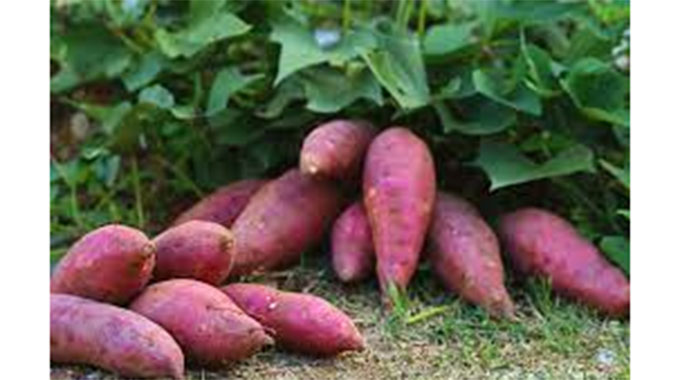
Back in the village in the land of milk, honey and dust or Guruve – if you like – a home without playing children is like a cemetery.
Village elders, the ones with cotton tuft hair say a child is never raised by one person. There, the soothsayer, the ageless autochthon of wisdom and knowledge says a family is like a forest, very dense, yet, every tree has its position. In the village, every child must at one stage or the other stay together with many others, especially at grandmother’s home.
Sharing, they say, grooms a responsible child.
The seven of us lived with grandmother and grandfather in the village.
The eldest of us was Tapfuma, whose eggshell head made him look awkward.
But he was a good shepherd.
We so liked grandmother because she rarely beat us.
Grandfather was something else, very strict and tough.
What made it worse for us was his fierce stature.
He walked with a slight stoop and his tobacco stained moustache made him look a bit cruel.
He hardly played with us.
He would beat us for sneaking into granny’s granary and stealing groundnuts.
Once in a while he beat us for unearthing granny’s underground sweet potato storage.
Roasting sweet potato away from granny’s eyes was our occupation, especially when the tubers were off season.
One night we set around a low burning fire. Although they were two huge windows, most of the smoke remained inside, coiling snake-like inside the hut. The roof of the kitchen tottered with age.
From outside the grass thatch had turned brownish grey from years of pilfering smoke.
Inside, finger-long strands of soot dangled like dreadlocks.
The brick wall was dirty outside from years of exposure to weathering.
The outside wall was also dirtied by goats that intermittently rubbed their itchy skins against it. The hut was dirty inside from the smoke that gathered from everyday fires.
The walls were plastered with carefully chosen soil paste. A strand of wire tied from one wall to another crossed above the fire place and there meat was being dried into biltong.
Grandfather was too clever. He made sure the wire was low enough to get the required smoke to dry the meat and high enough to be out of our reach. But Tapfuma, being the oldest among us, at times took grandfather’s stool, for long polished smooth with use, stepped on it and picked a long strand of biltong.
We would stash it is his pocket, thereafter, we would run behind the cattle kraal to share.
We munched fast.
Of course, Tapfuma always got the lion’s share.
We never sold Tapfuma out because he would beat us for it or made sure we sleep out of the blanket we shared.
He would roll the sole blanket around himself while we shivered in the cold the whole night, as punishment.
Granny had two blankets reserved for us, one for the floor and another to cover ourselves.
Every night there was pulling, pushing and shoving for the blanket.
Tough!
We also needed Tapfuma when going to the bush to relieve ourselves.
We were too young to use the pit latrine.
There, Tapfuma was very useful in monitoring all of us and ensuring we mould sand mounds that we used in place of tissue paper.
He would make us bend and inspect our behinds to ensure we were clean.
Cleanliness is nearest to Godliness, grandmother always said, referring to her Oxford English.
If he was not satisfied, Tapfuma made another sand mound for you, made you sit astride on it and squeeze hard.
We would go home, only after he was satisfied.
On our way from the bush if we would see a huge crow fly past us flapping its wings and croaking, and would shout: “One for sorrow!” We never rested until we spotted another one.
When a dove flew past, we competed in shouting: “One for joy!”
That was the village.
One night, a special night — we were roasting sweet potatoes.
They were a delicacy since they were off season.
Back then, it was unheard of to sell sweet potatoes.
It was a sign of poverty.
Granny had been kept some in a pit, covered with cold ash.
The ash was a preservative.
Grandmother knocked one of the sweet potatoes out of the hot ash and stabbed it with a stick, to test its ripeness.
There was a puff of steam then she broke it into pieces and started distributing among us.
She had no favourite.
She favoured no one.
We were equal so she tried to make the pieces uniform.
The pieces were too hot handle, even for her own experienced hands.
Besides the heat, the floury potatoes were difficult to swallow without drink.
With no tea or soft drink on site, water was the most ideal. Tea was a luxury only affordable on Christmas Day. In most of the cases the potato morsel foamed a lump too painful to swallow whose movement you felt until it landed on the base of the stomach.
So you needed water to push it down smoothly. Grandma repeated the process with each sweet potato but after two or three each, we had had enough.
Tapfuma never left food uneaten.
It was taboo to him.
He continued eating until granny said, he had had enough. After a meal, Tapfuma would lie back on the floor and pat his stomach.
To him, a full stomach was important as life itself.
It was life.
Life!
Grandma continued roasting potatoes for the following day.
They were meant for the elders and especially young boys were not allowed to eat sweet potatoes that would have been prepared the night before, for, their bamboo sticks would overgrow between their legs.
It was the belief in the village that bamboo sticks grew out of control if men ate them a day after they are prepared.
After eating the potatoes, we chatted noisily among ourselves about events of the day.
Grandma listened, prodding the dying ambers with a stick.
Smoke induced tears rolled down her chicks, glistening in the fire glow.
She intermittently frowned her nose pulling mucus up her nostrils with a whiffing sound. One by one, the boys started falling asleep.
On the other side Sebastian started snoring loudly and shifting about.
Granny was irritated that we had not gone to our bedroom on our own.
That meant she would carry us one by one. Suddenly she sprang up chewing the inside of her lower lip and started beating us up one by one.
“Wake up and go! Who would you want to carry you? Are your ears for decoration? Every day, I have to tell you to go and sleep,” she shouted.
There was a jabber of tongues punctuated by voices that drooled of content. But we ran to our bedroom. There, the war started.
Sharing the blanket was a war.
All night!
What with the gurgling and rumbling stomachs?
Air!
Growing up in the village and then making it in the in cosmopolitans is quite an achievement.
It has been a long journey.
Kwatakabva kure.
This villager and his kind came a long way.
The village!



 Online Reporter