admin
admin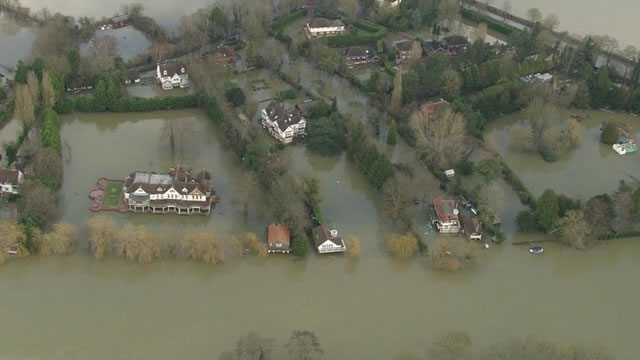
 LONDON/BUJUMBURA/LA PAS — Incessant rains, flooding and mud slides in different parts of the world are now a cause for concern as they leave behind a trail of deaths, massive infrastructure damage and humanitarian catastrophe. Thousands of homes in southeast England were braced for flooding yesterday after the River Thames burst its banks, as a political row over the handling of devastating winter storms erupted into the open.
The Environment Agency issued 14 severe flood warnings — meaning lives are at risk — for the Thames in the affluent counties of Surrey and Berkshire to the west of London.
Some areas were already under water, including parts of the Great Windsor Park, near Queen Elizabeth II’s castle at Windsor, which itself is built on higher ground.
London itself is protected by the Thames Barrier, although a suburb to the south of the capital, Croydon, announced plans to divert rising floodwaters caused by heavy rain away from homes and businesses by pumping them into a pedestrian underpass.
Parts of the southwest of England have been under water for weeks after the wettest January since 1766, with more bad weather expected over the coming days.
Forecasters at the Met Office said the run of winter storms, which have brought heavy rain and strong winds and seen high waves batter the English coastline, has been “exceptional in its duration”.
But there has been a growing tide of criticism at the official response, which has erupted into a full-blown political row. Many people in Somerset, one of the hardest-hit counties in the southwest, blame the devastating floods on the failure of the Environment Agency — a government body — to dredge local rivers.
David Cameron last week announced $215 million in extra funding for emergency repairs and maintenance. According to another AFP report, at least 51 people perished in flooding and landslides in a night of torrential rain in the Burundi capital, Bujumbura that swept away hundreds of homes and cut off roads and power, officials said yesterday.
The northern part of Bujumbura was the area hardest hit by the landslides and flooding after the rains began lashing the capital late Sunday.Torrential rain fell solidly for 10 hours overnight, causing power cuts in whole areas of the city.
The road leading out of the capital to neighbouring Rwanda was blocked because of a landslide while a bridge was washed away on the road to the Democratic Republic of Congo.
Police in Bujumbura said the toll was the highest in living memory from a disaster caused by freak weather, with more than 100 people also injured.
“The rain that fell in torrents overnight on the capital caused a disaster,” Security Minister Gabriel Nizigama told reporters.
“We have already found the bodies of 51 people killed when their houses collapsed or were swept away.”
Nizigama said burials of the victims were expected to begin yesterday because there was not enough space for their bodies in the capital’s mortuaries.
Police said several hundred homes were destroyed and more than 100 people injured in Bujumbura, which lies on the northeastern shore of Lake Tanganyika.
Houses in the poorer parts of town are often built from mud bricks, which offer no resistance to torrents of water and mud. Nizigama, touring the disaster zone with other ministers, promised food aid to those who lost their homes and said the government would bear the cost of burying relatives and would provide new housing.
Meanwhile, heavy rains and flooding have killed at least 38 people in Bolivia according to the Bolivian Defence Ministry, as authorities declared a state of emergency in response to the crisis.
The floods have washed away people’s homes and are causing illnesses, survivors said. In the northeastern department of Beni, navy and army officials came together as they prepared to reach isolated communities cut-off by the floods.
Officials reported that over 17,000 hectares of prime agricultural land has been flooded across Bolivia, devastating subsistence farmers and leaving communities without food and drinking water.
According to local media, the intense rains which had started in October 2013, have affected nearly 45,000 families in more than 100 municipalities, around five times more than last year, with the central and northern regions of the country hardest hit.
Captain Jose Ramiro Prado Flores told Reuters they will try and reach communities near the Secure River.
“We’re on our way to Santa Maria together, it’s about a 39-hour journey and there we will distribute the aid which is rice, sugar, noodles, oil and flour to all coastal communities of the Secure River,” he said.
Medics will join army officials in the journey as officials fear the spread of disease in flood-ravaged regions. With relentless rains expected to batter parts of Bolivia until mid-March, some believe the recent floods could be worse than the country’s devastating 2007 “El Nino” floods which displaced nearly half a million people. — Wires.



 Online Reporter