admin
admin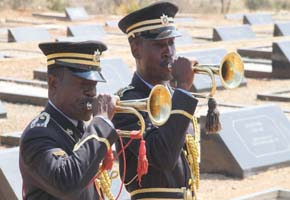
 Jephiter Tsamwi
Thousands of Zimbabweans gathered at the National Sports Stadium in Harare on Tuesday last week to celebrate one of the most important days on the national calendar. Many more congregated at centres in other parts of the country.
With people across the nation gathering in various designated areas to commemorate the 32nd anniversary of the Defence Forces Day, it was clear that the nation honours and salutes the commendable work which our security forces continue to do in the country and beyond our borders.
While this is all enough to put a smile on the face of every patriotic Zimbabwean, this writer noted a disturbing trend though, in the way the main event was covered in the media.
It has become an inescapable reality that tabloidisation of the media is slowly becoming cancerous in the mainstream media, and it is not so far before serious news completely vanishes from the country’s newspaper front pages.
Trivialisation of events seems to be taking its course, serious news sacrificed for light-toned story angles that are enough to kill the very fundamental significance of national events like Defence Forces Day whose theme for this year was “Zimbabwe Defence Forces: security and stability guarantee for national development”.
A day after the event, these are some of the headlines that flanked our local newspapers’ front pages and online publications: “Macheso wept after shaking hands with Mugabe”; “What could have made Macheso cry like this?” “Macheso hails Presidential handshake”; “Macheso sheds tears for Zimbabwe”; “Macheso mesmerises President”; “Macheso charms Mugabe”, and many others. The list goes on and on and with my limited space, I may not be able to put them all in this paper. At the same time, Facebook lovers and other social network platforms, forums and group pages, also produced different stories and angles to the whole story about Macheso’s handshake with the country’s first man.
It is after the media had shown deliberate attempt to take a lighter angle to the events that took place during the Defence Forces Day that this writer became keen to scrutinise the seriousness of the media in terms of covering national issues. Perhaps one can actually argue that the media showed total neglect of the fundamental issues, the core, the real ideals and meaning of Defence Forces Day in relation to the events that took place mainly at the National Sports Stadium where the main celebrations were held. The drastic shift of attention from the major highlights of the day towards the drama that took place when the Sungura giant met the President and the wide coverage that the emotional moment was given by the media is something that is difficult to turn a blind eye on.
But all the same, whatever reason can be given to justify or explain the trend, the disturbing events that are making world news in our neighbouring country South Africa are clearly suggestive and indicative that the Zimbabwean defence forces are a national pride that deserve better treatment in the media, and events like the Defence Forces Day should be honoured and treated with dignity, especially by the media.
As the nation celebrated the day, Zimbabweans refreshed their minds, and thought of the utmost criticism that the Zimbabwean security forces face in the hands of the private and foreign media despite the evident reality on the ground that the forces in Zimbabwe are perhaps the most competent on the continent. The West is desperate to put our uniformed forces to global disrepute, yet since Independence, the nation has never witnessed such kind of brutality by their own would-be custodians of the law, and of course peacekeepers in the nation, as was witnessed in South Africa on Thursday. The very nations that made and continue to make noise about the alleged incompetence of Zimbabwe’s security forces are all silent about the massacre down south.
And one finds it difficult to explain why security forces would go to the extent of shooting and killing 34 innocent civilians, defenceless civilians, mine workers who are determined to seek justice from the oppressive mine owners who are finding it difficult to remunerate the very labour force that is helping them do business.
At one point, some in the Western bloc actually called for the deployment of UN peacekeepers over the alleged figures of people dying amid economic hardships when in fact people were dying of cholera. Why then is the UN and the so-called champions of democracy silent about the mass killings of citizens, deliberate killings at the hands of security forces of yet another southern African nation? So it is only when violence and demonstrations happen in Zimbabwe that the alarm is raised loud enough for the whole world to hear?
Lest there are some who missed the news, 34 people were murdered after the police opened fire on striking miners at platinum mine, Lonmin Marikana, in South Africa on Thursday last week.
Considering that these are people who had resorted to demonstration after the mine administration extended the apartheid-oriented corrupt and oppressive system of exploiting black labour without pay, the racist South African police shot at the demonstrators as though they were shooting dolls during a shooting training session. What a painful disrespect for human dignity and utmost shameful abuse of human rights!
People use different means to be heard, to express their bitterness and put forth their demands to the same people, the politicians they entrust with office to lead them. But we have never heard of a situation in this country where police shoot and kill people mercilessly like the cold-blooded massacre in South Africa.
Surprisingly, Zimbabwe continues to be constantly attacked especially by the foreign media, labelling the country a nation “insecure” to the extent of negatively affecting even our tourism industry.
However, the plain truth is that Zimbabwe is a peaceful nation with professional and civilised security forces that value human life and take protection of human dignity and life as their raison d’être.
This writer would perhaps want to pose a question: Suppose the mass killings of demonstrators that happened in South Africa had happened in one of the streets of Harare or Bulawayo or any other place between Zambezi and Limpopo, with police actually opening fire at civilians, killing 34 in the process, what would you personally feel was going to be the West’s next step in their foreign policy to Zimbabwe? The answers are pretty obvious, isn’t it?
Maybe intensifying sanctions? Call for President Mugabe’s removal? Proposal for the deployment of UN peacekeepers? Or immediately advocate a form of a no-fly zone! Only God knows for the nation has never experienced such kind of brutality at the hands of our own security forces but surprisingly become one of the most hated and criticised security forces by the western media.
Perhaps, it is now clear to everyone that by commemorating the Defence Forces Day, the nation is not just fulfilling what is expected of it according to the national calendar. Rather the event is a day when the nation shows their solidarity and appreciation of the great work that the security forces are doing in terms of preserving peace in the nation and protecting the lives of every individual in the country.
Maybe the next time the event is held, our media should remember that through it, we cherish the great work that other countries wish to have and as a nation, we are blessed to be under the protection of the kind of security forces that we have.
Certainly, so for this year, there was more to the ZDF commemorations that were held at the National Sports Stadium than the trivial story that Macheso wept after shaking hands with the President.
Whether the Sungura icon mesmerised the President, wowed the crowd, or cried for the President, that story is not all that qualifies to be on the front page after such a crucial day to the nation like the Defence Forces Day.
* Jephiter Tsamwi can be contacted on [email protected]. Or 0733 854 681.


 Online Reporter