Vusumuzi Dube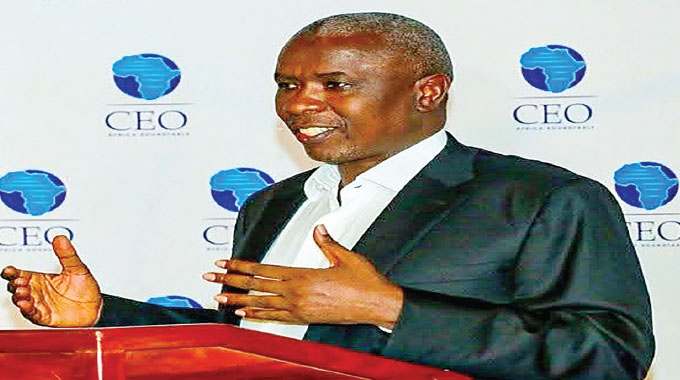
Rutendo Nyeve, [email protected]
FOR most people, standing in a 12-hour fuel queue back then was a moment of despair — but for prominent businessman Dr Kudakwashe Tagwirei, it was the moment an empire was born.
Speaking at the Zimbabwe CEOs Policy Roundtable in Victoria Falls on Thursday evening, the Sakunda Holdings founder shared his remarkable journey from being a retrenched systems analyst to becoming one of the country’s most influential business figures.
He narrated the story with rare candour, humility and a touch of humour. He admitted he had avoided the platform for years, but finally relented — and treated the room of top executives to a story that began not in a boardroom, but in a long fuel queue in Hatfield, Harare.
“One day, my wife and I wanted to go to South Africa. I went to Caltex garage in Hatfield and it took me 12 hours, from 4am to 4pm to get served. I just felt this was not right,” he recalled.
That frustration became the spark for Sakunda Holdings. But the journey was anything but easy. After being rejected for an oil company licence because he wore jeans to the interview, Dr Tagwirei bought a licence from a local car hire company for US$10 000.
“I was not formal in my attire,” he said.
He revealed that the name Sakunda was inspired by his wife.
“Sakunda is Sandra and Kuda. We had to drop the ‘r’ to make it sound nice,” he said.
What followed was a lesson in resilience.
In 2005, during the foreign currency crisis, he attempted chicken farming — only for disaster to strike.
“I lost all 15 tonnes of chicken. Do you know what happens with chicken? If they defrost, you cannot refreeze them again,” he said.
He sold his blast freezer, then his car, and finally his house, returning to what he knew best: fuel trading.
The breakthrough came when he secured a US$500 000 loan from a bank using fuel as security. By 2009, he said he had 100 trucks moving fuel from Beira. Then came a pivotal conversation with the late former Deputy Chief Secretary in the Office of the President and Cabinet, Cde Justin Mupamhanga.
“He asked me, ‘Why are you not using the pipeline? We as Government have put this infrastructure for you to use.’ I told him, ‘Because when I put my fuel into the pipeline, I don’t get it on the other side’.”
The pipeline was under-performing, pumping only 40 million litres a month when it needed 26 million litres as seed stock to run efficiently.
Dr Tagwirei took a bold gamble.
“I offered to do a take or pay arrangement. Most people think I owned the pipeline. No, I didn’t. I decided to do a take or pay on the back of the take or pay that the Government had,” he said.
He committed to 40 million litres a month — even though he was only selling 15 million at the time. He had no idea how he would find customers for the remaining 25 million litres.
But lessons from an international oil conference in London gave him an edge.
“They started telling me about hedging and fancy ways of moving products. I realised the money is in trading. You do not even need to see the fuel, you just need to move paper from one point to another,” he said.
Dr Tagwirei then made a counter-intuitive decision: he slashed his margins from between US$0,20 and US$0,30 per litre to just US$0,015 to US$0,02.
“I left between 18 and 28 cents on the table to be able to fulfil my obligation. If I didn’t sell the fuel, I would lose about US$1,5 million a month because of the take or pay,” he said.
Within six months, he was moving 40 million litres a month — and he believes the low margins helped the economy.
“It meant people were spending less on fuel. They had more money to spend on other things. That is how we grow an economy,” he said.
Dr Tagwirei warned fellow CEOs about the dangers of excessive margins, recalling a bank that once offered five percent interest per month.
“That bank is bust right now. People won’t be able to pay back,” he said.
In 2017, when a South African consortium attempted to buy 50 percent of the Beira pipeline for US$60 million, Mr Tagwirei stepped in at the request of the President.
But when he examined the contract, he discovered something unexpected.
“I looked at the contract. The option to buy was at a fixed amount US$5 million,” he said.
Government eventually paid US$17 million — including unpaid dividends — to secure full ownership of the pipeline.
Dr Tagwirei could have taken the asset for himself, but he said he chose not to.
“If those who are listening to my voice were in my shoes, you most probably would have wanted to take it and make it yours, right?” he said.
He urged CEOs to recognise that success often lies in solving problems, pricing responsibly and, at times, putting national interest first.
“Most people who have succeeded in life actually do so by solving problems. Most of the people you know are solving some problem somewhere. That’s how you make it,” he said.


 Online Reporter