Don Makanyanga
CheckPoint Desk
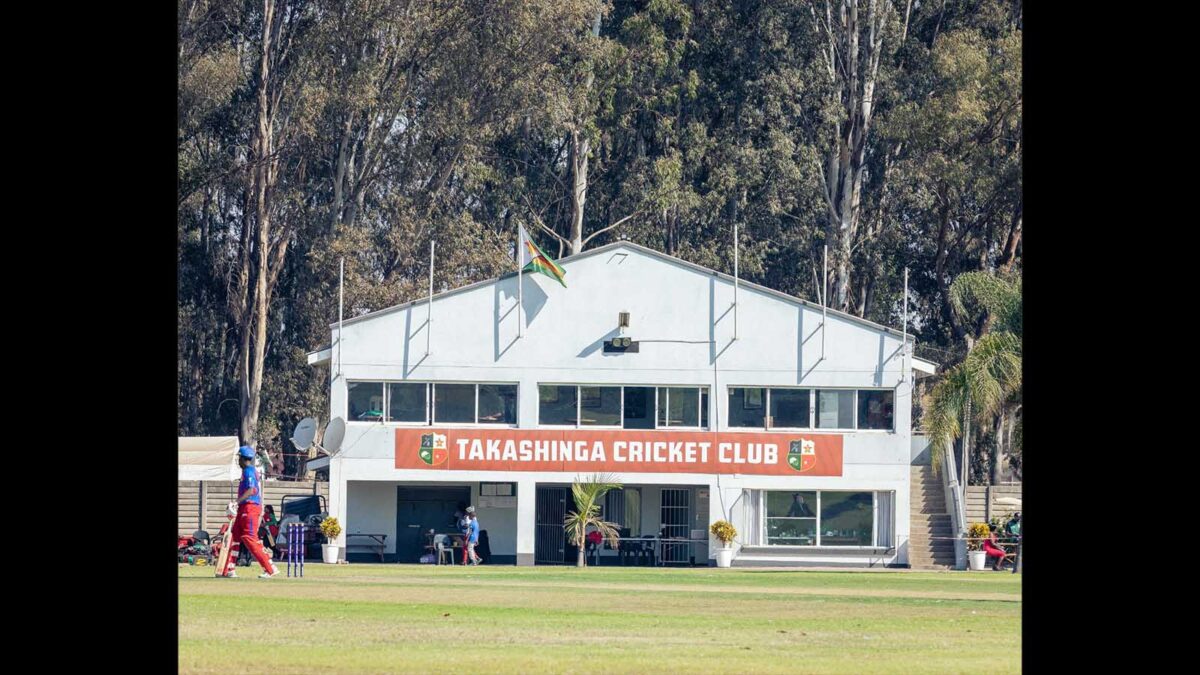
FROM humble beginnings in the early 1990s to hosting major international cricket tournaments, Takashinga Sports Club has grown into one of Zimbabwe’s most significant cricket development institutions.
Established around 1990-1991, the club was born out of a vision to make cricket accessible to communities that had traditionally been on the fringes of a sport largely associated with affluent suburbs.
For former Zimbabwe captain Hamilton Masakadza, who grew up playing for the club and witnessed much of its transformation, Takashinga’s story is one of resilience, determination and creating opportunities for previously underrepresented communities.
Although he was not involved in its initial formation, Masakadza traces his earliest connection to the club to the Winstonians era, when a group of Churchill School pupils needed a home ground as they sought promotion into the first league.
“To be honest, I wasn’t really there right at the beginning. I was one of those who came in towards the second part of the workings of Takashinga. Where I really started, where I know for a fact, is from the days of Winstonians,” Masakadza said.
The club needed its own ground to satisfy the requirements of the then Mashonaland Cricket Association (MCA) for teams competing in the first league.
Its principals approached Churchill High School, where several players were students, seeking permission to use its facilities.
The school granted the request, laying the foundation for Winstonians, a name derived from Churchill’s old boys, who are traditionally known by that name.
The club subsequently adopted the name Takashinga, a Shona expression that embodies strength and resilience.
“The name basically means we are strong, we are resilient, and it’s the ethos of the club. That’s how we see ourselves, as being very strong, very resilient, resourceful and brave,” he said.
However, Takashinga’s significance extends beyond its identity and competitive ambitions.
Its establishment was closely linked to a broader vision of transforming Zimbabwean cricket from a minority sport into one that reflected the country’s wider population.
Masakadza explained that as Zimbabwe pursued Test status, there was a need to increase participation and expand the game’s reach into high-density communities.
“The ICC basically advised Zimbabwe Cricket that if they were going to have the numbers, the game itself needed to be a mass sport, and the only way it was going to be a mass sport was if it was introduced to the high-density areas,” he said.
Takashinga became one of the pioneering institutions in that transformation, providing a platform for black cricketers to develop, compete and establish themselves.
“I would say it was mainly the first black club that had some sort of success that other black clubs managed to build from. The impact of Takashinga has been mainly that it was sort of the flagship. It presented what you would say was the blueprint and was the pioneer of black cricket in the country,” Masakadza said.
For youngsters growing up in high-density suburbs, accessing quality cricket facilities was a major challenge. Aspiring players often had to travel across town to practise on grass wickets, while concrete surfaces were the more readily available option in their communities.
Takashinga sought to bridge that gap by establishing a facility within the community.
“One of the main reasons why our principals decided to start the club in the high-density area was to allow for that sort of access,” he said.
“Being in the high-density area, we could only afford to play on concrete wickets. So one of the reasons why the facility itself was built was to make sure that there was access to the general community.”
The club consequently evolved into a development pathway, producing players who would go on to represent Zimbabwe.
For Masakadza, who enjoyed a distinguished international career, witnessing that progression has been particularly rewarding.
“To see the number of players that have come through the system of Takashinga, and that continue to come through the system, has been something very amazing,” he said.
His connection with the club also extends to the physical development of its facilities, having participated in the early construction of the ground.
“I remember we were part of even building it in the first place. We had to ferry our own soil from the edge of the field onto the actual wicket before we even started doing the outfield,” he recalled.
“From building the ground from scratch to where we are today, where the ground is actually hosting international matches, it has been amazing.”
Takashinga has since developed into an important venue for Zimbabwe Cricket, hosting matches during the 2023 ICC Men’s Cricket World Cup Qualifier, including the high-scoring West Indies-Netherlands encounter in which more than 740 runs were scored.
The ground also hosted matches during the ICC Under-19 Men’s Cricket World Cup, further strengthening its international reputation.
For Masakadza, the significance of these developments goes beyond the prestige of hosting visiting teams.
“What that has done as well is it’s taken cricket to the people. Youngsters aspiring to play the game are inspired because they now have access to come and actually watch that magnitude of a game right at the club, walking distance away from home,” he said.
With Zimbabwe preparing to co-host the 2027 ICC Men’s Cricket World Cup alongside South Africa and Namibia, Takashinga’s continued development could usher in another significant chapter.
Masakadza revealed that there are plans to continue upgrading the facility, with ambitions of establishing it as Zimbabwe’s fourth fully-fledged international cricket venue.
“I know that there are plans to continue developing the ground and continue making upgrades, to now even have it as an additional international venue in Zimbabwe,” he said.
But Masakadza believes the Takashinga success story should not end in Highfield.
He wants similar facilities established in other parts of the country, pointing to the growing contribution of players from Chitungwiza as evidence of the potential that exists when opportunities are created.
“We don’t want it to stop at Takashinga. We are hoping that what has happened here is going to be taken to other parts of Zimbabwe as well,” he said.
He also welcomed plans to extend similar infrastructure development to areas such as Dangamvura.
“My hope and my dream is that I see what has happened at Takashinga happening in other parts of the country as well,” he said.