admin
admin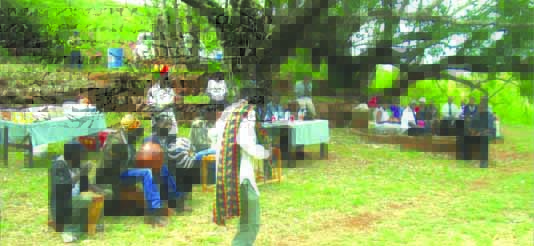
Liberty Dube
Tourism Correspondent
SITUATED on a rocky kopje and less than a kilometre from Penhalonga’s Manager’s Hill suburb is a national monument called the Indaba Tree and Nurses Memorial
It is high on a picturesque and tranquil setting where there is a commanding view of the surrounding countryside.
Progressively developed over the years, the monument is unique in that it comprises a number of separate and partly-related elements — primarily the Indaba Tree site and Nurses Memorial, as well as the pre-Pioneer Memorial, Rhodes Centenary Arch and memorials of two former residents of the area.
The magnificent site is loaded with cultural and historical significance and this draws both local and international tourists — particularly travel freaks seeking new experiences and cultures.
The site remains an integral part of Manicaland Province’s heritage and it promotes cultural tourism.
Cultural tourism is when the visitor’s greatest motivation is to learn, discover, experience and consume the tangible and intangible cultural products at a tourism destination.
The Indaba Tree itself is a place of traditional spiritual significance.
An imposing huge tree of the Fig specie was described by white settlers as the only large tree in the area, while the hill on which it is located was named Sabi Ophir Hill by the settlers.
However, it was known by the locals as the hill of the Great Tree.
This was a site held in great reverence before the arrival of the European settlers by the local people.
Under this tree, is said Chief Mutasa’s army commander, Muchira weHondo, would seek guidance from ancestral spirits in preparation for battle.
Chief Mutasa, whose village was strategically set up on a nearby hilltop, was probably the most powerful Manyika Chief and ruled his territory without any fear.
He frequently waged war against his neighbours and whenever they emerged victorious, he attributed that to the spiritual direction received under the Indaba Tree.
However, since his chiefdom was in an area that was under dispute between the British and Portuguese, Chief Mutasa inevitably became embroiled in the conflict.
In 1890 after his village was stormed, the Portuguese ousted Chief Mutasa and Fort Umtali (Mutare) was founded.
The Indaba Tree was no longer the site for traditional spiritual ceremonies.
Within the confines and serenity of this large tree, the first nursing camp was established.
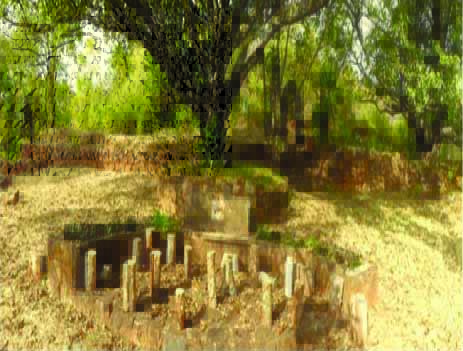
The Nurses Memorial pays tribute to the first nursing sisters of a non-religious order who came to Zimbabwe to assist Bishop Knight-Bruce, first Bishop of Mashonaland, in setting up a mission hospital.
Sisters Rose Blennerhassett, Lucy Sleeman and Beryl Welby arrived at the Port of Beira in May 1891 and after travelling up the Pungwe River by steam launch, they set out on foot on a 140-mile journey to Sabi Ophir Hill near Fort Umtali.
After the strenuous walk, the three nuns reached their destination on July 14, 1891, although Sister Blennerhassett had a fever at the time of their arrival.
Temporary accommodation was made available for them in a hut belonging to the manager of the Sabi Ophir Mining Company.
The courageous nuns served a two-year appointment, after which they were relieved by two other sisters from the Cape.
The next addition to the site was in 1953 — the centenary of Cecil John Rhodes’ birth — when a Memorial Gate was erected to symbolise Rhodes’s first entry into Penhalonga.
Rhodes actually visited the nurses at their newly opened hospital huts and presented them with a donation to acquire medicals.
On March 28, 1941, after the site had been surveyed, it was proclaimed a national monument.
To keep it as a living site, the National Museums and Monuments of Zimbabwe (NMMZ) has allowed a group of artists from Penhalonga to do their work from the site.
NMMZ is also helping to maintain and preserve its value.
“Today offshoots of the original Indaba Tree and the Nurses Memorial are maintained by the NMMZ and the site has retained its status of national monument over the years,” said NMMZ’s marketing executive and tourism expert, Mr Lloyd Makonya.
“In 1975, an earlier mystery was clarified when the reputedly exotic Indaba Tree or more correctly, its successor, was identified by the National Herbarium as Fiscusvogelii, the Giant-leafed Fig, a species indigenous to Zimbabwe,” he said.


 Online Reporter