Chronicle Editor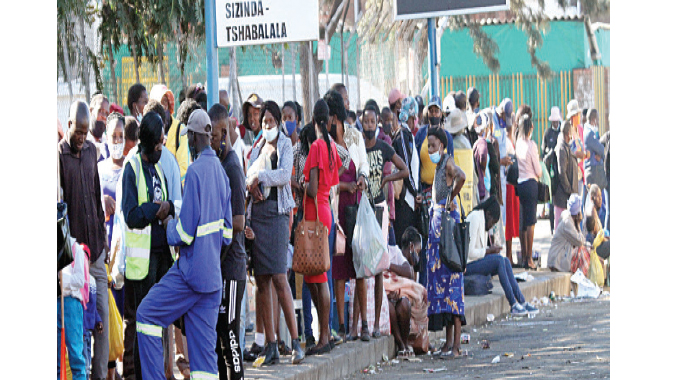
Andile Tshuma
Tax is the most sustainable source of funding for public services.
However sometimes public services leave a lot to be desired as they are not gender responsive or sensitive and they often do not accommodate the needs of marginalised groups in society such as the elderly and people with disabilities.
Some of the reasons often give on why services are below satisfactory standards have to do with lack of funding.
However, these people who are not getting the public services they deserve are also tax payers.
This week, Action Aid led an interesting conversation on the nexus between tax justice and the provision of gender responsive public services in the country.
The engagement was fruitful as it enlightened attendees on the importance of understanding how public entities are funded, and how communities can seek transparency on how public funds, mostly from tax payers are used to render services, for instance how taxes are used in public health financing in Zimbabwe.
However, while there have been calls for gender sensitive budgets, with many local authorities in the country having heeded the call and started taking action, actual services are still insensitive to the needs of women and girls, showing that gender inequality continues to limit access to these services for women and girls in the country particularly in rural communities.
It is important for people to understand the importance and value of taxes and paying taxes faithfully because when people know that the taxes fund the services they consume, then they will play their part in transacting honestly and not evading tax.
However, when services are poor, there is little that can motivate people to pay tax and to transact in formal markets where they will be taxed.
Gender responsive public services are democratic and just public services that are publicly funded, publicly delivered and universal.
They are gender equitable and inclusive; and are focused on quality. Furthermore, they are in line with human rights frameworks and the four quality criteria of being available, accessible, acceptable and adaptable. Gender responsive services put into consideration the different gender roles and needs of men and women.
According to UN WOMEN, we need quality gender responsive public services because women are disadvantaged by almost every global measure. For instance, women are over-represented among the poor and therefore, they will more often be unable to afford access to private services.
There are also a number of other factors, which cause women to rely more heavily on public services, including, unequal distribution of unpaid care work; reproductive health needs; and violence against women and girls.
Therefore, quality gender responsive public services are crucial to the delivery of women’s rights and to ensure that they live dignified lives just like all Zimbabweans should.
Tax and quality gender responsive public services is a women’s rights issue because tax is the most sustainable source of funding for public budgets, and is therefore vital for quality public services and social protection.
In Zimbabwe, there is a lot of smuggling in the country as people attempt to bring in goods for resale at a cheaper price without paying duty at ports of entry. There is therefore need for people to be fully educated on why and how taxes and duty are not a punishment but are necessary for the country to be run smoothly.
Tax leakages and loss of revenues to cross-border tax abuse contribute to the underfunding of essential services, institutions, and infrastructure on which women depend, from health care and education to public courts and transportation systems, and accountable law enforcement.
According to the Global Alliance for Tax Justice, tax leakages have hit developing countries the worst, and every dollar lost to tax havens is a dollar that could have been invested in public services – such as, for example, building hospitals, schools, affordable housing and public transportation systems, or delivering clean water and sanitation.
Inadequate spending on social services often takes a heavy toll on women in particular, as they typically bear the burden of care-giving and performing unpaid work when public institutions fall short. Institutions and programmes designed to promote gender equality and support women’s advancement often go unfunded or underfunded, and constantly face the risk of spending cuts.
Therefore, the way resources are mobilised, allocated and utilised matters for women as it often has an impact on the achievement of their rights. The way a tax system is designed can also have direct impacts on women. For example, with respect to the balance between direct and indirect taxes, there is concern about the effects of indirect taxation such as value added taxes. These taxes can have a disproportionally hard impact on the poorest, who tend to spend a larger share of their income on consumption. Since women are overrepresented among the poorest, this also entails a disproportionately hard impact on women.
Therefore, some basic commodities should be available tax free and this is already implemented in the country as some basic commodities are not taxed when we buy them Examples are milk, flour, maize meal, beans and cooking oil. This relieves the burden on women as moist of their income is sent in consumption, however more can still be done.
The impacts of underfunding in public service provision are hard hitting. When Government budgets are starved of adequate funding for public services and social protection, women and girls – especially those marginalised or living in poverty, often suffer the most.
Underfunding can for example lead to lack of access to free quality public healthcare including sexual and reproductive health services such as family planning services. Pregnancy and childbirth increase women’s need for life-saving healthcare. Every day, women across the world die from preventable complications during pregnancy and childbirth. The vast majority of maternal deaths occur in under resourced settings and can be prevented.
Access to clean and safe water becomes another burden if there are no clear transparent funding mechanism for public services. Where there are no public water services, women and girls most often carry the burden of getting water to their homes, making them vulnerable to violence, and keeping them away from education and other work. Access to public water is vital for women’s education and economic autonomy.
The Global Alliance for Tax Justice also highlights that lack of access to good public services makes childcare more difficult. Women spend nearly 2.5 times more time performing unpaid care and domestic work than men, and the Covid-19 pandemic has worsened this. When social services such as childcare are deprived of public funding, women take on an even greater share of unpaid work.
When there is poor financing of public services, the public education sector also suffers. Access to quality public education is vital for ensuring that girls living in poverty, who cannot afford the cost of privatized education, are able to go to school.
Taxes should also help ensure that there is safety and security in public spaces. Women living in poverty in developing countries are the most likely to be exposed to sexual violence whilst on the streets. Public transport in particular is a big challenge.
In Zimbabwe there have been reports of sexual assaults of women and girls in Zupco buses and at Zupco queues, and very few cases have been prosecuted. Some Zupco conductors are allegedly seeking sexual favours from school girls to help them jump long winding Zupco queues so that they get to school and home on time, and this is total unacceptable. It is unfortunate that many of these cases will end as street talk with very few victims coming out and reporting. Tax-funded public services that focus on women’s rights can improve women’s safety in public places, by providing services such as better policing, secure public toilets, street lighting and ticketing systems designed with the needs of women in mind.
Governments must fully assume their obligations and increase public spending for quality public services in general and ensure public funding of services for women.
This can be done by maximizing available resources to invest in quality, gender-responsive public services, the care economy, and social protection.
Governments must practice gender budgeting – raise and spend resources in ways that promote gender equality; reform tax laws so that they do not discriminate against women; ensure women have an equal say in how public money is spent.
Gender-sensitive budgeting will likely mean allocation of more funds to sectors that have an impact on women and girls such as education, early childcare, health, safety and social welfare and more targeted spending within each of these sectors. -@andile_tshuma


 Online Reporter